
If your dog is stuck in a cycle of itchy skin, chewed-up paws, and ear infections that keep coming back no matter what you do, a food allergy might be on your list of suspects. It’s one of the most misunderstood topics in dog care—partly because the symptoms hide as other problems, and partly because the internet is full of conflicting advice about grains, “boutique” diets, and heart disease.
Let’s cut through it. Here’s how to recognize a genuine food allergy, which ingredients most often cause trouble, how to actually pin down the culprit, and a clear-eyed look at where the grain-free heart-health debate stands today.

Food Allergy vs. Environmental Allergy: How to Tell the Difference
Here’s the first surprise: most people picture a food allergy as a stomach problem, but in dogs it usually shows up on the skin. And confusingly, environmental allergies (pollen, dust, mold) cause almost identical symptoms. Telling them apart is where most owners get stuck.
Key Symptoms to Watch For
The classic signs of a food-related reaction in dogs include persistent itching, obsessive paw licking, red or inflamed skin, and recurring ear infections that clear up on medication and then return. Some dogs also have digestive signs—loose stools or gas—but the skin-and-ear picture is the most common giveaway.
The big clue that points toward food rather than environment is timing. Seasonal allergies tend to flare in spring or summer and ease off in winter. A food allergy, by contrast, doesn’t care about the calendar—it’s there year-round, because the trigger is in every bowl. If your dog is itchy in January the same as in July, food climbs up the suspect list. A vet can help sort out which you’re dealing with, since the two often overlap.
The Most Common Food Allergens for Dogs
Here’s the second surprise, and it trips up a lot of well-meaning owners: the most common food allergens for dogs aren’t grains at all. They’re proteins—usually the very ingredients that appear in the most dog foods.
The Usual Suspects
The ingredients most often linked to food allergies in dogs are common animal proteins and a couple of staples: beef, chicken, dairy, wheat, and soy tend to top the lists. Notice that most of these are proteins, not grains. A dog develops an allergy through repeated exposure over time, which is exactly why the most widely used ingredients become the most common triggers—dogs simply eat them the most.
This matters because “grain-free” is often marketed as hypoallergenic, but a grain-free food loaded with chicken or beef could still be a problem for a dog allergic to those proteins. Grain-free doesn’t automatically mean allergy-free.
How to Run an Elimination Diet
The only reliable way to identify a food allergy is an elimination diet, and it takes patience. The idea is to feed your dog a diet with ingredients they’ve never eaten before—a “novel” protein and carbohydrate, or a specially formulated hydrolyzed diet—and nothing else at all for a stretch of weeks, typically around eight to twelve. That means no treats, no table scraps, no flavored medications or chews, because a single stray ingredient can ruin the whole trial.
If the symptoms clear up on the strict diet, you then reintroduce old ingredients one at a time and watch for the itch to return, which reveals the trigger. It’s tedious, but it’s the gold standard—far more reliable than allergy blood tests for food, which are considered unreliable in dogs. Because it’s easy to get wrong, running an elimination diet with your vet’s guidance is strongly recommended.
Grain-Free Dog Food and Heart Disease: What We Know Today
No topic in dog nutrition has caused more confusion than the link between grain-free food and a heart condition called dilated cardiomyopathy, or DCM. Here’s an honest summary of where things actually stand, because the headlines have often outrun the science.
The FDA Investigation and the Role of Legumes
Back in 2018, the U.S. Food and Drug Administration began investigating reports of DCM in dogs eating certain diets—many of them grain-free—including in breeds not usually prone to the disease. The reported numbers were striking: the large majority of the cases involved grain-free foods, and most of those foods were high in legumes like peas and lentils.
But here’s the crucial part that’s often lost: the FDA found a correlation, not a proven cause. The reports were voluntary and lacked a control group, and grains themselves were never identified as protective or legumes as definitively harmful. Suspicion has centered on diets heavy in peas, lentils, and other pulses high up the ingredient list, and the mechanism remains unclear—it doesn’t appear to be a simple taurine deficiency, and other factors are still being studied.
Where the Science Sits Now
Since its last major update in late 2022, the FDA has said it won’t issue new public updates unless meaningful new evidence emerges, and reported case numbers have declined. Research has continued: some studies have reinforced that legume-heavy diets show up most often in affected dogs, while a 2025 study found no significant cardiac changes in dogs fed complete, balanced grain-free or grain-inclusive diets over an 18-month period. In short, the picture is more nuanced than the original scary headlines suggested—no diet type has been proven to cause DCM, but diets very heavy in pulses remain the main flag.
So Should You Choose Grain-Free or Grain-Inclusive?
Given the uncertainty, the practical takeaways are reasonable rather than alarmist. Grains are not required for dogs, and plenty of dogs do well without them—but grain-free is not automatically safer or more hypoallergenic, and going grain-free just because it sounds healthier isn’t well supported. If you do feed grain-free, being cautious about diets where peas, lentils, and other legumes dominate the ingredient list is sensible. Above all, this is a genuinely individual decision best made with your vet, who can weigh your specific dog’s needs.
Choosing a Diet for an Allergic Dog
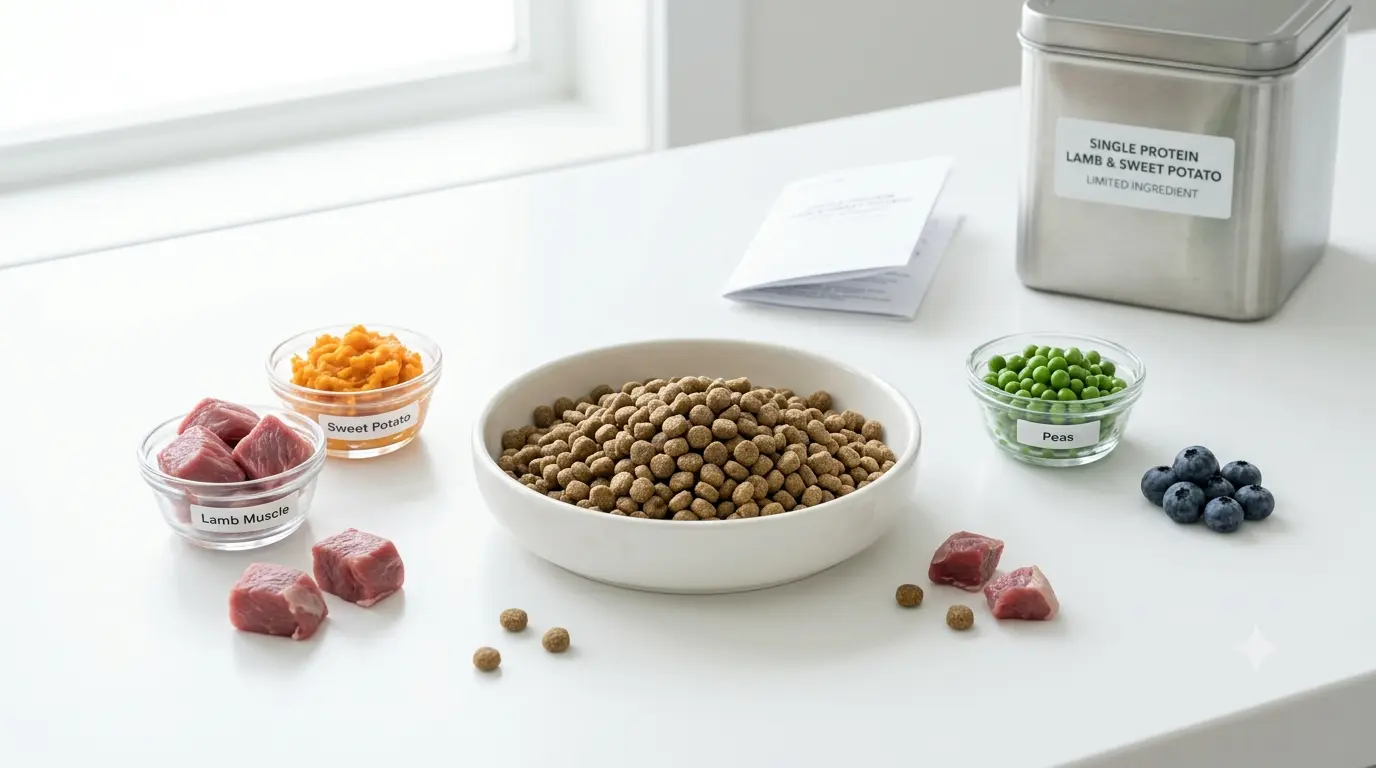
For a dog with a confirmed or suspected food allergy, two types of diet come up most. Limited-ingredient diets keep the recipe short and built around a single, often novel, protein—salmon or lamb, for example—making it easier to avoid known triggers. Hydrolyzed diets break proteins down into pieces too small for the immune system to react to, and are often used for tougher cases under veterinary supervision. Whichever route you take, transition to the new food gradually to protect your dog’s stomach; our guide to switching foods without diarrhea walks through the timing.
The Bottom Line
Food allergies in dogs usually announce themselves through the skin and ears, not just the stomach, and they show up year-round rather than seasonally. The most common triggers are proteins like beef, chicken, and dairy—not grains—so “grain-free” is no guarantee of relief. A careful, vet-guided elimination diet is the only dependable way to find the culprit. And on the grain-free heart question: the science points to caution around legume-heavy diets rather than panic about grains, and the smartest move is a conversation with your vet about your individual dog.
Frequently Asked Questions
What are the signs of a food allergy in dogs?
The most common signs are persistent, year-round itching, obsessive paw licking, red or inflamed skin, and recurring ear infections. Some dogs also have digestive upset. Unlike seasonal environmental allergies, food allergies don’t come and go with the weather, which is a key clue that food may be involved.
What are the most common food allergens for dogs?
They’re mostly proteins and staples rather than grains—beef, chicken, dairy, wheat, and soy are among the most frequently reported. Dogs develop allergies through repeated exposure, so the most commonly used ingredients tend to become the most common triggers.
Does grain-free dog food cause heart disease?
No diet has been proven to cause DCM. The FDA found a correlation—not a proven cause—between reports of DCM and certain diets, most of them grain-free and heavy in legumes like peas and lentils. Reported cases have since declined, and the science is still evolving, so caution around very legume-heavy diets and a chat with your vet make more sense than panic.
How do I find out what my dog is allergic to?
The reliable method is a vet-guided elimination diet: feed only a novel or hydrolyzed diet with no other foods, treats, or flavored chews for roughly 8–12 weeks. If symptoms clear, you reintroduce ingredients one at a time to identify the trigger. Food allergy blood tests are considered unreliable in dogs.
Is grain-free food better for dogs with allergies?
Not necessarily. Grains are relatively uncommon allergens; proteins like chicken and beef are far more likely culprits. A grain-free food still containing a protein your dog reacts to won’t help. What matters is avoiding your dog’s specific trigger, which usually means a limited-ingredient or hydrolyzed diet identified through an elimination trial.
Food allergies and heart health are complex, individual matters, so use this as a starting point and work with your veterinarian for diagnosis and diet decisions specific to your dog.