
If your dog leaves a snowstorm of white flakes on the couch or scratches relentlessly, you know dandruff isn’t just a human problem. It often signals dry, irritated skin – and diet can play a starring role in calming it down. The right dog food for dandruff delivers a cocktail of omega fatty acids, digestible proteins, and gut-supporting prebiotics to tackle the issue from the inside out.
Not all bags labelled “skin support” deliver equal results, though. Some pack the omega-6 needed to strengthen the skin barrier, while others rely on high-quality salmon or limited ingredients to quiet allergic reactions that manifest as flaking. This guide walks you through four standout options across different brands so you can zero in on what your dog’s coat needs most.
Best Dog Food for Dandruff – 2026 Reviews
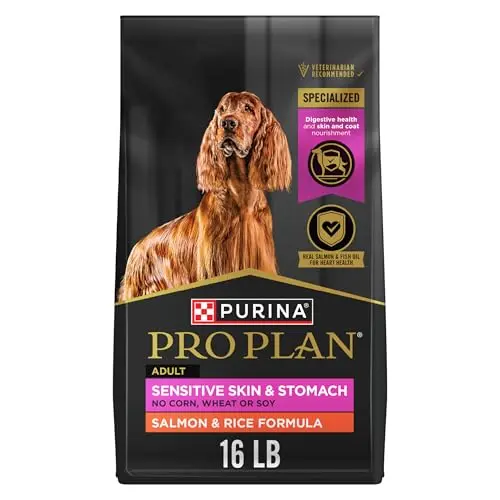
Sensitive Skin & Stomach Salmon & Rice – Skin & Coat Support
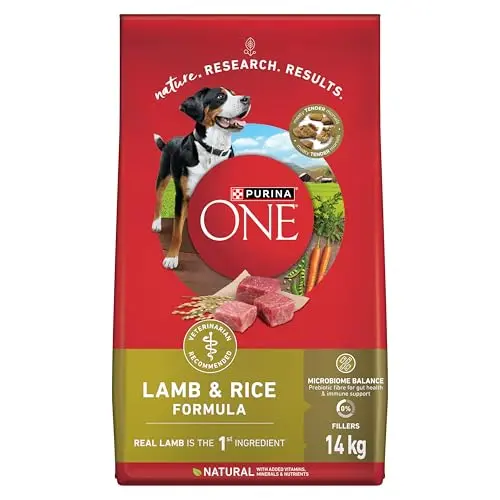
Microbiome Balance Lamb & Rice – Digestive & Immune Support
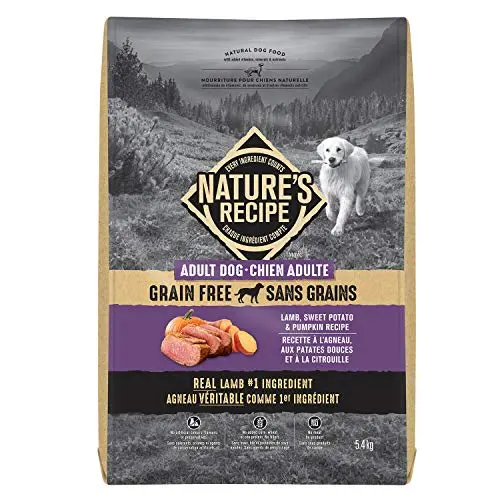
Grain Free Lamb, Sweet Potato & Pumpkin – Skin & Coat Health
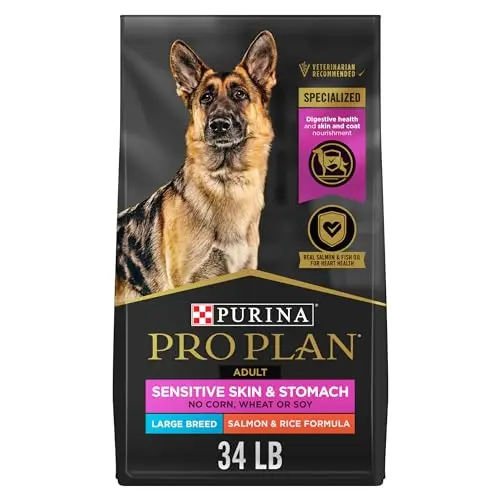
Large Breed Sensitive Skin & Stomach Salmon & Rice – Joint & Skin Support for Big Dogs
How We Evaluated These Dog Foods for Dandruff
We didn’t run controlled feeding trials in a lab. What we did: cross-referenced four dry dog food formulas across three distinct brands against five key decision axes – omega fatty acid content, protein source, digestibility, targeted skin benefits, and real-world owner feedback where available. We triangulated published specifications, ingredient panels, and aggregated owner experiences with an eye on dandruff-specific outcomes.
The scoring framework weighted real-world performance (60%) – how reliably each food reduces flaking and itching based on owner reports and ingredient science – against feature differentiation (40%) – unique advantages like gut-skin axis support or joint plus skin formulas. We have no commercial relationship with any of the brands featured; recommendations track fit and differentiation, not brand preference. If your dog’s dandruff is linked to general sensitivity, the Pro Plan Sensitive Skin & Stomach is your match; if digestive health might be the root cause, the Purina ONE Microbiome Balance offers a compelling gut-first alternative.
How to Choose the Right Dog Food for Dandruff
Omega Fatty Acids: The Skin Barrier's Best Friend
Dandruff often boils down to a compromised skin barrier, and omega-6 fatty acids – like those in sunflower oil or chicken fat – are the building blocks that repair it. You’ll want a dog food that lists a specific omega-6 source high on the ingredient panel. Omega-3s from fish oils or flaxseed add anti-inflammatory power, which helps if your dog’s flakes come from allergy-driven itching. Together, these fats keep skin supple and reduce the visible fallout.
In practice, look for phrases like “rich in omega-6” or ingredients such as sunflower oil, salmon, or flaxseed. The Pro Plan Sensitive Skin & Stomach formula leans heavily on sunflower oil, while Nature’s Recipe gets its omega punch from lamb and pumpkin. If your dog’s dandruff seems seasonal or allergy-related, prioritizing a high omega-6 food is a smart first step.
Protein Source and Sensitivity: Chicken Isn't Always to Blame
Dandruff can be a symptom of a food intolerance, and the protein source is often the first place to experiment. Novel proteins like lamb or salmon may ease skin reactions if your dog has been on chicken-based food for years. That’s why both the Purina ONE and Nature’s Recipe options centre on lamb, while the Pro Plan formulas use salmon – a common go-to for sensitive dogs.
However, not every dog with dandruff needs to ditch chicken. It’s more about finding a highly digestible, named protein source that your individual dog handles well. Start with one novel protein and give it 8-12 weeks to judge skin response. If the flakes persist, you might need an even more limited ingredient diet or a vet consultation.
Digestive Health and the Gut-Skin Connection
A growing body of research shows that a healthy gut equals healthier skin. Prebiotic fibres – like the dried chicory root in Purina ONE Microbiome Balance – feed beneficial bacteria, which in turn regulate inflammation throughout the body. By calming internal inflammation, you often see fewer skin flare-ups, less itching, and a reduction in dandruff. Even the Pro Plan formulas include prebiotics for this reason.
If your dog’s dandruff comes with loose stools, gas, or a sensitive stomach, pick a food that explicitly mentions microbiome support or prebiotic fibre. The Purina ONE option is the standout here for directly targeting the gut-skin axis, while the oatmeal in the Pro Plan recipes provides easily digestible carbs that won’t upset the stomach.
Grain-Free vs. Grain-Inclusive: What's Best for Dandruff?
The grain-free trend has cooled, but some dogs genuinely do better without wheat, corn, or soy. If your dog’s dandruff coincides with recurrent ear infections or itchy paws – classic signs of a grain sensitivity – a limited-ingredient, grain-free formula like Nature’s Recipe may help. However, for most dogs, well-sourced whole grains like oatmeal or barley are perfectly fine and can even support stable energy levels.
Don’t go grain-free simply for the sake of it. The Pro Plan recipes use oatmeal as a gentle carb, while the Nature’s Recipe swaps in sweet potato. Base your choice on your dog’s history: if grains have never been an issue, a grain-inclusive food is often more balanced and affordable. If you suspect a grain allergy, elimination trials under a vet’s guidance are the gold standard.
Kibble Size and Your Dog's Breed
While it’s not the first thing you think of with dandruff, kibble size can influence how well your dog eats – and consistent nutrition is key to skin health. Small-breed dogs may struggle with large kibble pieces, leading to picky eating and missed meals. Conversely, large breeds benefit from bigger kibble that encourages chewing and slows down consumption.
The Pro Plan Large Breed formula is specifically designed for big jaws, while the Purina ONE and Nature’s Recipe options have more universally sized pieces. If your small dog shows no interest in a large kibble, consider a small-breed variant of the same line if available. The IAMS Minichunks line is a notable alternative, though not in our lineup because it lacks explicit skin benefits.
Price Range and What You're Paying For
Dog food for dandruff spans from budget-friendly bags to premium specialty formulas. The budget end – like the Purina ONE Microbiome Balance – gives you a solid nutritional foundation with gut benefits that indirectly support skin health. At the premium level, products like Pro Plan Sensitive Skin & Stomach include targeted skin ingredients (higher omega-6, specific prebiotics) and often utilise wild-caught salmon as the first ingredient.
You’re paying for higher-cost protein sources, added joint supplements (in the large breed version), and more rigorous formulation for sensitivities. If your dog’s dandruff is mild, a more affordable option with omega-6 might do the trick. For chronic, severe flaking, the investment in a premium skin-focused food often pays off in fewer vet visits and a happier dog.
Frequently Asked Questions
What's the difference between Purina ONE Microbiome Balance and Pro Plan Sensitive Skin & Stomach for dandruff?
The Purina ONE formula focuses on gut health as the pathway to better skin, using prebiotic fibre to balance the microbiome. It’s lamb-based, which suits dogs with chicken sensitivities. The Pro Plan formula directly targets skin and stomach issues with a salmon-first recipe rich in omega-6 fatty acids and a specific prebiotic for digestion. Owners generally see faster skin-specific results with Pro Plan, but the Purina ONE is a more affordable, gut-centric option that can still reduce itching.
How do I switch my dog to a new food without causing stomach upset?
Go slow: over 7-10 days, gradually mix increasing amounts of the new food with decreasing amounts of the old. Start with 25% new food, 75% old for 2-3 days, then 50/50, then 75% new, then fully switch. This is especially important when moving to a higher-fibre or novel-protein food, as sudden changes can cause diarrhoea. If your dog has a very sensitive stomach, extend the transition to two weeks. Adding a spoonful of plain canned pumpkin (not pie filling) can help ease the process.
Can a grain-free diet help with my dog's dandruff?
It can, if your dog has a confirmed grain sensitivity. Dandruff caused by an allergic reaction to grains like wheat or corn may improve on a grain-free formula like Nature’s Recipe. However, grain-free diets aren’t universally better for skin, and recent research has raised concerns about heart health in some dogs. It’s best to trial a grain-free food only after ruling out other causes of dandruff, and under veterinary supervision.
Are all salmon-based dog foods good for dandruff?
Salmon is a great ingredient for skin health because it’s rich in omega-3 fatty acids and is a novel protein for many dogs. But not all salmon foods are created equal. Look for formulations that also include an omega-6 source (like sunflower oil) and prebiotics to get the full skin-supporting effect. The Pro Plan Sensitive Skin & Stomach line stands out because it pairs salmon with targeted skin ingredients, while some budget salmon foods may lack additional fatty acids.
Final Verdict
For most dogs with dandruff, the Pro Plan Sensitive Skin & Stomach Salmon & Rice is the clear champion – it attacks the problem directly with a high omega-6 load and a gentle, digestible base. If you suspect gut health is at the root of your dog’s flakes, the Purina ONE Microbiome Balance offers a smart, affordable gut-first approach that actually works for skin. And for large breed owners who don’t want to choose between joint care and skin support, the Pro Plan Large Breed Sensitive Skin & Stomach hits both marks. Whichever route you go, give it time: diet-driven skin changes often take a month to fully show.