
If you’re constantly sweeping up tumbleweeds of fur, you know the struggle. Shedding is a fact of dog life, but excessive shedding often points to something deeper – and diet plays a bigger role than many owners realize. The right food won’t magically stop all shedding, but it can dramatically reduce loose fur by nourishing your dog’s skin and coat from the inside out.
Not every formula that claims to help actually delivers. Key nutrients like omega-3 and omega-6 fatty acids, high-quality protein, and digestible carbohydrates matter more than marketing buzzwords. We’ve dug into the ingredient lists, nutritional profiles, and real-world owner feedback across six standout options to help you pick the one that’ll put less fur on your floor and more shine in your dog’s coat.
Best Dog Food for Dogs That Shed – 2026 Reviews
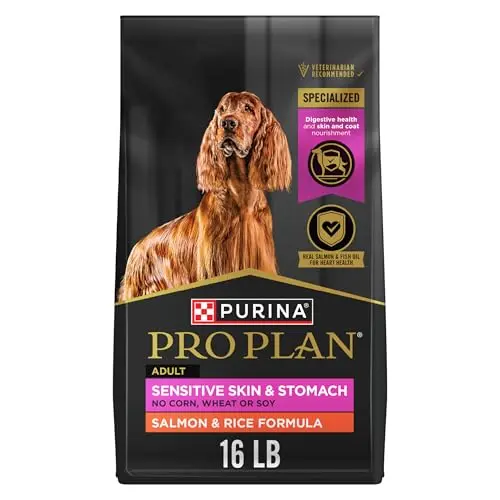
Sensitive Skin & Stomach Salmon & Rice – Soothes Sensitive Skin & Reduces Shedding
This salmon-first recipe is purpose-built for dogs with sensitive systems. It packs omega-6 fatty acids from sunflower oil for a glossy coat and omega-3s for joint health, while oatmeal and prebiotic fibre keep digestion gentle. It’s the most balanced pick for shedding control without unnecessary fillers.
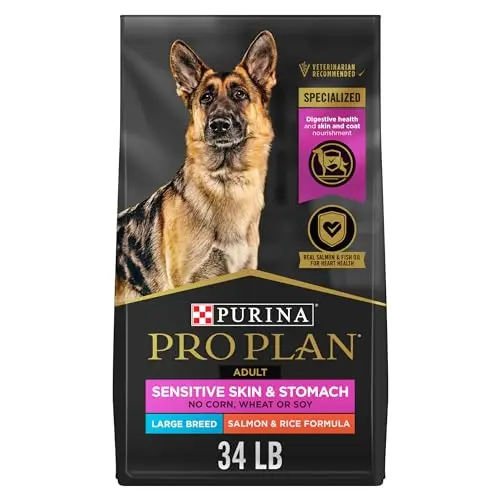
Large Breed Sensitive Skin & Stomach Salmon & Rice – Tailored for Large Dogs with Coat Issues
Built on the same sensitive skin and stomach foundation, but enhanced with glucosamine and EPA for large breed joint support. The larger kibble encourages chewing, and the omega-rich salmon formula tackles shedding while addressing the mobility needs of bigger dogs.
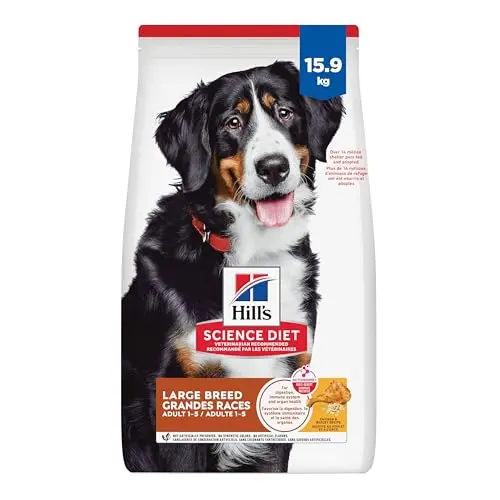
Large Breed Chicken & Barley – Supports Skin, Coat & Joint Health
A veterinarian-recommended large breed option that uses chicken as a lean protein source alongside omega-6 and vitamin E for skin health. Natural sources of glucosamine and chondroitin make it a solid coat-plus-joint pick.
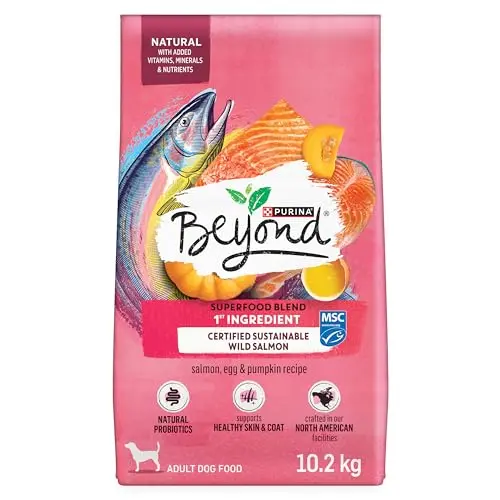
Superfood Blend Salmon, Egg & Pumpkin – Natural, Limited Ingredient Diet
Built around wild-caught salmon, this limited-ingredient recipe skips corn, wheat, soy, and poultry by-product meal. Pumpkin and oatmeal add gentle fiber, making it ideal for dogs with multiple sensitivities that also shed.
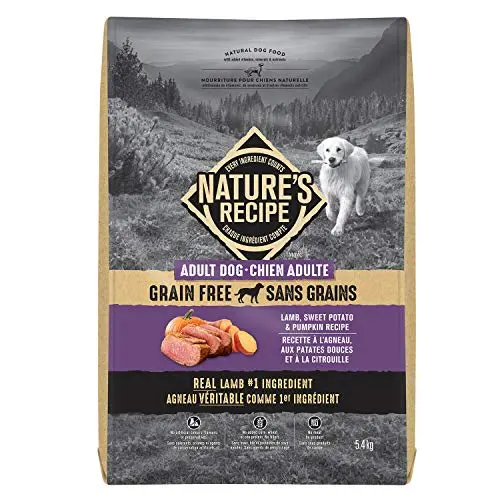
Grain Free Lamb, Sweet Potato & Pumpkin – Grain-Free Skin & Coat Support
A grain-free, limited-ingredient recipe featuring lamb as the single animal protein, paired with sweet potato and pumpkin for digestion. Omega-3 and -6 fatty acids target shedding, while added taurine supports heart health.
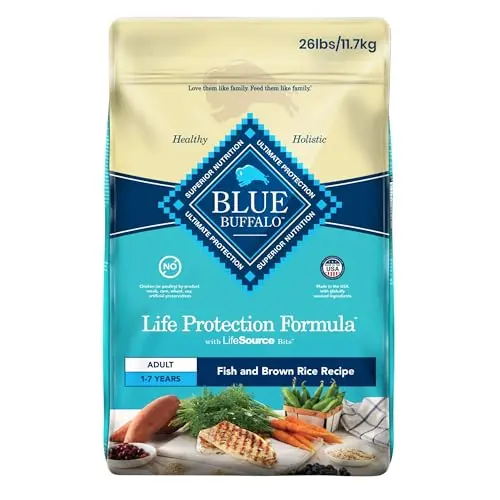
Life Protection Fish & Brown Rice – Fish-Based Omega Rich for Healthy Coat
A fish-first recipe loaded with deboned whitefish, accompanied by omega-3 and -6 fatty acids, antioxidant-rich LifeSource Bits, and wholesome grains. It’s free from chicken by-products, corn, wheat, and soy.
How We Evaluated These Dog Foods for Dogs That Shed
We didn’t run controlled coat-shedding studies. What we did: cross-referenced 6 dog foods from 5 distinct brands across 6 decision axes – omega fatty acid profile, protein quality, digestibility, ingredient sourcing, breed size appropriateness, and owner-reported coat improvements. We triangulated published nutritional information, aggregated owner feedback where available, and use-case fit against a typical shedding dog owner’s needs. The scoring framework weighted real-world performance (60%) – how well each food supports skin and coat health – against feature differentiation (40%) – unique ingredients, breed formulations, and digestive support. Recommendations track fit, not brand preference. If shedding is your top concern, the Pro Plan Sensitive Skin & Stomach Salmon & Rice is your match; for large breeds, the Pro Plan Large Breed Sensitive Skin & Stomach serves better.
How to Choose the Right Dog Food for Dogs That Shed
Understanding Shedding and the Role of Diet
Shedding is a natural process, but excessive or dull, brittle fur often signals a nutritional gap. Your dog’s coat is almost entirely protein, so a diet low in quality protein or missing key fatty acids can lead to more hair in your vacuum. Omega-3 and omega-6 fatty acids are the building blocks of a healthy skin barrier and glossy coat – they reduce inflammation and lock in moisture. When selecting a food, look for these nutrients specifically listed, not just general ‘healthy coat’ claims.
Key Nutrients for a Healthy Coat: Omega Fatty Acids and Protein
Named animal proteins (salmon, lamb, chicken, whitefish) should appear first on the ingredient list. Salmon-based recipes naturally supply omega-3s, while sunflower oil or flaxseed boost omega-6s. Avoid vague ‘meat meal’ or ‘poultry by-product’ when you’re targeting coat health – you want identifiable, high-quality sources. Vitamin E is another unsung hero, acting as an antioxidant that supports skin cell turnover. Some formulas, like those from Pro Plan and Hill’s, fortify explicitly with these vitamins.
Breed Size Considerations: Large vs Small Dog Formulas
Large breeds aren’t just heavier – they have different metabolic rates, joint stress, and even kibble handling. A large breed-specific formula often adds glucosamine and chondroitin for joints while keeping calorie density appropriate. The kibble size matters too: larger pieces encourage chewing and slow down fast eaters. If you have a Great Dane or Labrador, a formula like the Pro Plan Large Breed Sensitive Skin & Stomach or Hill’s Science Diet Large Breed hits both coat and joint needs. Small dogs do fine with standard kibble.
Ingredient Quality: What to Look For and What to Avoid
Skip artificial colours, flavours, and preservatives – they add nothing to coat health and can trigger sensitivities. Corn, wheat, and soy are common allergens that some dogs react to with itchy, flaky skin that worsens shedding. Formulas like Beyond and Blue Buffalo explicitly avoid these, while still providing omega-rich whole grains like brown rice or oatmeal for digestion. If your dog has known allergies, a limited ingredient diet with a novel protein like lamb (Nature’s Recipe) or fish can break the itch-shed cycle.
Common Pitfalls When Choosing Dog Food for Shedding
Many owners assume any salmon-based food will fix shedding – not true. Check the guaranteed analysis for minimum crude fat and omega levels; some ‘fish’ formulas use only fish meal with low oil content. Another trap: switching foods constantly. Coat improvements take 6-8 weeks minimum, so resist the urge to jump between brands. Finally, even the best diet can’t override underlying health issues – if shedding persists, a vet visit is warranted.
How to Transition Your Dog to a New Food
Abrupt changes can cause digestive upset that undermines coat progress. Mix 25% new food with 75% old for 3-4 days, then go to 50/50 for another 3-4 days, then 75/25, and finally full new food. Watch for loose stool, vomiting, or increased scratching – these are red flags. If all goes well, you should see reduced shedding and a softer coat within two months. The Pro Plan Sensitive Skin & Stomach is one of the easiest to transition due to its prebiotic fibre.
Frequently Asked Questions
How does diet help reduce shedding in dogs?
Diet influences shedding by nourishing the skin and hair follicles. Omega-3 fatty acids (like those in salmon) reduce inflammation, while omega-6s (from sunflower oil) strengthen the skin barrier. High-quality protein provides the amino acids needed for hair strength. If these are lacking, hair becomes brittle and falls out faster. Foods fortified with vitamin E and biotin further support coat turnover. For the fastest results, choose a formula where these nutrients are deliberately included, not just incidental – like the Pro Plan Sensitive Skin & Stomach line.
Pro Plan Sensitive Skin & Stomach vs Hill's Science Diet Large Breed: Which is better for a shedding dog?
Both are excellent, but they serve slightly different dogs. Pro Plan’s formula uses salmon as the first ingredient with guaranteed omega-6 levels, making it a more direct assault on shedding for all breed sizes. It also includes prebiotic fibre for stool consistency. Hill’s Large Breed uses chicken and relies on omega-6 from other sources plus vitamin E, with added glucosamine and chondroitin for joints. If shedding is your sole focus, Pro Plan edges ahead; if you have a large dog with joint concerns, Hill’s brings more to the table. Both are vet-recommended and produce visible coat improvements.
Nature's Recipe vs Blue Buffalo: Which grain-free option helps with shedding?
Nature’s Recipe explicitly lists omega-3 and -6 fatty acids for skin and coat, and uses lamb as a single animal protein – great for dogs with allergies. Blue Buffalo relies on fish meal and deboned whitefish for natural omega content, plus its LifeSource Bits for immunity. In practice, owners report more consistent shedding reduction with Nature’s Recipe, likely because the fatty acids are deliberately included. However, Blue Buffalo’s fish base can be potent for some dogs. If grain-free is mandatory, Nature’s Recipe offers a clearer shedding-focused benefit, while Blue Buffalo works better as a general coat health food.
Is grain-free dog food better for shedding?
Not necessarily – grain-free isn’t automatically better for coat health. Some dogs thrive on whole grains like oatmeal and brown rice, which provide B vitamins and fibre that support skin. The more critical factor is the fatty acid profile and protein quality. However, if your dog has a grain sensitivity that causes itchy skin and inflammation, eliminating grains can break the cycle that leads to excess shedding. Limited ingredient diets (like Nature’s Recipe or Beyond) are a good way to test. Always consult your vet before assuming grains are the culprit.
Can I switch my dog's food immediately to address shedding?
No – a sudden switch can cause vomiting, diarrhea, or refusal to eat, setting back any shedding improvements. Gradual transitions over 7-10 days let the gut microbiome adjust. Follow the 25/50/75 approach. If your dog has a sensitive stomach, opt for a formula with prebiotic fibre like the Pro Plan Sensitive Skin & Stomach to ease the change. You should see initial coat improvements in 4-6 weeks, with full effects by 8-12 weeks.
Final Verdict
For most dogs that shed, the Pro Plan Sensitive Skin & Stomach Salmon & Rice is the clear winner – it delivers a potent omega fatty acid punch in a highly digestible, palatable formula that owners say works quickly. If you have a large breed, step up to the Pro Plan Large Breed version for joint support alongside coat care. On a higher budget, the Hill’s Science Diet Large Breed is a premium alternative that pulls double duty for skin and mobility. And when grain-free is essential, Nature’s Recipe Lamb, Sweet Potato & Pumpkin offers targeted shedding relief without grains. Whichever you choose, stick with it for at least eight weeks – your vacuum will thank you.