
If your dog breaks out in itchy skin, chronic ear infections, or an upset stomach every time chicken hits the bowl, you’re not alone. Chicken allergies are one of the most common food sensitivities in dogs, and finding a safe, nutritionally complete alternative can feel like navigating a minefield of ingredient lists. The good news? The market has responded with a wave of chicken‑free options that don’t compromise on quality or taste.
The key is knowing what to look for: a named animal protein that isn’t chicken (like salmon, lamb, or beef), limited ingredient panels that reduce the chance of cross‑reactions, and added supports for skin and digestion – because allergies often come with a side of secondary issues. We’ve cross‑compared the top contenders across ingredient transparency, protein source, and real‑world owner feedback to help you find the right bowl for your allergic dog.
Best Dog Foods for Dogs with Chicken Allergies – 2026 Reviews
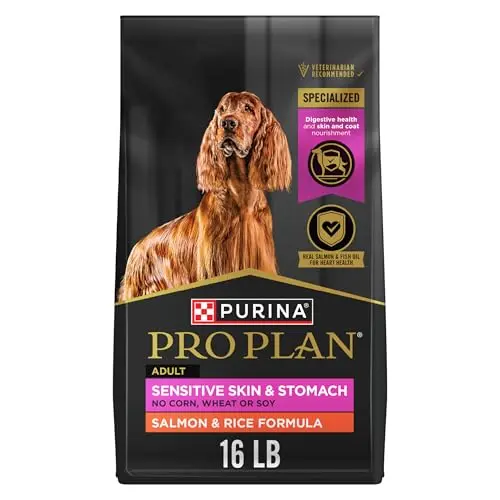
Sensitive Skin & Stomach Salmon & Rice – Allergy-Friendly Daily Nutrition
A vet‑recommended staple for dogs with food sensitivities, this salmon‑first formula pairs easily digestible oatmeal with omega fatty acids and prebiotic fibre. It’s designed to calm skin irritation and support gut health – two areas where chicken‑allergic dogs often struggle – without relying on novel proteins that can be hard to source consistently.
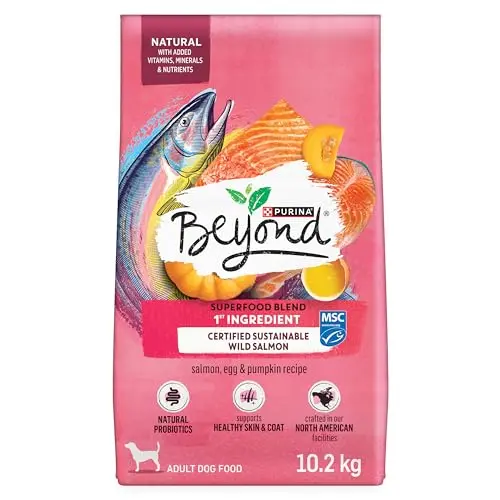
Superfood Blend Salmon, Egg & Pumpkin – Natural, Grain-Free Formula
A wallet‑friendly, grain‑free option that leans on wild‑caught salmon, eggs, and pumpkin for a nutrient‑dense recipe. It’s free from corn, wheat, soy, and poultry by‑products, making it a safe bet for chicken‑allergic dogs while keeping the ingredient list simple and recognizable.
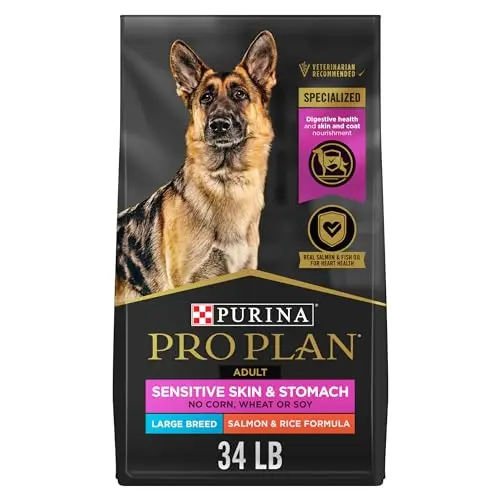
Large Breed Sensitive Skin & Stomach Salmon & Rice – Joint & Skin Support
This formula takes the same salmon‑first, allergy‑friendly base as our top overall pick and tailors it for larger frames. Glucosamine and EPA support joint health, while the oatmeal and prebiotic fibre continue to work on sensitive digestion – all without a trace of chicken.
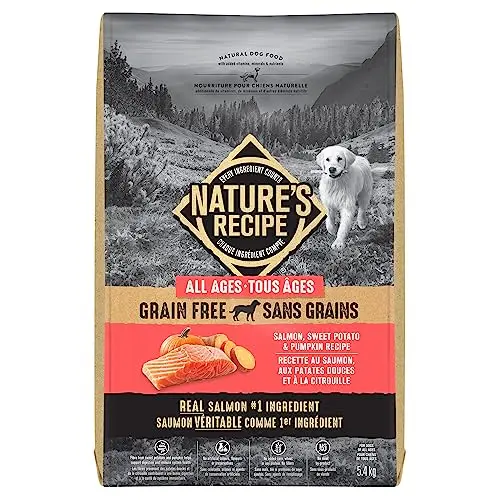
Grain Free Salmon, Sweet Potato & Pumpkin – Simple Ingredients, Allergy-Friendly
A straight‑to‑the‑point grain‑free recipe built around salmon as the first ingredient. Sweet potato and pumpkin add fibre and antioxidants, making it a solid candidate for dogs that need a straightforward, no‑frills chicken‑free diet.
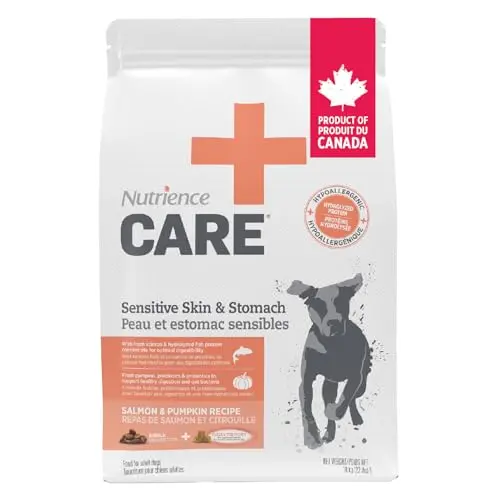
Care Sensitive Skin & Stomach Salmon – Hypoallergenic Digestive Support
A Canadian‑made, limited‑ingredient formula that goes all‑in on gut health. With fresh salmon, pumpkin, prebiotics, and probiotics, it’s engineered for dogs whose allergies manifest primarily as digestive distress.
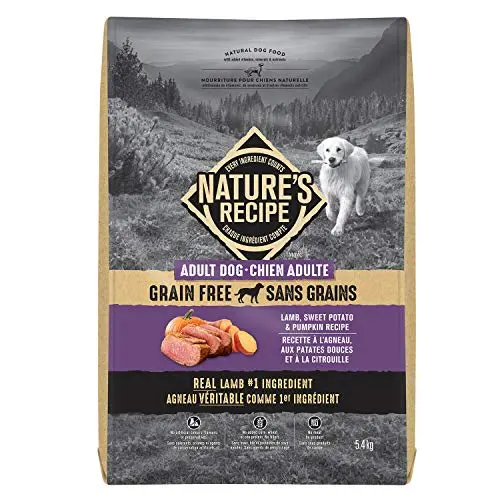
Grain Free Lamb, Sweet Potato & Pumpkin – Novel Protein for Allergies
A lamb‑based alternative for dogs that don’t do well with fish. This grain‑free recipe uses lamb as a novel protein, combined with sweet potato and pumpkin for easily digestible carbs and fibre.

True Instinct Beef & Salmon – High-Protein, No Chicken
A high‑protein blend of beef and salmon that skips chicken entirely. With 32% protein and added antioxidants, it’s built for active dogs who need to steer clear of poultry.
How We Evaluated These Dog Foods for Dogs with Chicken Allergies
We didn’t run controlled elimination diet trials or allergy blood panels. What we did: cross‑referenced 7 chicken‑free dry dog foods from 5 distinct brands across 5 decision axes – protein source, ingredient transparency, digestive support features, skin and coat benefits, and real‑world palatability based on aggregated owner feedback. We triangulated published ingredient lists, nutritional adequacy statements, and where available, patterns in customer experiences, to map each product’s fit for dogs with diagnosed or suspected chicken allergies.
The scoring framework weighted real‑world allergy‑management performance (60%) – how reliably each formula avoids chicken and addresses secondary symptoms like itching or loose stools – against feature differentiation (40%) – unique elements like joint support for large breeds, prebiotic blends, or novel protein variety. We have no commercial relationship with any of the brands featured; recommendations track fit and differentiation, not brand preference. If your dog’s allergies manifest as skin trouble, the Pro Plan Sensitive Skin & Stomach is the safest starting point; if stomach issues take centre stage, the Nutrience Care formula offers targeted gut support.
How to Choose the Right Dog Food for Dogs with Chicken Allergies
Understanding Chicken Allergies in Dogs
Chicken allergies are an immune‑system overreaction to specific proteins in chicken meat or by‑products. Unlike an intolerance (which causes digestive upset), a true allergy can trigger skin rashes, ear infections, hot spots, and chronic scratching. Because chicken is so common in pet foods – often appearing as ‘poultry meal’ or ‘animal fat’ – it can be surprisingly difficult to avoid. If your vet suspects a chicken allergy, the first step is an elimination diet: removing all chicken sources for 8-12 weeks and monitoring symptoms. The foods in this guide all pass that test, but always check the full ingredient panel for hidden chicken derivatives like chicken fat or broth.
Key Ingredients to Look For in a Chicken‑Free Dog Food
Start with a named animal protein other than chicken: salmon, whitefish, lamb, beef, or duck. A single‑source protein is often safer for sensitive dogs. Next, look for easily digestible carbohydrates like oatmeal, sweet potato, or pumpkin – these are gentle on the stomach and less likely to provoke a reaction than corn or wheat. Added omega fatty acids (especially from fish oil or flaxseed) help calm inflamed skin, while prebiotics or probiotics support gut health, which is closely linked to overall immune function. Avoid artificial colours, flavours, and preservatives, which can add unnecessary chemical load to an already stressed system.
Grain‑Free vs. Whole Grain: What's Better for Allergic Dogs?
The grain‑free debate isn’t settled for allergy dogs. While some dogs with chicken allergies also react to grains like wheat or corn, many do not. In fact, easily digestible whole grains like oatmeal or brown rice can be excellent sources of steady energy and fibre without the pulses (peas, lentils) that have been associated with nutritional dilated cardiomyopathy (DCM) in some dogs. Our lineup includes both grain‑free options (like the Nature’s Recipe formulas and Nutrience Care) and grain‑inclusive choices (like the Pro Plan Sensitive Skin & Stomach). Unless your dog has a confirmed grain sensitivity, a grain‑inclusive food with a simple ingredient list may be the safer long‑term bet.
Novel Proteins: Lamb, Salmon, and Beyond
Novel proteins are animal sources your dog hasn’t eaten before, making them less likely to trigger an immune response. Salmon is the go‑to for many chicken‑allergic dogs because it’s uncommon in standard foods and naturally rich in anti‑inflammatory omega‑3s. Lamb (like in the Nature’s Recipe Lamb & Sweet Potato) offers an alternative for fish‑averse pups, while beef (as seen in Purina ONE True Instinct) works if your dog tolerates red meat. The key is to match the protein to your dog’s history: if they’ve never had salmon, that’s a novel choice; if they’ve eaten lamb‑based treats, it’s not. Rotating novel proteins can also prevent new sensitivities from developing.
How to Transition Your Dog to a New Food
Switching foods too quickly is a sure‑fire way to sabotage even the best allergy diet. I recommend a 7-10 day transition: start with 75% old food / 25% new for days 1-3, then 50/50 for days 4-6, then 25/75 for days 7-9, before going 100% new. Watch for loose stools or increased scratching, and slow down if you see either. During the elimination trial, avoid all other treats, table scraps, and flavoured medications that might contain chicken. Keep a simple symptom journal – that data will be invaluable for your vet. The Pro Plan Sensitive Skin & Stomach tends to transition smoothly thanks to its prebiotic fibre, which helps buffer digestive upset during the switch.
Pro Plan vs Nutrience Care: Which for Your Dog?
Both the Pro Plan Sensitive Skin & Stomach and the Nutrience Care Sensitive Skin & Stomach are built for dogs with food sensitivities, but they take different paths. Pro Plan uses oatmeal and a single‑source salmon protein, with a focus on skin health through omega‑6s and gut health through prebiotic fibre. Nutrience goes further into digestive territory with its Digestiboost blend of pumpkin, chicory root, turmeric, and ginger, plus a probiotic kicker. If your dog’s primary symptom is skin trouble, Pro Plan’s balanced approach is often sufficient. If you’re battling persistent soft stools or gurgly tummies, the Nutrience Care formula’s extra gut‑soothing ingredients may tip the scales.
Frequently Asked Questions
How do I know if my dog has a chicken allergy?
Signs of a chicken allergy typically include intense itching, red or inflamed skin, recurrent ear infections, hot spots, and sometimes gastrointestinal issues like vomiting or diarrhea. Symptoms often appear year‑round (unlike seasonal allergies) and may worsen after meals. The gold standard for diagnosis is an elimination diet trial prescribed by your veterinarian: you feed a food with a single, novel protein and carbohydrate source for 8-12 weeks and watch for symptom resolution. If symptoms disappear and return when chicken is reintroduced, the allergy is confirmed. Keep in mind that some dogs are allergic to multiple proteins, so it’s worth working with a vet to design the trial.
What's the difference between the Pro Plan Sensitive Skin & Stomach and the Nutrience Care formula?
Both are salmon‑based, chicken‑free, and target sensitive systems, but their supporting blends differ. The Pro Plan relies on oatmeal for gentle fibre, omega‑6‑rich sunflower oil for skin, and a single prebiotic fibre source for gut health – it’s a streamlined, vet‑trusted formula. The Nutrience Care adds a more complex digestive support package: pumpkin, chicory root, turmeric, and ginger (its Digestiboost blend), plus probiotics, making it more of a gut‑health specialist. It also includes coconut oil alongside salmon oil for extra skin support. If skin is the main complaint, Pro Plan often suffices; if your dog has chronic loose stools, Nutrience’s broader gut‑soothing ingredients may be worth the extra cost.
Is grain‑free dog food better for dogs with allergies?
Not necessarily. While some dogs are allergic to specific grains like wheat or corn, true grain allergies are far less common than chicken allergies. Many chicken‑allergic dogs do fine on a grain‑inclusive diet that uses gentle grains like oatmeal or brown rice. In fact, the FDA has investigated a potential link between certain grain‑free diets (especially those high in peas, lentils, and potatoes) and dilated cardiomyopathy (DCM) in dogs. For most chicken‑allergic dogs, I’d recommend starting with a grain‑inclusive option like the Pro Plan Sensitive Skin & Stomach unless your vet has specifically identified a grain sensitivity. Our lineup includes both grain‑free and grain‑inclusive choices so you can match your dog’s individual needs.
Can all dogs with chicken allergies eat lamb‑based foods?
Lamb is often considered a novel protein for dogs that haven’t eaten it before, and it’s structurally different enough from chicken proteins that it rarely cross‑reacts. However, lamb allergies do exist, and if your dog has already been exposed to lamb in previous foods or treats, it may not be truly novel. We included the Nature’s Recipe Lamb & Sweet Potato as a fish alternative, but always introduce it as you would any new protein – slowly, while monitoring for any return of symptoms. If your dog hasn’t had lamb before, it’s a strong candidate; if they have, consider a different novel protein like salmon or duck.
Final Verdict
For the vast majority of chicken‑allergic dogs, the Pro Plan Sensitive Skin & Stomach Salmon & Rice is the pick I’d make for my own dog. It covers all the allergy bases – skin, stomach, and overall nutrition – with a level of consistency that takes the guesswork out of mealtime. If you’re feeding a big dog, the Pro Plan Large Breed formula adds essential joint support without a hint of chicken. And if your dog’s allergy shows up mainly in the gut, the Nutrience Care Sensitive Skin & Stomach brings a specialized digestive toolkit that’s hard to beat. No matter which you choose, you’re taking a giant leap away from the itchy, unhappy dog that chicken left behind.