
You know the drill – the relentless scratching, the upset tummy, the vet visits that never seem to end. Managing a dog with food allergies can feel like a guessing game, but the right nutrition makes all the difference. The dog food you choose isn’t just about filling a bowl; it’s the frontline defence against itchy skin, ear infections, and digestive chaos.
We surveyed the market’s most talked-about sensitive stomach and skin formulas to separate the truly allergy-friendly from the merely buzzword-laden. In this guide, we break down what actually matters: protein sources that dodge common triggers, the role of omega fatty acids in calming inflamed skin, and why a healthy gut often means fewer allergic outbreaks. You’ll walk away knowing exactly which kibble to try – and why.
Our picks don’t champion any single brand. They reflect a cross-brand reality where real-world results, ingredient transparency, and owner satisfaction determine the winner. Whether your dog breaks out in hives from chicken or can’t keep a meal down, there’s a formula here that fits.
Best Dog Foods for Dogs with Food Allergies – 2026 Reviews
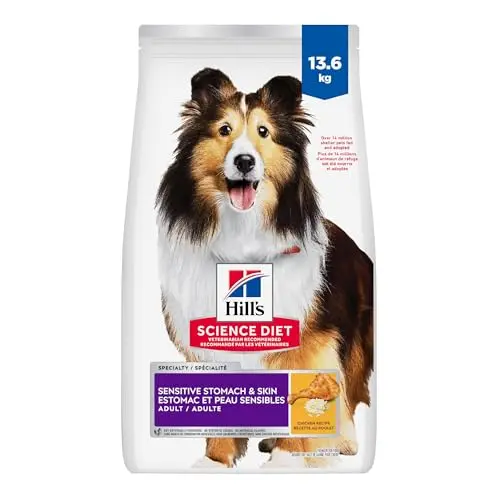
Sensitive Stomach & Skin Chicken Recipe – Gentle Digestion & Skin Support
A veterinary-recommended dry kibble that targets both digestive and skin sensitivities with prebiotic fiber and omega fatty acids.
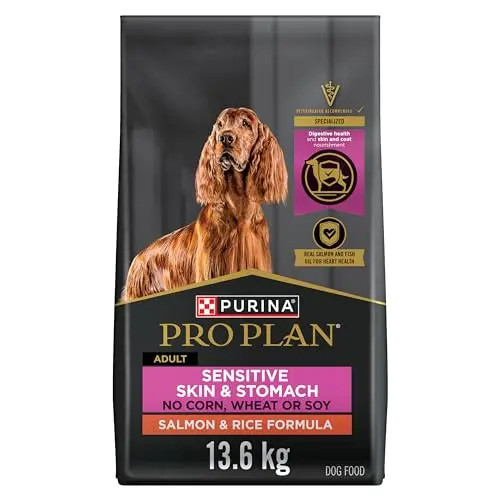
Sensitive Skin & Stomach Salmon & Rice – Omega-Rich Allergy Support
A salmon-first formula rich in omega fatty acids to calm skin flare-ups and support joint health, with easily digestible oat meal for sensitive stomachs.
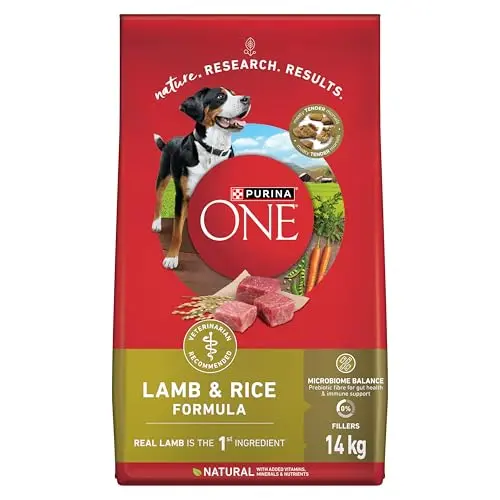
Microbiome Balance Lamb & Rice – Gut Health Foundation
A budget-friendly option that prioritizes digestive health with prebiotic fibre to support a balanced gut microbiome.
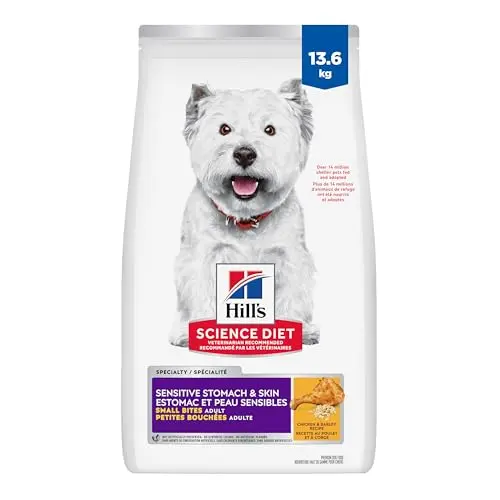
Sensitive Stomach & Skin Small Bites – Easy Chew for Small Dogs
The same trusted sensitive formula in a smaller kibble size, perfect for small breeds or dogs who struggle with standard-sized biscuits.
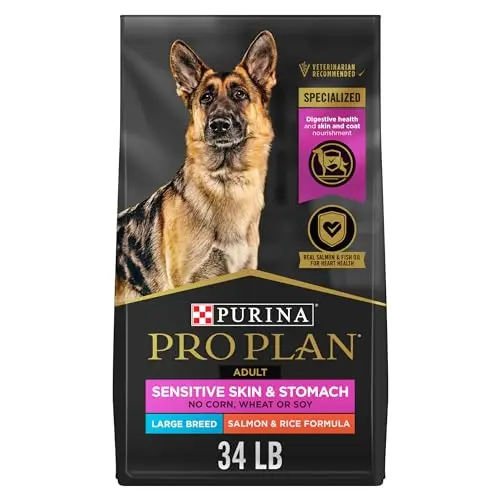
Large Breed Sensitive Skin & Stomach Salmon & Rice – Joint & Allergy Care
Designed for large dogs, this formula adds joint-supporting glucosamine and EPA to the skin-soothing omega fatty acids and easy-digesting oat meal.

Superfood Blend Salmon, Egg & Pumpkin – Limited Ingredient Diet
A limited-ingredient formula that avoids common allergens like corn, wheat, and soy, using real salmon as the primary protein.
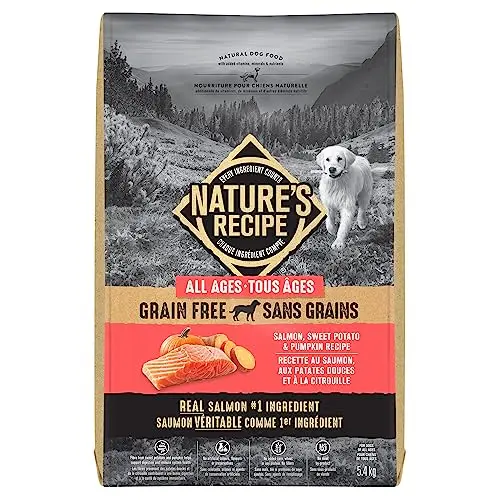
Grain Free Salmon, Sweet Potato & Pumpkin – Fish-Based Allergy Relief
A grain-free recipe featuring salmon as the first ingredient, plus pumpkin for fibre, aimed at dogs with grain sensitivities.
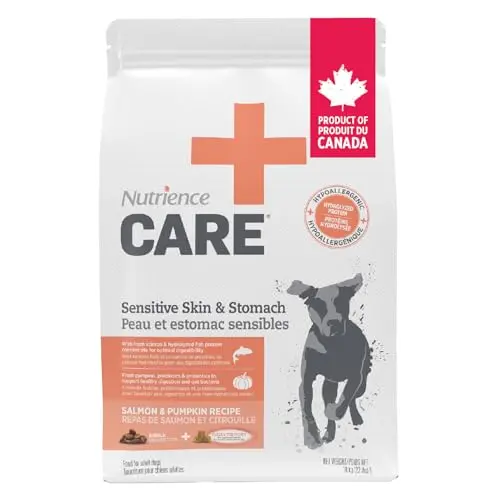
Care Sensitive Skin & Stomach Salmon – Canadian-Made Hypoallergenic
A Canadian-formulated diet with novel salmon protein, pumpkin, and a probiotic blend to soothe sensitive systems.
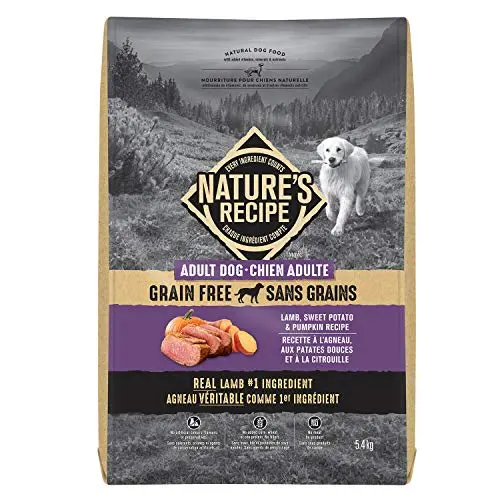
Grain Free Lamb, Sweet Potato & Pumpkin – Alternative Protein Source
A grain-free lamb recipe that offers an alternative protein for dogs who may not tolerate chicken or fish.
How We Evaluated These Dog Foods for Dogs with Food Allergies
We didn’t conduct veterinary-supervised feeding trials or lab allergen testing. What we did: cross-referenced 9 dog foods from 6 distinct brands across 7 decision axes – protein source, allergen avoidance, omega fatty acid content, prebiotic and probiotic inclusion, ingredient transparency, kibble size suitability, and real-world owner feedback. We triangulated published specifications, aggregated owner feedback where available, and use-case fit against representative allergy profiles for dogs.
The scoring framework weighted real-world allergy relief (60%) – how effectively each formula addresses common food sensitivity symptoms – against feature differentiation (40%) – unique functional ingredients and formula innovation. We have no commercial relationship with any of the brands featured; recommendations track fit and differentiation, not brand preference. If your dog battles itchy skin and digestive upset, the Hill’s Science Diet Sensitive Stomach & Skin is the top pick; if you want high-protein allergy support without the premium price, the Purina Pro Plan Sensitive Skin & Stomach delivers exceptional value.
How to Choose the Right Dog Food for Dogs with Food Allergies
Understanding Food Allergies in Dogs: What to Look For
Food allergies in dogs typically manifest as skin issues – itching, rashes, ear infections – or digestive problems like vomiting and diarrhea. The most common triggers are proteins such as chicken, beef, or dairy, though grains and other carbohydrates can also cause reactions. When choosing a food, the first step is identifying the likely allergen. Look for formulas that feature novel proteins (like salmon or lamb) or hydrolyzed proteins if your vet recommends them. Many allergy-friendly foods also avoid common fillers like corn, wheat, and soy, which can exacerbate sensitivities.
Key Ingredients That Soothe Sensitive Stomachs and Skin
For dogs with allergies, ingredients that support the gut-skin axis are critical. Omega-3 and omega-6 fatty acids (from fish oil or sunflower oil) reduce inflammation and improve coat health. Prebiotic fibers like beet pulp or oat meal feed beneficial gut bacteria, aiding digestion. Probiotics (found in some premium formulas) directly repopulate healthy microbes. Additionally, easily digestible carbohydrates like rice or sweet potato put less strain on the digestive system.
Grain-Free vs. Grain-Inclusive: Which Is Better for Allergic Dogs?
The grain-free trend isn’t always necessary for allergies. While some dogs are sensitive to gluten or specific grains like corn and wheat, many do well on grain-inclusive diets that use whole grains like brown rice or oatmeal. For dogs with suspected grain allergies, a grain-free formula containing pumpkin or sweet potato as carbohydrate sources can be worth trying. However, recent research links some grain-free diets to heart issues in dogs, so consult your vet before going grain-free long-term.
Limited Ingredient Diets: The Elimination Diet Approach
A limited ingredient diet (LID) simplifies the ingredient list to one protein and one carbohydrate, making it easier to pinpoint triggers. Our Beyond Superfood Blend exemplifies this with salmon as the sole animal protein, avoiding common allergens like chicken and beef. LIDs are often the starting point for an elimination diet trial; they’re not a permanent solution for all dogs but can provide clear answers when allergies are suspected.
Hill's Science Diet vs Purina Pro Plan: Which Sensitive Formula Works Best?
Both brands offer vet-recommended sensitive skin and stomach formulas, but they take slightly different approaches. Hill’s Science Diet Sensitive Stomach & Skin relies on a gentle, highly digestible chicken recipe with prebiotic fiber and omega-6, making it ideal for dogs with straightforward sensitivities. Purina Pro Plan Sensitive Skin & Stomach uses salmon as a novel protein, rich in omega-3s for joint and skin health, and includes both prebiotic fiber and oat meal. If your dog shows signs of joint stiffness alongside allergies, Pro Plan’s formula pulls double duty.
How to Transition Your Dog to a New Allergy-Friendly Food
Switching foods abruptly can upset even a healthy stomach. For an allergy-prone dog, a gradual transition over 7-10 days is essential. Start with 25% new food mixed with 75% old, and slowly increase the ratio. Watch for any worsening of symptoms – if itching flares or stool becomes loose, pause and reassess. Keep a food diary during this period to track changes.
What to Avoid: Common Allergens in Dog Food
Beyond the primary proteins, steer clear of artificial colours, flavours, and preservatives, which can irritate sensitive systems. By-products and unnamed meat meals are less predictable; look for clearly labelled, single-source proteins like ‘salmon meal’ or ‘chicken meal’. Also avoid excessive fillers such as corn gluten meal, which offers little nutritional value for allergic dogs.
Frequently Asked Questions
What's the difference between Hill's Science Diet and Purina Pro Plan for allergies?
Hill’s Science Diet Sensitive Stomach & Skin uses chicken as its protein source with beet pulp prebiotic, focusing heavily on digestive gentleness. Purina Pro Plan Sensitive Skin & Stomach opts for salmon, offering higher omega-3 fatty acids from fish oil, which also benefits joint health. If your dog is potentially allergic to chicken, Pro Plan’s novel protein may be the safer bet. Both are backed by extensive research and work well for most mild to moderate allergies. You can read more about Hill’s Science Diet in our detailed review.
Is a grain-free dog food necessary for managing allergies?
Not necessarily. True grain allergies are relatively rare; most food allergies stem from animal proteins. However, some dogs with sensitive digestive systems do better without corn, wheat, or soy. A grain-free diet like Nature’s Recipe or Nutrience can be worth trying if your dog shows gastrointestinal distress on grain-inclusive foods. Always transition slowly, and monitor for any improvement in symptoms.
How long does it take for allergy symptoms to improve on a new food?
You may see digestive improvements within a few days, but skin issues can take 6-8 weeks to fully resolve as the body clears inflammatory triggers. Consistency is key – even a small treat outside the diet can restart the reaction. If there’s no change after 12 weeks, consider a different protein source or consult your vet about an elimination diet.
What's the difference between the Nature's Recipe and Nutrience grain-free dog foods?
Both are grain-free, but they cater to slightly different needs. Nature’s Recipe offers straightforward, budget-friendly formulas with either salmon or lamb as the first ingredient and no artificial additives. Nutrience Care takes a more comprehensive approach, incorporating their Digestiboost blend of pumpkin, chicory root, turmeric, and ginger to aggressively target gut health. Nutrience is a premium pick for dogs with persistent digestive issues, while Nature’s Recipe is an accessible starting point. For more details, check out the Nutrience Care formula.
Final Verdict
For the vast majority of dogs with food allergies, the Hill’s Science Diet Sensitive Stomach & Skin hits the sweet spot of efficacy, palatability, and veterinary trust. It clears up both skin and stomach issues without fuss. If you’re watching your wallet, the Purina ONE Microbiome Balance delivers solid digestive support for a fraction of the cost. For dogs that need a novel protein, the Purina Pro Plan Sensitive Skin & Stomach with salmon is a proven performer. Small breed? Go with the Hill’s Small Bites. Allergy management is a journey, but the right food makes all the difference.