
After cleaning yet another slobber-dusted floor around a traditional water bowl, many dog owners start to wonder if there’s a better way. A steady supply of clean, filtered water not only keeps your dog hydrated but also cuts down on the biofilm, hair, and debris that collect in standing water. The category of filtered dog water bowls has exploded, but not every model actually delivers on the promise of fresher, cleaner water.
We looked at gravity-fed dispensers that use replaceable filters – the simplest, most reliable way to filter without pumps or electricity. The real differentiators come down to capacity, bowl material, and how well the filtration system holds up over days. This guide sorts through five cross-brand options to help you match a bowl to your dog’s size, drinking habits, and your tolerance for upkeep.
Best Filtered Dog Water Bowls – 2026 Reviews
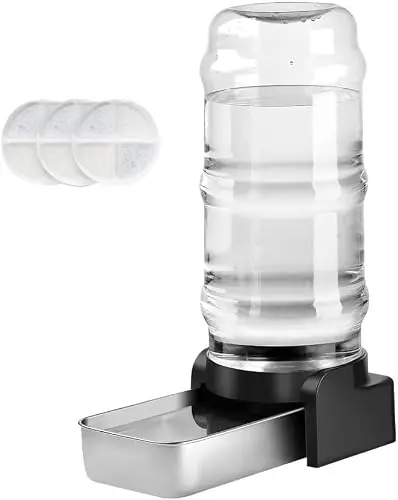
A218XL – High-Capacity Stainless Steel Filtered Water Station
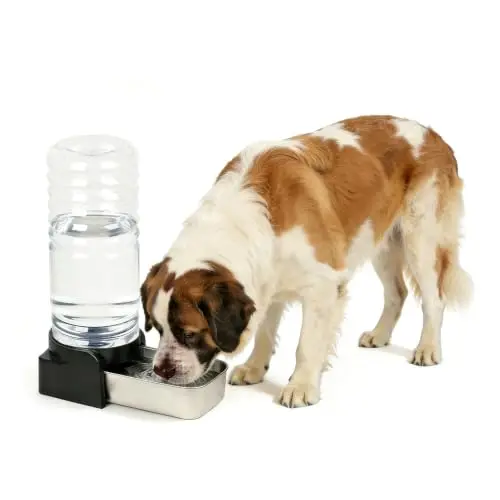
Ricoreich-005 – Extra-Large Triple-Filtration Dispenser
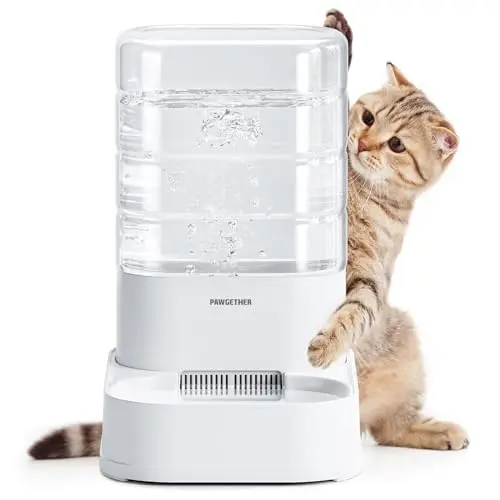
Gravity Waterer – Budget-Friendly Filtration for Small Pets
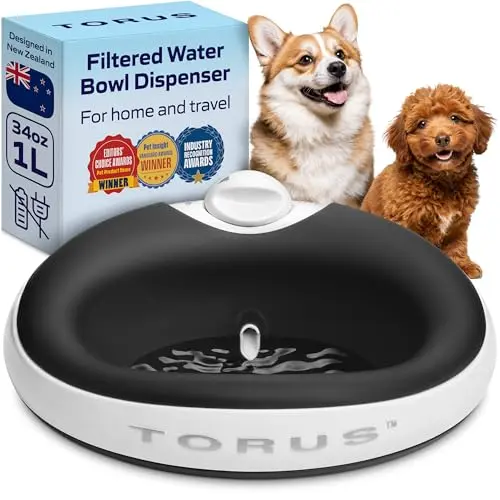
TR1LC2020 – Portable No-Spill Filtered Bowl
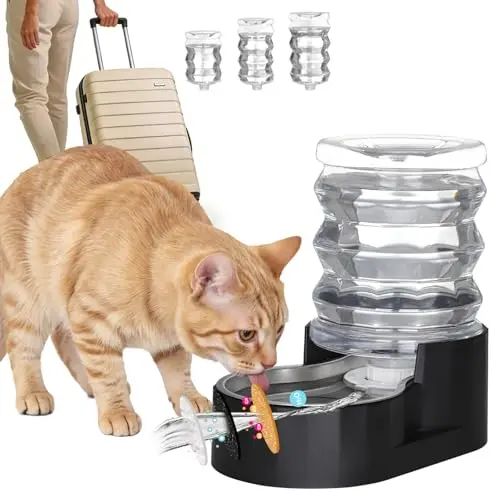
EUQJ-Q – Compact Stainless Steel Hydration
How We Evaluated These Filtered Dog Water Bowls
We didn’t run these through lab water-quality tests or long-term material durability trials. What we did: cross-referenced five filtered dog water bowls from five distinct brands across six decision axes – filtration type and effectiveness, capacity, bowl material, stability and spill resistance, ease of cleaning, and suitability for breed size. We triangulated published specifications, owner feedback where available, and use-case fit against common real-world hydration scenarios.
The scoring framework weighted real-world performance and filtration quality (60%) – how well each bowl delivers consistently clean water – against feature differentiation (40%) – unique design choices like stainless steel construction, multi-stage filters, and portability. We have no commercial relationship with any of the brands featured; recommendations track fit and differentiation, not brand preference. If you’re looking for the best all-around filtered bowl, the Marchul A218XL is our top pick; if you need an extra-large reservoir, the Ricoreich-005 serves big dogs better.
How to Choose the Right Filtered Dog Water Bowl
What Makes a Dog Water Bowl 'Filtered'?
The core idea is simple: a replaceable cartridge sits between the water reservoir and the drinking bowl, trapping hair, debris, and impurities while activated carbon reduces odours and improves taste. Most gravity-fed filtered bowls use one or more filters with a combination of mechanical (mesh or cotton) and chemical (carbon) stages. The real test is how well the filter holds up over a week of use – cheaper single-stage filters can lose effectiveness quickly, while triple-filtration systems with nano cotton and carbon tend to keep water noticeably fresher longer. Look for bowls that make swapping the filter straightforward and that sell replacements in multi-packs to keep costs down.
Capacity: How Much Water Does Your Dog Need?
A 1-litre bowl works for a cat or Chihuahua but will leave a Labrador thirsty in an hour. As a rule of thumb, a healthy dog drinks about 30-50 ml of water per kg of body weight daily – so a 15 kg Cocker Spaniel might get through 750 ml per day. That means a 1-litre bowl like the Torus needs refilling at least daily, while the 9-litre Ricoreich-005 can keep a large dog hydrated for nearly a week. If you have multiple pets, err on the larger side to avoid the bowl running dry. Also consider how often you’re home; a busy schedule suits a high-capacity model.
Stainless Steel vs. Plastic Bowls
Stainless steel is the gold standard for hygiene – it resists scratches that trap bacteria, doesn’t leach chemicals, and feels more substantial on the floor. Bowls like the Marchul and Ricoreich use 304 stainless steel that stays odour-free and cleans easily. Plastic bowls, like the PAWGETHER and Torus, are lighter and often cheaper, but they can develop micro-scratches over time that hold onto biofilm. If your dog is a determined chewer, stainless steel also wins on durability. For most medium-to-large breeds, a stainless steel bowl is a worthwhile upgrade.
Filter Types and Replacement Schedules
Most filtered bowls use a combination of cotton, mesh, and activated carbon. Some, like the PAWGETHER, pack these into a single flat disc; others, like the Marchul and Ricoreich, use multiple separate cartridges. Multi-filter systems tend to last longer between changes and do a better job of catching fine particles. Count on swapping filters every 2-4 weeks, depending on use, and check that the brand’s replacements are readily available online. Avoid bowls where the filter is a proprietary oddity that might be discontinued – a quick search for “replacement filter” plus the model number should turn up multi-packs easily.
Stability and Spill Prevention
No one wants a soaked kitchen floor. Look for non-slip rubber feet that actually grip tile or hardwood – the Marchul and Ricoreich excel here with four sturdy corner pads. Bowl shape also matters: a wide, heavy base resists tipping from a paw. The Torus goes a step further with a no-spill lip that keeps water from sloshing out during travel, making it the best choice for RV or car use. If your dog is an enthusiastic drinker, a dispenser with a slow-flow gravity valve also reduces splashback.
Cleaning and Maintenance
All these bowls need a weekly scrub to stay hygienic. Split designs that let you separate the tank from the base make this much easier – the Marchul, RIZZARI, and Ricoreich all break down quickly. Stainless steel bowls can be tossed in the dishwasher (top rack), while plastic ones usually need hand washing. A bottle brush is handy for getting inside the narrow tank neck, and some brands include one. Don’t forget to remove and rinse the filter when you clean to avoid trapped gunk.
Frequently Asked Questions
Are all filtered dog water bowls effective at purifying water?
Not equally. Basic models may use a single carbon pad that mainly reduces chlorine taste, while more advanced options like the Marchul combine mechanical and chemical stages. A bowl is only as good as its filter, so look for multi-layer designs that physically trap debris and genuinely improve taste. The real difference shows after a few days – better filters keep water from developing a staleness or slime film.
How often should I change the water filter?
Most manufacturers recommend every 2-4 weeks, but that depends on how many pets use the bowl and the ambient temperature (warmer rooms breed bacteria faster). If the water starts to look cloudy or smell off before the month is up, swap it sooner. Buying replacement filters in bulk is usually cheaper – check if your chosen bowl’s brand offers multi-packs.
What's the difference between the Marchul A218XL and the Ricoreich-005?
Both use stainless steel bowls and triple filtration, but the Marchul A218XL targets medium dogs with an 8.6L tank and a heavy, stable base. The Ricoreich-005 ups the capacity to 9L and is better suited for large dogs or multi-pet homes; its tank is transparent so you can monitor water level without lifting. The Ricoreich is slightly lighter and more portable, while the Marchul feels more robust on the floor. If your dog is 30-50 lbs, the Marchul is the better everyday pick; for dogs over 50 lbs or multiple drinkers, the Ricoreich’s extra capacity wins.
Can a filtered water bowl replace a pet fountain?
Yes, if your primary goal is cleaner, better-tasting water. Fountains add aeration and a moving-water appeal that some cats and dogs love, but gravity-fed filtered bowls do the filtration part without electricity, pump noise, or motor maintenance. If your pet already drinks readily from a still bowl, a filtered gravity dispenser is simpler, quieter, and cheaper to run. The PAWGETHER in particular mimics the silent, low-profile convenience of a regular bowl while still filtering water.
Is a stainless steel bowl better than plastic for dogs?
Generally yes. Stainless steel is non-porous, so it resists bacterial buildup and doesn’t absorb odours. It’s also less likely to cause chin acne in sensitive dogs. Plastic bowls are lighter and more affordable, but they can get scratched – and those scratches are perfect hideouts for biofilm. If you can swing the slightly higher investment, stainless steel bowls like those on the Marchul or RIZZARI are the way to go.
What size filtered bowl do I need for my labrador?
Labradors are big drinkers – expect a 30 kg lab to go through about 1.5 litres a day. A bowl with at least a 5L reservoir will keep up, but for convenience, the 9-litre Ricoreich-005 or 8.6-litre Marchul will need refilling only a couple of times a week. Avoid anything under 3 litres for a breed this size, unless you’re happy to top up daily.
Final Verdict
For most dog owners, the Marchul A218XL hits the sweet spot: robust stainless steel build, triple filtration that actually maintains water quality, and a generous 8.6L tank suited to medium breeds. If your pup is on the larger side or you manage a multi-dog household, the Ricoreich-005 and its 9L reservoir will cut refills to once or twice a week. Budget-conscious shoppers can get solid filtration from the PAWGETHER, and road-trippers need the spill-proof, portable design of the Torus TR1LC2020. Whichever fits your life, a quality filtered bowl is a simple upgrade that makes hydration cleaner and easier – and your dog’s water will taste a whole lot better.