
Feeding a giant breed puppy isn’t just about filling a bowl – it’s about managing a delicate growth trajectory that will see your pup balloon from a fluffy ball into a 45 kg adult in under two years. The wrong diet can push those long bones to grow too fast, setting the stage for joint problems that last a lifetime. That’s why the food you choose now matters more than for almost any other type of dog.
The market for giant breed puppy food has expanded dramatically, with options ranging from budget-friendly basics to premium formulas loaded with extras like glucosamine and probiotics. But not all are created equal. In this guide we cut through the noise, comparing protein sources, DHA levels for brain development, calcium-phosphorus ratios for bone health, and real-world palatability to help you find the right food for your extra-large pup.
We evaluated seven formulas across five brands – Purina Pro Plan, Purina ONE, Royal Canin, Blue Buffalo, and Hill’s Science Diet – to identify the best overall, the best budget pick, and the best food tailored specifically for giant breeds. Whether your Great Dane, Mastiff, or Saint Bernard is just starting on solids or nearing that growth spurt, there’s a match here.
Best Food for Giant Breed Puppies – 2026 Reviews
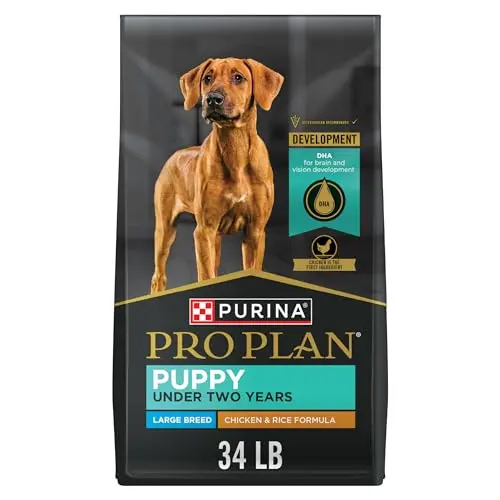
Large Breed Puppy Chicken & Rice – Brain & Vision Support
Purina Pro Plan’s Large Breed formula combines real chicken with DHA from omega-rich fish oil to support brain and vision development. The crunchy kibble mixed with tender meaty shreds appeals to picky eaters, while guaranteed live probiotics aid digestion – a critical perk for large litters where sensitive stomachs are common.
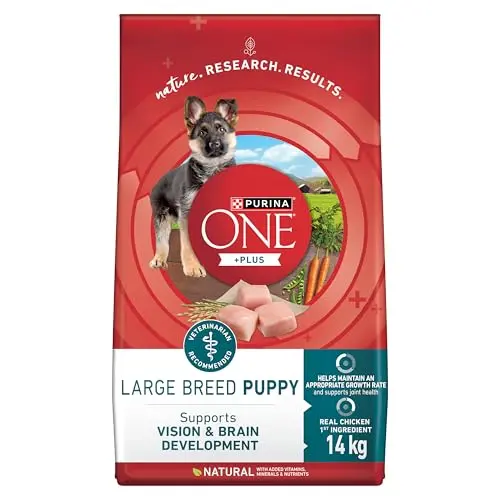
Large Breed Puppy Chicken – Joint & Brain Development
Purina ONE +Plus Large Breed Puppy food delivers a surprising amount of nutrition for the price. Real chicken leads the ingredients, and it’s fortified with DHA for brain development along with natural sources of glucosamine for joint health. The dual-defense antioxidant blend rounds out a solid, all-around formula that doesn’t break the bank.
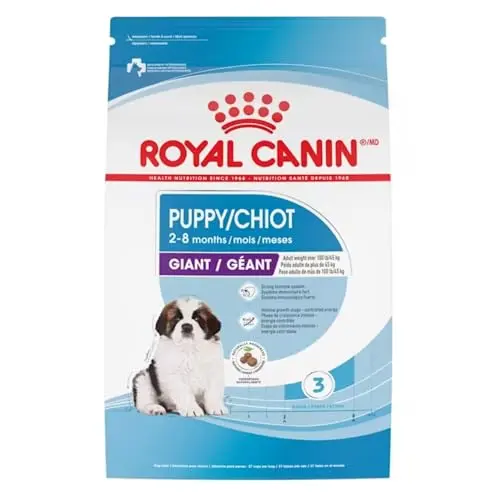
Giant Puppy Formula – Tailored for Extra-Large Breeds
Royal Canin’s Giant Puppy formula is one of the few foods specifically designed for puppies expected to top 100 lbs as adults. It pays close attention to calcium and phosphorus balance for controlled bone growth, while prebiotics and digestible proteins support the gut health that giant breeds often struggle with. The crunchy kibble size is adapted for large puppy mouths.
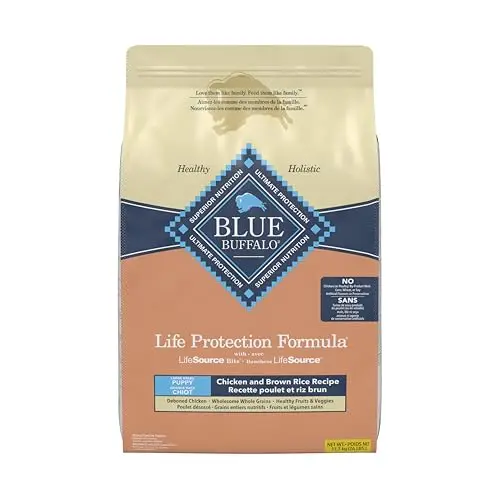
Life Protection Large Breed – Immune-Boosting LifeSource Bits
Blue Buffalo’s Life Protection formula for large breed puppies starts with real chicken and adds their signature LifeSource Bits – a cold-formed blend of antioxidants, vitamins, and minerals. It avoids corn, wheat, and soy, leaning on wholesome grains like brown rice and oatmeal for steady energy. Added DHA and ARA support early development.
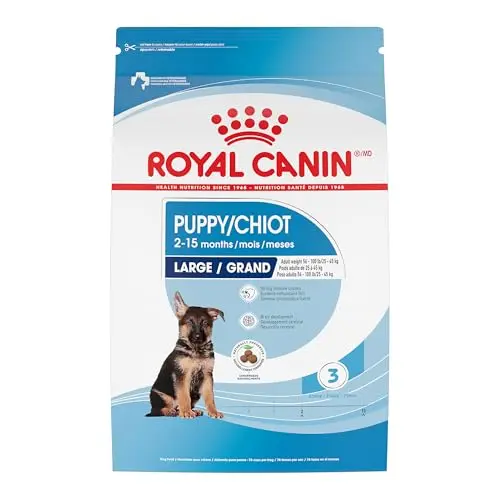
Large Puppy Formula – Optimized for 56-100 lb Breeds
Royal Canin’s Large Puppy formula is engineered for breeds that will mature between 56 and 100 lbs, such as Labradors, Golden Retrievers, and standard Poodles. It includes a specialized mineral blend for bone and joint support, clinically proven antioxidants, and an exclusive kibble design that encourages chewing rather than gulping.
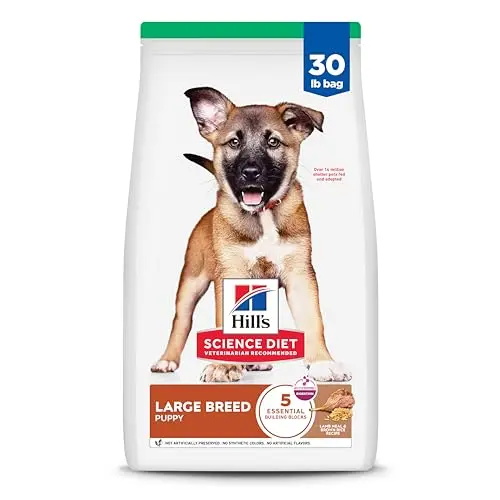
Large Breed Lamb & Brown Rice – Digestive & Immune Health
Hill’s Science Diet Large Breed Puppy food uses lamb meal for a high-quality protein base and pairs it with brown rice for digestible energy. Balanced minerals support controlled bone growth, while DHA from fish oil fuels brain and eye development. An antioxidant blend helps strengthen the developing immune system.
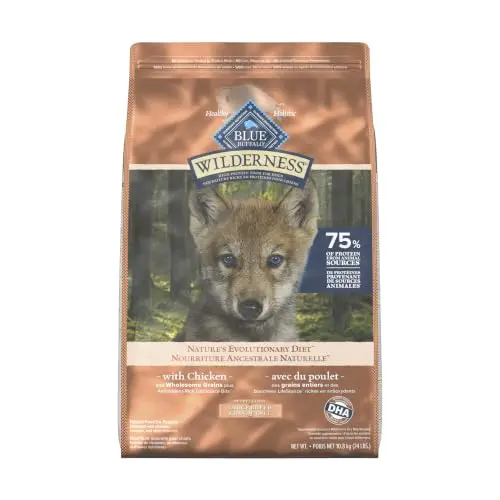
Wilderness Large Breed – High-Protein Muscle Development
Blue Buffalo Wilderness pumps the protein up to 35% with real chicken, targeting the lean muscle needs of large breed puppies. Wholesome grains and LifeSource Bits provide balanced energy and immune support, while added glucosamine caters to joint health. It’s free of corn, wheat, soy, and artificial additives.
How We Evaluated These Foods for Giant Breed Puppies
We didn’t run controlled feeding trials in a kennel. What we did: cross-referenced 7 puppy food formulas from 5 distinct brands across 6 decision axes – protein quality and source, DHA levels for brain development, calcium-phosphorus balance for bone growth, joint support ingredients like glucosamine, digestive health features (probiotics, fibre), and ingredient transparency (no by-products, artificial additives). We triangulated published specifications, aggregated owner feedback where available, and use-case fit against representative giant breed puppy profiles – Great Danes, Mastiffs, Saint Bernards.
The scoring framework weighted real-world performance (60%) – how well each food supports measured, proportional growth – against feature differentiation (40%) – unique advantages like LifeSource Bits or tailored giant breed formulations. We have no commercial relationship with any of the brands featured; recommendations track fit and differentiation, not brand preference. If you’re after the all-around best for most giant pups, the Purina Pro Plan Large Breed is your match; if you need a giant-breed specialist, Royal Canin Giant Puppy serves you better.
How to Choose the Right Food for Giant Breed Puppies
Why Giant Breed Puppies Need Specialized Nutrition
Giant breeds like Great Danes, Mastiffs, and Newfoundlands don’t just grow bigger – they grow faster and for longer than smaller dogs. A 70 kg adult Great Dane might have reached half that weight by 6 months of age. This rapid growth puts enormous strain on developing bones and joints. The key is controlled, steady growth, not maximum growth. Puppies fed too much energy or calcium too early risk developmental orthopaedic diseases like hip dysplasia and osteochondrosis. Giant breed puppy foods are formulated with adjusted calcium-to-phosphorus ratios (ideally around 1.2:1 to 1.4:1) and moderate energy density to avoid growth spurts that outpace the skeleton. If you’re not feeding a giant-specific food, at minimum choose a large breed puppy formula – general puppy foods rarely account for these needs.
Key Nutrients for Giant Breed Puppy Growth
Focus on these four nutrient groups when scanning labels:
- Protein: High-quality from real meat, poultry, or fish. It fuels muscle development, but high protein alone isn’t enough – it must be digestible. Look for chicken meal, lamb meal, or salmon meal as first ingredients. For giant breeds, aim for 26-30% crude protein in the guaranteed analysis.
- DHA & Omega-3s: DHA (docosahexaenoic acid) from fish oil is critical for brain and vision development during puppyhood. It’s a non-negotiable for sharp learning and training. Many formulas now include it, but check the source – marine-based DHA is most bioavailable.
- Calcium & Phosphorus: The most critical minerals for giant breed bone health. Foods should list calcium between 0.8-1.2% on a dry matter basis, with a Ca:P ratio close to 1.2:1. Too much calcium can cause irreversible skeletal damage, so avoid supplements unless a vet prescribes them.
- Joint Support: Natural glucosamine and chondroitin from chicken cartilage or green-lipped mussel are early-stage joint supporters. While not a cure-all, they help lubricate joints as heavy pups start moving. Some foods also add MSM or hyaluronic acid.
Digestive Health and Probiotics for Sensitive Stomachs
Giant breed puppies often have sensitive digestion, made worse by stress, diet changes, or the sheer volume of food they consume. Look for foods with guaranteed live probiotics – like those in Purina Pro Plan – or prebiotic fibres (chicory root, beet pulp) that feed good gut bacteria. These help firm up stools and reduce the risk of colitis that can plague large breeds. Some owners find that grain-inclusive formulas with rice or oatmeal are easier on the stomach than grain-free options, though every pup is different. A gradual transition over 7-10 days when switching foods is essential – giant puppies don’t tolerate abrupt changes well.
Ingredient Quality: What to Avoid
Avoid foods with generic meat by-products or unnamed protein sources – they make it impossible to gauge quality. Artificial colours, flavours, or preservatives have no place in a growing puppy’s diet and can trigger sensitivities. Corn, wheat, and soy are often flagged as fillers, but for most puppies, quality whole grains like brown rice are perfectly fine unless a specific allergy exists. Some brands, like Blue Buffalo, explicitly avoid poultry by-product meals, which can be reassuring. However, don’t assume that high protein percentages automatically make a food better – for giant breeds, balanced nutrition trumps raw protein numbers every time.
How to Switch Puppy Foods Without Stomach Upset
A rushed food switch can trigger diarrhoea or vomiting, which is riskier for giant breeds given their fast metabolism. Over 7-10 days, mix the new food with the old, gradually increasing the proportion of new. Day 1-3: 25% new; Day 4-6: 50%; Day 7-9: 75%; Day 10: 100%. Watch for loose stools or discomfort – if issues arise, slow down. For puppies transitioning from mother’s milk or wet food to kibble, soften the kibble with warm water initially. Always provide plenty of fresh water, especially with dry food, to prevent bloat, a life-threatening emergency in deep-chested giant breeds.
Royal Canin Giant vs. Purina Pro Plan Large Breed: Which for Giant Pups?
This is the most common cross-brand question for giant breed owners. Royal Canin Giant Puppy is specifically formulated for dogs over 100 lbs adult weight, with a precise calcium-phosphorus ratio and kibble size for massive jaws. Purina Pro Plan Large Breed targets a broader large breed category (50-100 lbs) but still carries many giant-friendly features. In practice, if your pup’s expected adult weight is well over 90 lbs – a true giant – Royal Canin’s tailored approach is worth the premium. If your dog will land in the 70-90 lb range, Pro Plan offers similar nutrition at a friendlier price and with a probiotic advantage that many owners prefer. For the biggest of the big, Royal Canin Giant Puppy is purpose-built; for almost-giant or mixed large breeds, Pro Plan wins on value and everyday performance.
Frequently Asked Questions
What's the difference between Royal Canin Giant Puppy and Purina Pro Plan Large Breed for a Great Dane?
Royal Canin Giant Puppy is specifically calibrated for dogs expected to exceed 100 lbs, with a lower calcium and phosphorus balance to prevent accelerated bone growth in massive dogs like Great Danes. Its kibble size is larger and uniquely shaped to encourage chewing, which can reduce bloat risk. Purina Pro Plan Large Breed is a more general large breed formula that works for dogs in the 50-100 lb range, but many Dane owners find it effective too – it includes live probiotics for digestion, which is a plus for sensitive stomachs. For a pure Great Dane, Royal Canin Giant is the safer bet; if your Dane is mixed or on the smaller side, Pro Plan may be sufficient.
How does Blue Buffalo compare to Hill's Science Diet for large breed puppies?
Blue Buffalo emphasizes natural ingredients and the exclusion of by-products, corn, wheat, and soy. Its LifeSource Bits provide a cold-pressed nutrient boost. Hill’s Science Diet takes a clinical, veterinarian-backed approach with precise mineral ratios for bone growth and often includes lamb or novel proteins for pups with chicken sensitivities. In terms of digestive support, Hill’s tends to be gentler during transitions, while Blue Buffalo wins on ingredient purity perceptions. Both are excellent for large breed puppies, but if your pup has a chicken allergy, Hill’s lamb formula is a standout.
When should I switch my giant breed puppy to adult food?
Giant breeds mature slowly – don’t switch before 18-24 months. Switching too early can deprive the body of the controlled growth nutrients that giant puppy foods provide. Some brands, like Royal Canin, recommend a junior formula from 8-24 months that bridges puppy and adult stages. Watch for signs that growth has levelled off (height at withers stabilising) before making the move, and consult your vet. For the very largest breeds, extending puppy food until 24 months is common.
Do giant breed puppies need grain-free food?
No – grain-free is not necessary for giant breed puppies unless a specific grain allergy is diagnosed. In fact, whole grains like brown rice and oatmeal provide stable energy and dietary fibre that support digestive health. Recent research has linked some grain-free diets to dilated cardiomyopathy (DCM) in dogs, so sticking with grain-inclusive, high-quality formulas is generally safer. All of our top picks contain grains for good reason.
Final Verdict
For most giant breed puppies, the Purina Pro Plan Large Breed Chicken & Rice is the clear best overall – it delivers complete, probiotic-backed nutrition that promotes steady growth and healthy digestion at a reasonable price. If you’re on a tighter budget, the Purina ONE Large Breed Puppy gives you most of that quality for less. For true giant breeds predicted to top 100 lbs, the Royal Canin Giant Puppy is purpose-built and unmatched. Whichever you choose, remember that controlled, steady growth is the goal – and these formulas all help you get there.