
Staring down the Blue Wilderness lineup can feel like walking into a specialty butcher shop – everything looks high-quality, but which protein and format actually fits your dog’s needs? From grain-free dry kibble packed with wild-caught salmon to pâté-style wet food loaded with beef and chicken, the Wilderness line spans enough variety to serve very different pups. That’s a good problem to have, but it makes picking the right bag (or can) a real decision.
We’ve mapped the four most popular Blue Wilderness recipes against what matters most for your dog – protein source, wet versus dry, grain content, and the key benefit each formula emphasizes. Whether you’re dealing with a picky eater, a suspected chicken sensitivity, or just want to nail the best daily nutrition, this guide will route you to the right meal.
Best Blue Wilderness Dog Food – 2026 Reviews
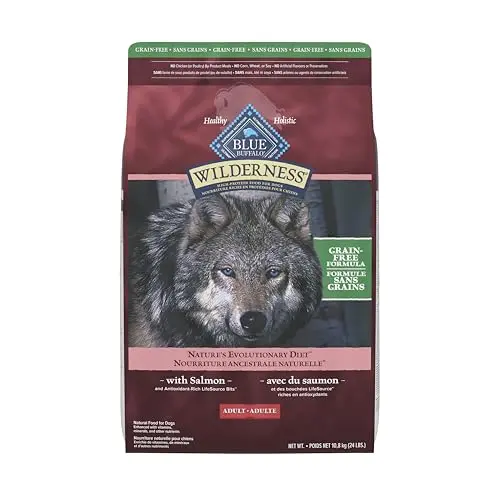
Salmon Recipe Dry Food – Skin & Coat Support
This grain-free dry food leads with wild-caught salmon and packs 34% protein, targeting adult dogs that need active muscle support and a shiny coat. It’s our go-to recommendation for most dogs thanks to its balance of high protein, omega fatty acids, and immune-boosting LifeSource Bits.
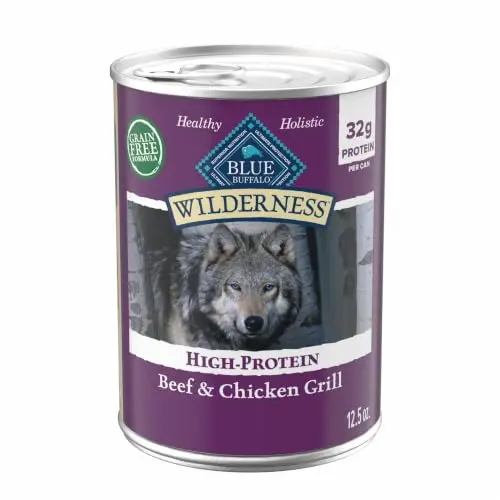
Beef & Chicken Grill Wet Food – Protein-Rich Pâté
This pâté-style wet food puts real beef and chicken front and centre, skipping grains and fillers. It’s an excellent choice for dogs who need extra hydration, struggle with kibble texture, or simply prefer a meatier meal experience.
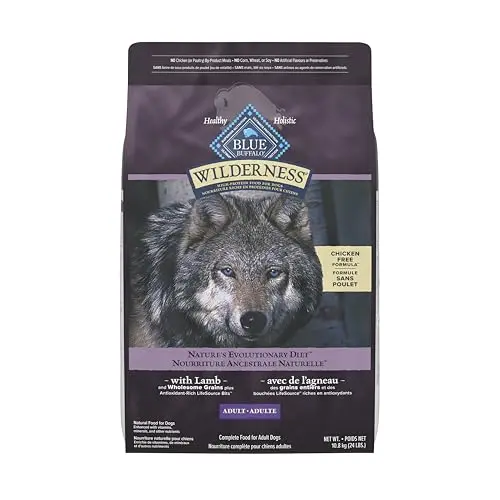
Lamb Recipe with Wholesome Grains – Chicken-Free Formula
Built for dogs with chicken sensitivities, this lamb-based dry food skips all poultry and instead relies on wholesome grains like oats and brown rice for steady energy. It’s our top pick for pups that need a novel protein source without going grain-free.
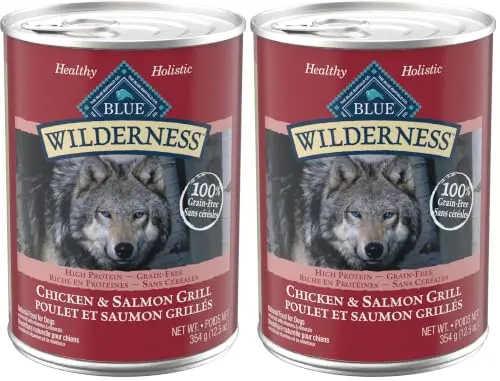
Salmon & Chicken Grill Wet Food – Bulk Seafood Value
This 24-can bulk pack combines real salmon and chicken in a grain-free pâté, offering a seafood twist on the classic wet food. It’s a practical choice for multi-dog homes committed to canned feeding, though feedback is still emerging.
How We Evaluated These Blue Wilderness Dog Food Formulas
We didn’t run controlled feeding trials or send kibble to a lab. What we did: cross-referenced 4 Blue Wilderness recipes across 5 decision axes – protein source, wet versus dry format, grain inclusion, targeted health benefits, and ingredient quality. We triangulated published nutritional specifications, ingredient deck transparency, and aggregated owner feedback where available to separate meaningful differences from marketing noise.
The scoring framework weighted real-world suitability (60%) – how well each formula fits common dog needs and households – against feature differentiation (40%) – unique protein profiles, format advantages, and allergy-sensitive formulations. Because this lineup comes entirely from the Blue Wilderness family, we focused on mapping each recipe to the right dog rather than comparing brands; our recommendations track which formula solves specific feeding challenges best. If you’re after a high-protein dry food that works for most adult dogs, the Salmon Recipe is the pick; if your dog thrives on wet food, the Beef & Chicken Grill earns its place.
How to Choose the Right Blue Wilderness Dog Food
Wet vs. Dry: Which Blue Wilderness Format Suits Your Dog?
The first fork in the road is texture and moisture. Dry kibbles like the Salmon Recipe and Lamb Recipe offer convenience, dental benefits, and a lower cost per serving. They’re easy to store and measure, making them ideal for most households. Wet foods, on the other hand, bring higher moisture content – up to 78% – which helps hydration, especially in dogs that don’t drink enough water. The Beef & Chicken Grill pâté is great for picky eaters, seniors with dental issues, or as a high-value topper on kibble. Both formats meet the same high-protein philosophy, so the choice often comes down to your dog’s preference and your feeding routine.
Protein Source Showdown: Salmon, Beef, or Lamb?
Blue Wilderness rotates around a few protein anchors, and each brings its own benefits. Salmon (used in the dry Salmon Recipe) is rich in omega-3s, making it a standout for skin and coat health – a common pick for dogs with itching or dull coats. Beef and chicken (in the Beef & Chicken Grill wet food) deliver classic, crowd-pleasing flavours that most dogs devour. Lamb (the Lamb Recipe) serves as a novel protein for dogs with chicken sensitivities; it’s also slightly higher in protein per cup, suiting very active dogs. If your dog hasn’t tried lamb before, it’s often a good diagnostic tool for food allergies – a positive response can point away from poultry issues.
Grain-Free vs. Wholesome Grains: What's Right for Your Pup?
Most Wilderness formulas are grain-free, leaning on peas and potatoes for carbs – ideal for dogs with grain sensitivities or owners who prefer that route. The Salmon Recipe dry food and both wet foods fit this bill. However, the newer Lamb Recipe includes wholesome grains like oats, barley, and brown rice. These complex carbs provide steady, slow-burn energy that can benefit highly active dogs or those that need more lasting fuel. There’s no universal “better” here; it hinges on your dog’s digestive tolerance and activity level. If grain-free works, stick with it; if you want the extra carbohydrates and don’t need to avoid grains, the Lamb Recipe opens a different door.
Key Nutritional Benefits: Omega Fatty Acids and LifeSource Bits
Across the Wilderness line, you’ll see a few recurring nutritional highlights. Omega-3 and omega-6 fatty acids are standard, supporting skin, coat, and joint health – especially prominent in the salmon-based recipes. LifeSource Bits are another Blue Buffalo signature: a cold-formed blend of antioxidants, vitamins, and minerals designed to support immune function. They’re present in both dry formulas and add a layer of wellness beyond basic protein and fat. When comparing recipes, consider whether your dog needs extra skin support (go salmon) or immune reinforcement (any dry food with LifeSource Bits will help).
Considering Your Dog's Size, Age, and Activity Level
All four recipes target adult dogs, but their suitability shifts with size and activity. The high-protein dry foods shine for medium to large, active breeds – the kibble size is generous, and the calorie density supports higher energy output. Small dogs might struggle with the larger kibble pieces; wet food becomes a more manageable alternative. Senior dogs with dental wear often lean toward the pâté textures, which can be licked clean without chewing. If your dog is sedentary or prone to weight gain, be mindful of the rich calorie content in both wet foods and measure portions strictly – a little goes a long way.
Frequently Asked Questions
What's the difference between the Blue Wilderness Salmon dry food and the Lamb Recipe?
The core difference is protein source and grain content. The Salmon Recipe is grain‑free, using wild‑caught salmon as the main ingredient, with an emphasis on omega‑3s for skin and coat health. The Lamb Recipe contains wholesome grains (oats, barley, brown rice) and real lamb, making it completely chicken‑free – a deliberate choice for dogs with poultry allergies. Protein levels are similar (34% vs. 38%), but the Lamb Recipe is slightly higher. If grain‑free matters most, stick with Salmon; if you need a novel protein and don’t mind grains, Lamb is the better fit.
Is all Blue Wilderness dog food grain-free?
Not entirely. The classic Wilderness ethos is grain‑free, and most recipes – like the Salmon Recipe dry food and all wet foods – follow that rule. However, the newer Lamb Recipe intentionally includes wholesome grains to provide complex carbohydrates for sustained energy, recognizing that some dogs thrive on a grain‑inclusive diet. Always check the recipe label; if you see oats, barley, or rice, it’s the grain‑containing formula.
Can I mix Blue Wilderness wet and dry food?
Absolutely. Mixing the Beef & Chicken Grill wet food with the Salmon Recipe dry food can boost palatability and hydration – great for picky eaters or dogs that need extra water intake. Use the wet food as a topper (a spoonful on kibble) or split the daily calories between the two. The protein and ingredient philosophies align well, so you won’t throw off nutritional balance as long as total calories are controlled.
Which Blue Wilderness formula is best for dogs with food allergies?
It depends on the suspected allergen. For chicken allergies, the Lamb Recipe is the go‑to – it’s poultry‑free and uses a novel protein. For grain sensitivities, stick with grain‑free options like the Salmon Recipe dry food or either wet food. Dogs with fish allergies should avoid salmon‑based recipes and lean toward the Beef & Chicken wet food or Lamb dry food. Since many allergy symptoms overlap, consult your vet before pinpointing a culprit, but these recipes give you targeted choices.
Final Verdict
If we had to feed just one Blue Wilderness recipe to the widest range of adult dogs, it’d be the Salmon Recipe dry food. It delivers the high-protein, grain‑free nutrition the Wilderness line is known for, with added omega‑3s and LifeSource Bits that support coat and immune health – a combination that fits most dogs without overcomplicating things.
That said, if your dog lights up at wet food or needs more moisture, the Beef & Chicken Grill is a worthy centrepiece or topper. And for the chicken‑sensitive crowd, the Lamb Recipe with Wholesome Grains opens up a poultry‑free path without sacrificing protein quality. Whatever you pick, all three earn their spot by doing exactly what a good dog food should: putting real meat first and leaving the filler behind.