
If your dog inhales dinner in under 30 seconds, you know the drill – gulping, burping, maybe even the dreaded reverse sneeze that follows a too-fast meal. Fast eating isn’t just messy; it can lead to bloat, indigestion, and long-term health issues. A good slow feeder bowl turns mealtime from a speed-eating contest into a manageable, brain-engaging activity. But with so many maze patterns, materials, and puzzle designs on the market, picking the right one can feel overwhelming.
We’ve scoured the current options to find bowls that actually slow dogs down – across a range of sizes, materials, and complexity levels. Whether your furry speed demon is a Great Dane or a tiny terrier, a bowl that makes them work a little for their kibble can improve digestion and add a dose of mental stimulation. This guide walks you through what to look for, and highlights the standouts for different needs and budgets.
Best Dog Bowls for Fast Eaters – 2026 Reviews
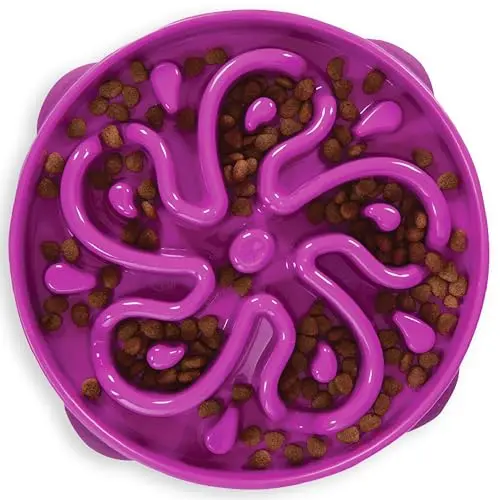
Fun Feeder Slo Bowl (Large) – 4-Cup Deep Maze for Big Breeds
The Outward Hound Fun Feeder Slo Bowl has become the reference point in slow feeder bowls for a reason. The deep, complex maze design extends mealtime up to 10X, and the large size holds a full meal for medium to large dogs. It’s made from food-safe, BPA-free plastic with a non-slip base that stays put on tile or hardwood, and it’s top-rack dishwasher safe for effortless cleanup.
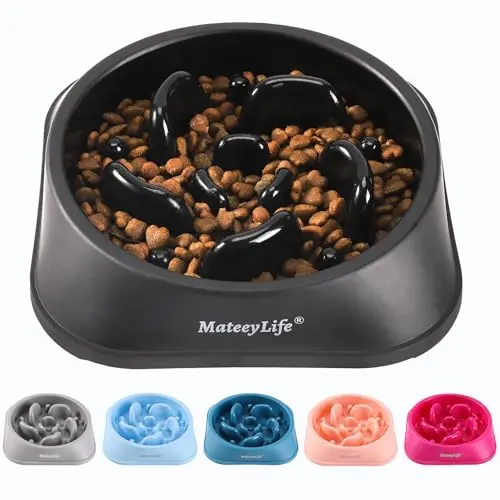
Slow Feeder Bowl – 2-Cup Maze for Mixed Sizes
The MateeyLife Slow Feeder Bowl packs the essential slow-down features into a straightforward, affordable design. With a 2-cup capacity and a spiral maze pattern, it’s suitable for small to medium breeds. The food-grade polypropylene body is dishwashable, and the non-slip base keeps it planted during enthusiastic meals. It’s a simple, effective option for owners who want a basic puzzle bowl without extra frills.
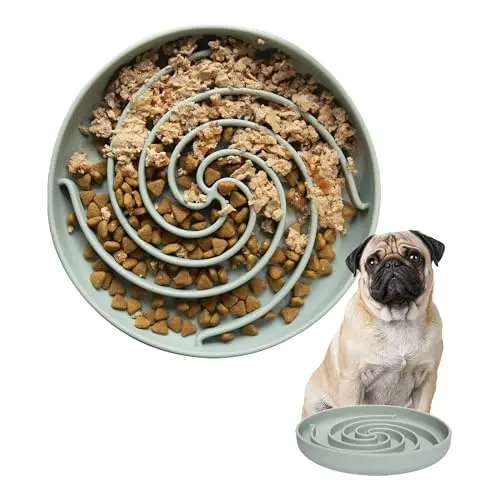
Silicone Slow Feeder – Suction Base for No-Slip Feeding
The Bifeaw Silicone Slow Feeder offers a flexible, travel-friendly alternative to hard plastic bowls. Made from food-grade silicone, it’s microwave and freezer safe, and the non-slip bottom suctions to smooth floors. With a 2-cup capacity and gentle ridges, it’s a great pick for small to medium dogs who tend to push bowls around. It also doubles as a lick mat for anxiety relief.
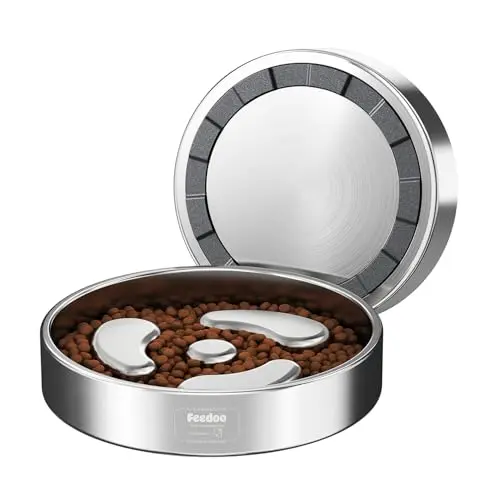
Stainless Steel Slow Feeder – 1-Cup Heavy-Duty Bowl
The Feedoo Stainless Steel Slow Feeder is a serious upgrade for owners who want a bowl that will outlast any plastic or ceramic option. It’s crafted from double-walled 304 stainless steel with a weighted non-slip base, and it holds about 1-1.5 cups – ideal for small breeds or as a supplement bowl for wet food. The raised maze pattern slows eating without deep crevices that trap food, and the whole thing is dishwasher safe.
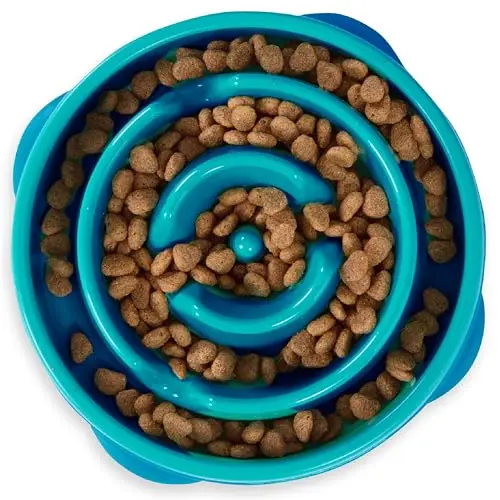
Fun Feeder Slo Bowl (Medium) – 2-Cup Maze for Medium Dogs
The medium version of Outward Hound’s bestselling slow feeder offers the same challenging maze design in a smaller footprint. With a 2-cup capacity and the same Slowest-level pattern, it’s sized for small to medium breeds who need serious slowing. Like the large, it’s BPA-free, top-rack dishwasher safe, and features a non-slip base. It’s a straightforward choice for owners who trust the Fun Feeder brand but have a mid-size dog.
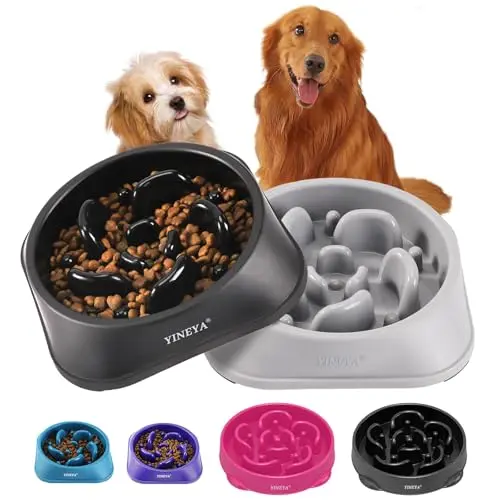
2-Pack Slow Feeder Bowls – Value Set for Multi-Dog Homes
The YINEYA 2-Pack Slow Feeder Bowls deliver twice the value in one purchase. Each bowl holds about 1-1.5 cups and features a raised maze pattern that slows eating, plus non-slip rubber pads on the bottom. Made from food-grade polypropylene, they’re dishwasher safe and suitable for both dry and wet food. This set is an ideal pick for households with multiple small dogs, or for having a spare while one is in the dishwasher.
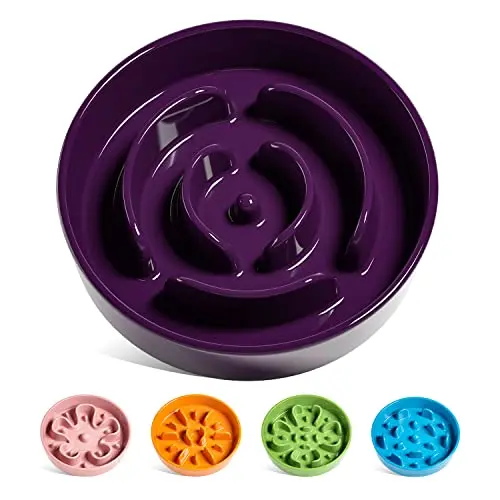
Ceramic Slow Feeder Bowl – Heavy Mazestone Design
The LE TAUCI Ceramic Slow Feeder brings a hefty, elegant alternative to plastic bowls. The glazed ceramic body is naturally anti-scratch, microwave safe, and dishwasher safe, and it weighs over 2 pounds – so most dogs can’t push it around. With a 1.5-cup capacity and a gentle maze pattern, it’s suited for small to medium breeds. The non-slip base adds stability, and the included stand helps contain messes. It’s an excellent pick for owners concerned about plastic hygiene or who want a bowl that matches their kitchen.
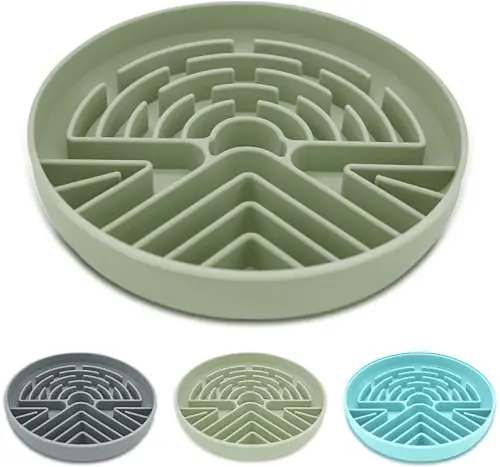
Silicone Slow Feeder Bowl – 2-Cup Interactive Design
Similar to the Bifeaw, the Zonopy silicone slow feeder offers a flexible, suction-based design. It holds 2 cups, features a raised maze pattern to slow eating, and is dishwasher safe. The soft material is gentle on mouths, and it can double as a lick mat. It’s a solid choice for small to medium dogs who need moderate slowing and for owners who appreciate the portability of silicone.
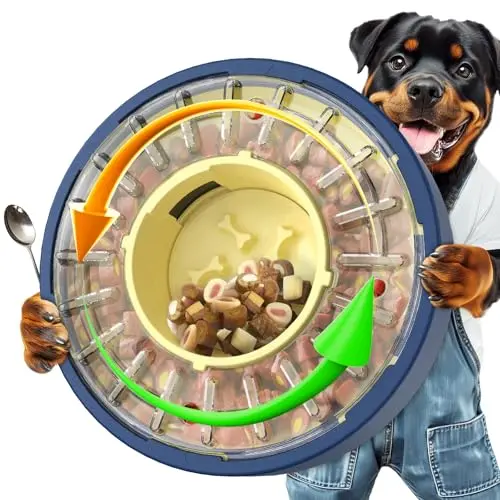
Adjustable Spinning Puzzle Feeder – 4-Cup Mental Enrichment
The KADTC Adjustable Spinning Puzzle Feeder takes slow feeding to a whole new level with its no-power spinning mechanism. Adjust the food outlet to control how quickly kibble falls, and your dog has to paw or nudge the center to release pieces. It holds up to 4 cups and works with kibble, freeze-dried toppers, or small treats. This bowl isn’t just about slowing down – it’s about mental enrichment and turning meals into a game.
How We Evaluated These Dog Bowls for Fast Eaters
We didn’t set up a controlled kennel trial with timed eating tests for every bowl. What we did: cross-referenced 9 dog slow feeder bowls from 8 distinct brands across 6 decision axes – slowing effectiveness, material safety, non-slip performance, capacity range, ease of cleaning, and suitability for specific breed sizes and eating styles. We triangulated published specifications, design features, and aggregated owner feedback where available against realistic use-case scenarios for fast-eating dogs.
The scoring framework weighted real-world performance (60%) – how effectively and consistently a bowl slows eating and withstands daily use – against feature differentiation (40%) – unique material choices, innovative mechanisms like adjustable puzzles, or dual-purpose versatility. We have no commercial relationship with any of the brands featured; recommendations track fit and differentiation, not brand preference. If you’re looking for a proven, no-fuss slow feeder for a medium to large dog, the Outward Hound Fun Feeder Large is your match; if budget is top of mind but you still want solid slowdown, the MateeyLife Slow Feeder covers the essentials without costing a fortune.
How to Choose the Right Dog Bowl for Fast Eaters
Why Slowing Down Matters for Your Dog
Fast eating isn’t just a messy habit – it’s a genuine health risk. Dogs that gulp food are prone to bloat (gastric dilatation-volvulus), choking, regurgitation, and excess air intake, which can cause discomfort or even life-threatening emergencies in deep-chested breeds. Beyond the immediate risks, chronic overeating from speed can contribute to obesity. A slow feeder encourages your dog to chew and pace themselves, which aids digestion and nutrient absorption. It also taps into their natural foraging instinct, turning mealtime into a mentally enriching activity rather than a race. If your dog seems restless or anxious after meals, switching to a puzzle bowl can often help them settle more calmly.
Types of Slow Feeder Designs: Mazes, Puzzles, and More
Not all slow feeders are created equal. Static maze bowls, like the Outward Hound Fun Feeder and MateeyLife, use raised ridges and winding paths that force dogs to navigate around obstacles to reach kibble. These are low-tech, durable, and suitable for most dogs. Interactive puzzle feeders, such as the KADTC spinning model, require the dog to manipulate the bowl – pawing, nudging, or spinning – to dispense food piece by piece. These offer higher mental stimulation but have a learning curve. There are also suction-based silicone mats and bowls (Bifeaw, Zonopy) that stick to the floor and often double as lick mats. Choose based on your dog’s persistence and problem-solving style: a simple maze works for most, while a puzzle rewards smart, food-motivated dogs.
Material Matters: Plastic, Ceramic, Stainless Steel, or Silicone
The material of your slow feeder affects durability, safety, and ease of cleaning. Plastic (PP or ABS) is the most common – lightweight, affordable, and often dishwasher safe, but it can harbor bacteria in scratches and may not hold up to aggressive chewers. Ceramic, like the LE TAUCI bowl, is heavy, quiet, and scratch-resistant; it stays put but can chip if dropped. Stainless steel, as in the Feedoo bowl, is nearly indestructible, hygienic, and dishwasher safe, though usually limited to smaller capacities and can be noisy. Silicone bowls are soft, portable, and safe for freezers and microwaves, but they require a smooth floor for suction and may attract lint. Consider your dog’s chewing habits and your cleaning preferences – if you want something that lasts a lifetime without degradation, stainless steel is the gold standard.
Size and Capacity: Matching the Bowl to Your Dog's Meal
Slow feeders come in capacities from 1 cup to 4 cups or more. Small breeds (up to 20 lbs) typically eat ½-1 cup per meal, so a 1-1.5 cup bowl like the Feedoo or LE TAUCI works well. Medium dogs (20-50 lbs) usually require 1-2 cups, making the MateeyLife, Outward Hound Medium, or YINEYA bowls a good fit. Large and giant breeds may need 3-4 cups, and the Outward Hound Large or KADTC can handle those portions. Don’t pick a bowl too big or the food will spread too thin and your dog may give up; too small, and you’ll be refilling mid-meal. Check the cup capacity against your dog’s daily portion. Also, consider the bowl’s diameter: narrow designs suit flat-faced breeds, while wide, shallow patterns work better for long-snouted dogs.
Cleaning and Maintenance: Keeping Things Hygienic
A slow feeder’s crevices can trap saliva and food residue, so easy cleanup is non-negotiable. All the bowls we reviewed are at least hand-washable with warm soapy water, but many are also top-rack dishwasher safe (Outward Hound, MateeyLife, Bifeaw, YINEYA, LE TAUCI, Feedoo, Zonopy). The KADTC spinning feeder requires hand-washing to protect its mechanism. Stainless steel and ceramic resist odours and stains better than plastic, while silicone can be flipped inside out to scrub but may need occasional deep cleaning to stay fresh. Avoid abrasive sponges on plastic to prevent micro-scratches that harbor bacteria. For busy households, having a second bowl (or a 2-pack like YINEYA) means you’ll never serve dinner in a dirty bowl.
Plastic vs Ceramic vs Stainless Steel: Which Is Right for Your Dog?
Each material has its loyal fans. For a budget-friendly, no-fuss option that’s available in every size, plastic bowls like the Outward Hound or MateeyLife are hard to beat – they’re lightweight, inexpensive, and effective. If your dog tends to push bowls around, a heavy ceramic bowl like the LE TAUCI adds stability and a quiet eating experience, albeit with a risk of chipping. For the ultimate in durability and hygiene, stainless steel from Feedoo is unbeatable, though its small capacity limits it to smaller dogs. If you travel often or want a multipurpose option, silicone bowls (Bifeaw, Zonopy) offer portability and freezer-safe versatility. Your final choice comes down to what matters most: price, durability, or added features like microwave safety.
Frequently Asked Questions
How do slow feeder bowls actually help with fast eating?
Slow feeder bowls disrupt the ‘grab-and-gulp’ reflex by forcing dogs to work around obstacles – ridges, mazes, or spinning mechanisms – to extract each piece of food. This naturally extends mealtime, letting the dog’s stomach send satiety signals to the brain, which reduces overeating. The chewing and navigating also promote better digestion and lower the risk of choking or bloat. For dogs that eat so fast they vomit afterward, switching to a slow feeder often resolves the issue within days as they learn to pace themselves.
What's the difference between a maze bowl like the Outward Hound and a puzzle feeder like the KADTC?
A maze bowl is a static dish with raised ridges – the dog simply needs to maneuver its tongue and snout to reach food, which is intuitive and works for most dogs without training. The Outward Hound Fun Feeder is a classic example. A puzzle feeder like the KADTC requires active interaction: the dog must paw or nudge a spinning mechanism to dispense food. This adds a layer of mental stimulation and can slow eating even more effectively for smart, motivated dogs, but some dogs may get frustrated or scared of the movement. Maze bowls are simpler; puzzle feeders are for dogs that need a real challenge.
Are ceramic slow feeders better than plastic ones?
It depends on your priorities. Ceramic bowls (like the LE TAUCI) are heavier, so they stay put better, and they’re quieter – no scraping noise. They’re also less likely to harbor bacteria since they don’t scratch easily. However, they can chip or crack if dropped and often cost more. Plastic bowls (like the MateeyLife or Outward Hound) are lighter, cheaper, and come in more sizes and patterns, but they can be chewed by aggressive dogs and may develop scratches over time that trap germs. If hygiene and noise are concerns, ceramic is a solid upgrade; if you want a low-cost, durable option for a non-chewing dog, plastic works fine.
Can I use a slow feeder bowl for wet food?
Absolutely. Many slow feeders work perfectly with canned, raw, or fresh food. The ridges and valleys in a maze bowl will still slow down a dog’s licking and lapping, though it may not add as much time as with dry kibble. Some bowls, like the Feedoo stainless steel or Bifeaw silicone, are explicitly marketed for both wet and dry food. Silicone mats can even be smeared with wet food and frozen for a longer-lasting challenge. Just note that wet food may require a bit more scrubbing to clean out of crevices, so dishwasher-safe bowls make post-meal cleanup easier.
How do I clean a slow feeder bowl without it getting gross?
Immediate rinsing after meals prevents dried-on gunk. Most slow feeders are dishwasher safe (top rack) – just make sure to angle them so water doesn’t pool. For hand-washing, use a bottle brush or old toothbrush to scrub the narrow channels. Silicone bowls can be turned inside out for a thorough clean. Stainless steel and ceramic are the most odour-resistant. Avoid soaking plastic bowls for hours, as water can seep into micro-abrasions. Once a week, sanitize with diluted vinegar or a pet-safe disinfectant, especially if your dog is prone to chin acne.
Final Verdict
For most dogs who practically inhale their meals, the Outward Hound Fun Feeder Slo Bowl (Large) is the clear winner – it’s time-tested, capacious, and genuinely slows down even the most committed speed eaters. If you’re budget-conscious but still want an effective slowdown, the MateeyLife Slow Feeder Bowl punches well above its weight. For small dogs and those who chew aggressively, the Feedoo Stainless Steel Bowl is a lifelong investment that stays hygienic. And if your dog needs more than a maze – they need a challenge – the KADTC Spinning Puzzle Feeder brings next-level mental enrichment. The right bowl turns a frantic ritual into a healthy, calm routine – pick the one that matches your dog’s style, and you’ll both breathe easier at dinnertime.