
Yorkshire Terriers may be tiny, but they have big personalities – and even bigger nutritional needs. These little dogs are prone to picky eating, sensitive stomachs, and dental issues, which means the kibble they eat matters far more than you might think. Choosing a dog food that’s genuinely tailored to their small size and breed-specific quirks can be the difference between a glossy, energetic companion and one with constant tummy troubles or a dull coat.
We cross-shopped the market to find the best options for your Yorkie, comparing everything from breed-specific formulas to versatile small-breed offerings. Whether you’re looking for a kibble that supports a sensitive stomach, a puppy blend for your youngest family member, or simply a reliable everyday food, our guide will help you make the right choice.
Best Dog Food for Yorkshire Terriers – 2026 Reviews
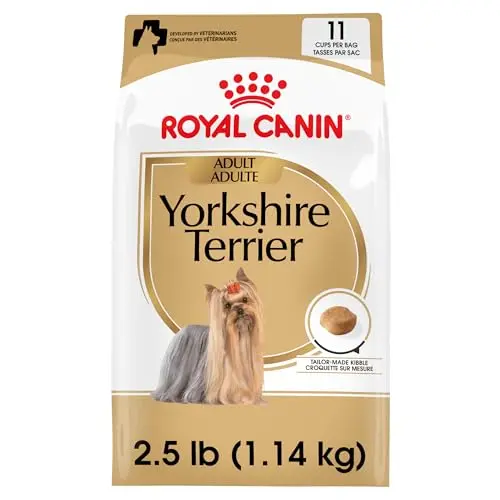
Yorkshire Terrier Adult – Breed-Specific Nutrition
Specifically formulated for purebred Yorkshire Terriers, this dry food addresses the breed’s unique needs. The kibble’s shape and texture are designed for a Yorkie’s small jaw, helping to reduce tartar while making it easy to chew. Omega fatty acids promote a glossy coat, and added vitamins support vitality as your dog ages. A fantastic choice for owners who want tailored nutrition.
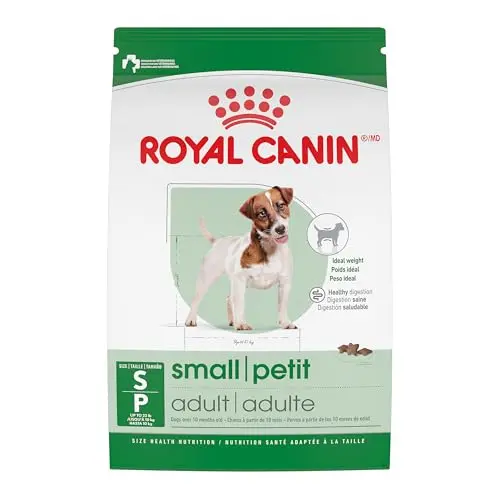
Small Breed Adult – Weight & Digestive Health
While not exclusive to Yorkies, this formula is tailored for small dogs between 9-22 lb, making it a versatile choice for many Yorkshire Terriers. It focuses on weight maintenance with L-carnitine, digestive health, and skin support. The kibble is specially designed for miniature jaws, and many owners note improvements in coat quality and digestive regularity.
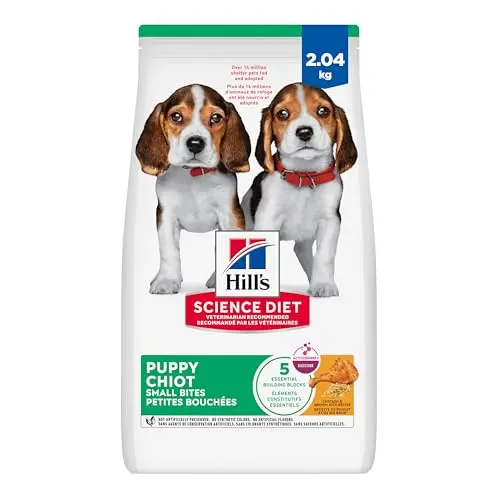
Puppy Small Bites – Brain & Eye Development
For Yorkshire Terrier puppies, this formula provides crucial nutrients during their growth phase. DHA from fish oil supports brain and eye development, while high-quality protein builds lean muscle. The small, easy-to-chew kibble is perfectly sized for tiny puppy mouths, and the prebiotic fibre blend promotes a healthy digestive system.
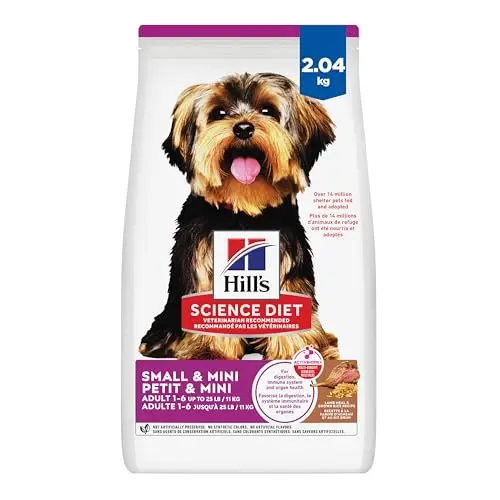
Small & Mini Lamb – Digestive Health Support
Featuring lamb as the primary protein and easily digestible ingredients like pumpkin, this recipe targets adult Yorkies with sensitive stomachs. The small kibble is well-suited for toy breeds, and the formula includes antioxidants for immune support. It’s a solid pick for dogs that struggle with chicken- or grain-based foods.
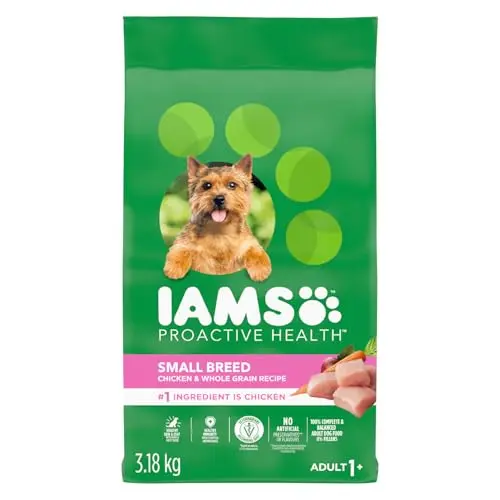
Small Breed Chicken – Complete Daily Nutrition
For budget-conscious owners, this IAMS formula delivers solid nutrition for small breeds. The chicken-based recipe is free from artificial flavours and preservatives, and the kibble is specially sized for dogs under 20 lb. It promotes healthy digestion and includes antioxidants for overall wellness, making it a straightforward, everyday option.
How We Evaluated These Dog Foods for Yorkshire Terriers
We did not run long-term feeding trials or supervised veterinary testing. What we did: cross-referenced 5 dog food formulas from 3 distinct brands across 6 decision axes – breed-specificity, kibble size and texture, digestive support, skin and coat benefits, ingredient transparency, and palatability for picky eaters. We triangulated published ingredient lists and guaranteed analyses, manufacturer specifications, and aggregated owner experiences where available, matching each product against the most common nutritional challenges Yorkshire Terriers face.
The scoring framework weighted real-world suitability for Yorkies (60%) – how well each food addresses breed-specific needs like dental health, sensitive stomachs, and a tendency toward finicky appetites – against feature differentiation (40%) – unique formula strengths, speciality ingredients, and kibble design. We have no commercial relationship with any of the featured brands; our picks prioritise fit and measurable benefits. If your Yorkie struggles with a sensitive stomach, the Hill’s Science Diet Small & Mini Lamb is a standout; for breed-specific nutrition, the Royal Canin Yorkshire Terrier is purpose-built.
How to Choose the Right Dog Food for Yorkshire Terriers
Understanding a Yorkshire Terrier's Nutritional Requirements
Yorkshire Terriers have a fast metabolism and require a nutrient-dense diet tailored to their small size. Protein should always be the first ingredient to support lean muscle mass, while healthy fats like omega-3 and omega-6 fatty acids promote skin and coat health. Because Yorkies are prone to dental issues, their food should also contribute to oral hygiene – either through kibble texture or added ingredients. Avoid fillers like corn, wheat, and soy when possible, as these can trigger sensitive stomachs common in the breed.
Why Kibble Size Matters More Than You Think
Yorkies have one of the smallest jaws in the canine world, so a tiny kibble size isn’t just a convenience – it’s a necessity. Larger kibble can lead to choking hazards or cause your dog to swallow air, which may contribute to bloat. Look for foods labeled as “small bite” or “mini” where the pieces are appropriately sized for dogs under 10 lb. The Royal Canin Yorkshire Terrier formula takes this a step further with a specialised kibble shape designed to be easy for a Yorkie to grasp and chew, which also helps reduce plaque.
Ingredients to Prioritise (and What to Avoid)
High-quality animal proteins like chicken, lamb, or fish should top the ingredient list. Whole grains like brown rice or oatmeal provide steady energy, while pumpkin and prebiotic fibres aid digestion. Steer clear of artificial colours, flavours, and preservatives, which offer zero nutritional value and can cause adverse reactions. For Yorkies with food sensitivities, a limited-ingredient diet or a novel protein like lamb may be beneficial – the Hill’s Science Diet Small & Mini Lamb formula is a great example of a recipe built around gentle digestion.
Royal Canin Yorkie vs Hill's Small & Mini: Which Is Better for Your Dog?
These two are often top contenders, but they serve slightly different needs. The Royal Canin Yorkshire Terrier is breed-specific, with a kibble engineered for a Yorkie’s mouth and a formula that targets coat health and early aging. It’s the pick for owners who want the most tailored nutrition. The Hill’s Science Diet Small & Mini Lamb, on the other hand, is all about digestive health. Its lamb and pumpkin recipe is ideal for dogs with poultry allergies or sensitive stomachs, and it comes in a slightly larger bag size for better value. If your Yorkie has no digestive issues and you want breed-specific perks, go Royal Canin; if stomach sensitivities are your primary concern, Hill’s is the safer bet.
Wet Food vs Dry Food: What's Best for Your Yorkie?
Both have their place. Dry kibble helps with dental health by scraping away plaque, and it’s more convenient and cost-effective for daily feeding. Wet food can be a good option for picky eaters or seniors with dental issues, but it should be balanced with dry food to maintain oral hygiene. Many Yorkie owners use a combination approach – dry food as a base with a spoonful of wet food as a topper. Just ensure any wet food you choose is free from by-products and fillers.
Frequently Asked Questions
What's the difference between Royal Canin Yorkshire Terrier and Royal Canin Small Breed Adult?
While both are designed for small dogs, the Yorkshire Terrier formula is breed-specific. It has a unique kibble shape and texture tailored to a Yorkie’s narrow jaw and biting pattern, which promotes better dental health. The ingredient blend also targets skin and coat health more directly with added biotin and borage oil, and it includes anti-aging nutrients like vitamin C, EPA, and DHA. The Small Breed Adult is a broader formula that focuses on weight management and digestion across all small breeds. If you want the most precise nutrition for your purebred Yorkie, go with the breed-specific version; if you have a mixed-breed small dog or value a larger bag size, the Small Breed Adult is an excellent alternative.
How does IAMS Small Breed compare to Hill's Science Diet Small & Mini for a Yorkie?
The IAMS Small Breed is the more budget-friendly option, delivering solid basic nutrition with digestive support and a small kibble size. It’s a good everyday food for a healthy adult Yorkie without specific sensitivities. Hill’s Science Diet Small & Mini Lamb, on the other hand, steps up the ingredient quality with lamb as the first protein and pumpkin for digestion. It’s particularly suited for Yorkies with chicken allergies or sensitive stomachs. If cost is a primary concern and your dog has no known food issues, IAMS is a practical pick; if you want to invest in a more targeted digestive formula, the Hill’s is worth the extra money.
What should I look for in a dog food for my Yorkshire Terrier?
Start with small kibble size – it’s non-negotiable for this breed. Then check the first ingredient: it should be a named animal protein like chicken, lamb, or fish. Look for omega fatty acids for skin and coat, and digestive aids like prebiotic fibres or pumpkin. Avoid artificial additives and fillers like corn or wheat when possible. If your Yorkie has a sensitive stomach, consider a limited-ingredient or novel-protein formula. Finally, make sure the food is appropriate for your dog’s life stage – puppy, adult, or senior – to ensure the right nutrient balance.
Is grain-free dog food necessary for Yorkies?
Not necessarily. While some owners choose grain-free due to perceived allergies, true grain allergies are rare in dogs. Quality whole grains like brown rice or oatmeal can be a good source of energy and fibre. The concern is often low-quality fillers like corn or wheat, not grains themselves. If your Yorkie has a confirmed grain sensitivity, a grain-free food like Nature’s Recipe Grain Free can be appropriate; otherwise, a formula with limited, whole ingredients is a safer bet. Always consult your vet before switching to a grain-free diet, as the FDA has investigated potential links between grain-free foods and canine heart disease.
How often should I feed my Yorkshire Terrier?
Adult Yorkies typically do well with two meals per day, while puppies under 6 months may need three or four smaller meals to maintain blood sugar levels. Yorkshire Terriers are prone to hypoglycaemia, especially as puppies, so consistent feeding times are important. Avoid free-feeding (leaving food out all day) to prevent overeating and weight gain, which can strain their tiny joints. Use the feeding guidelines on the bag as a starting point, but adjust based on your dog’s activity level, age, and body condition – you should be able to feel but not see their ribs.
Final Verdict
For most Yorkshire Terrier owners, the Royal Canin Yorkshire Terrier Adult is the answer – it nails breed-specific nutrition, from the tailored kibble shape to the coat and aging support, without making compromises. If your dog struggles with a sensitive stomach, the Hill’s Science Diet Small & Mini Lamb gets you most of the way there with gentle, easily digestible ingredients. For a growing Yorkie puppy, the Hill’s Science Diet Puppy Small Bites provides the brain and eye development support they need. And if budget is top of mind, the IAMS Small Breed delivers dependable nutrition at a wallet-friendly price. Whichever you pick, your Yorkie will thank you with a wagging tail and a shiny coat.