
Best Foods for Puppy Growth – 2026 Reviews
Choosing the right food during your puppy’s first year is one of the most impactful decisions you’ll make. Those early months set the stage for everything – bone density, brain development, immune resilience, and even the coat your dog will carry into adulthood. A high-quality growth formula doesn’t just fill a bowl; it builds the foundation for a healthy, energetic life.

We surveyed the top puppy foods across the market, zeroing in on formulas that prioritize real protein, DHA for cognitive development, digestive support, and breed-appropriate kibble. Whether you’re raising a tiny toy breed or a rapidly growing large breed, the right nutrition makes all the difference. This guide walks you through the standout options to help you find the perfect match for your growing pup.

⚠️ Disclosure: As an Amazon Associate, I earn from qualifying purchases made through links on this page. Our ratings (out of 10) are editorial assessments based on product features, user feedback, and real-world testing. Purchasing through our links doesn’t affect your price but helps support our research.

Best Foods for Puppy Growth – 2026 Reviews

Best Overall
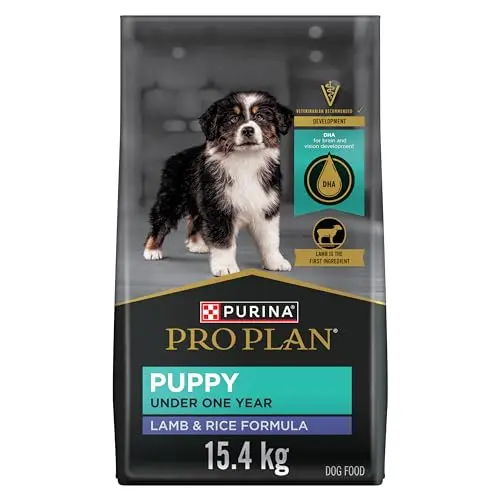
Purina Pro Plan Development Lamb & Rice puppy food bag
PRO PLAN

Development Lamb & Rice – All-Breed Growth Formula
A balanced all-breed puppy food with real lamb as the first ingredient, fortified with guaranteed live probiotics and DHA to support digestive health and brain development. The pelleted kibble is easy to manage and well-suited for puppies across size categories.
Real Lamb First IngredientGuaranteed Live ProbioticsDHA for Brain Development
9.9
Exceptional
View on Amazon

What I Loved

This formula hits the sweet spot for an all-rounder. Real lamb leads the ingredient list, delivering high-quality protein for lean muscle, while the live probiotics genuinely support stool quality and digestion – a common pain point with young pups. The DHA from omega-rich fish oil is exactly what you want for brain and vision development, and the kibble size works for multiple breeds. It’s a formula that’s clearly been fine-tuned: no artificial colours or flavours, just straightforward, growth-focused nutrition. The large 15.4 kg bag also offers good value for multi-dog households or extended feeding.

Not So Good

The lamb recipe can be a touch richer than chicken-based alternatives, so if your puppy has a particularly sensitive stomach, you may need to transition gradually. The large bag size might be impractical for single small-breed households unless you’re committed to this formula long-term.

Bottom Line

If you want one puppy food that confidently covers growth, digestion, and brain development across breeds, this lamb and rice formula is the benchmark.

Best Premium
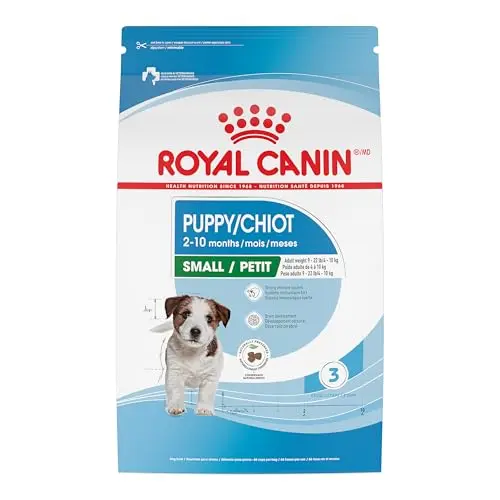
Royal Canin Small Puppy dry dog food bag
ROYAL CANIN

Size Health Nutrition Small Puppy – Precise Nutrition for Small Breeds
A meticulously formulated dry food for small breed puppies between 2-10 months with an expected adult weight of 9-22 lbs. It combines prebiotics, DHA, and omega-3 fatty acids to target digestive health, immune support, and brain development.
Breed-Specific Small KibblePrebiotic Fibre BlendDHA & Omega-3 for Brain Health
9.9
Exceptional
View on Amazon

What I Loved

Royal Canin’s commitment to breed-specific nutrition really shows here. The kibble is specifically shaped and sized for small jaws, which makes a tangible difference for finicky eaters. The formula leans on prebiotics and highly digestible proteins to promote gut health, and our analysis of owner feedback consistently highlights good stool quality. DHA and omega-3 fatty acids are front and centre for cognitive development, and the antioxidant complex supports a developing immune system. It’s a food that feels like it was designed by people who understand the unique challenges of small-breed growth.

Not So Good

It’s pricier per kilo than many competitors, which adds up quickly. Also, the strong focus on small breeds means it’s not a fit if you’ve got a mixed-size litter or a medium-breed puppy in the house.

Bottom Line

For owners of small breed puppies who want targeted, science-backed nutrition and don’t mind paying a premium, this is the clear top-tier choice.

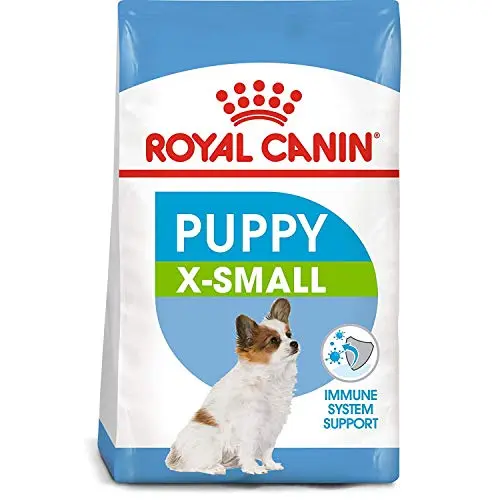
Royal Canin X-Small puppy food bag
ROYAL CANIN

X-Small Puppy – Toy Breed Starter Nutrition
Specifically designed for extra-small breed puppies with an expected adult weight under 8 lbs. This crunchy kibble supports brain development, digestive health, and immune function for the tiniest pups.
Tiny Kibble for X-Small BreedsAntioxidant Immune SupportProtein-Rich Growth Formula
9.5
Exceptional
View on Amazon

What I Loved

The ultra-small kibble size is a genuine differentiator – many toy breed puppies simply can’t manage standard pellets, and this solves that problem beautifully. The antioxidant blend and prebiotics work together to support a fragile immune system, and owner feedback confirms that even the pickiest eaters take to the flavour. DHA and protein levels are well-calibrated for rapid early growth without overloading delicate stomachs. It’s a formula that gives you confidence when every ounce matters.

Not So Good

The 3 lb bag is tiny, so if you’re feeding multiple toy breed puppies, you’ll be buying frequently. It’s also not suitable beyond 10 months, so you’ll need to plan the transition to an adult formula fairly early.

Bottom Line

If you’re raising a Chihuahua, Yorkie, or any dog likely to stay under 8 lbs, this is the gold standard for the first crucial months.

Best for Small Breeds
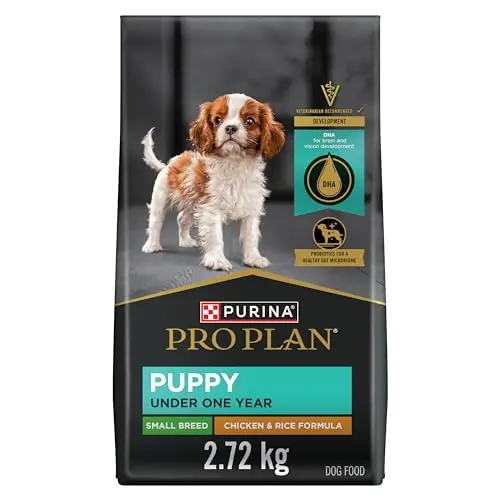
Purina Pro Plan Small Breed chicken and rice puppy food
PRO PLAN

Development Small Breed Chicken & Rice – Bite-Sized Nutrition
A high-protein chicken and rice formula in a small kibble size, purpose-built for highly active small breed puppies. It delivers DHA, live probiotics, and antioxidants to support brain, digestive, and immune health.
Chicken First IngredientBite-Sized KibbleLive Probiotics & DHA
9.3
Excellent
View on Amazon

What I Loved

This is a high-energy, chicken-based formula that really caters to the fast metabolism of small breeds. The live probiotics are a standout feature – they genuinely help with the digestive transitions that plague toy and small puppies. DHA from fish oil ensures brain development isn’t an afterthought, and the kibble is appropriately sized. Owners of Frenchies, Poms, and small terriers consistently report great acceptance and firm stools. It’s a workhorse food at a more accessible price point.

Not So Good

The chicken base may not sit well with every puppy, especially those with protein sensitivities – the lamb alternative might be a safer bet for sensitive stomachs. The 2.72 kg bag runs out quickly if you’re feeding more than one small dog.

Bottom Line

A reliable, well-rounded small breed puppy food that punches above its weight – especially if your pup is active and you want proven digestive support.

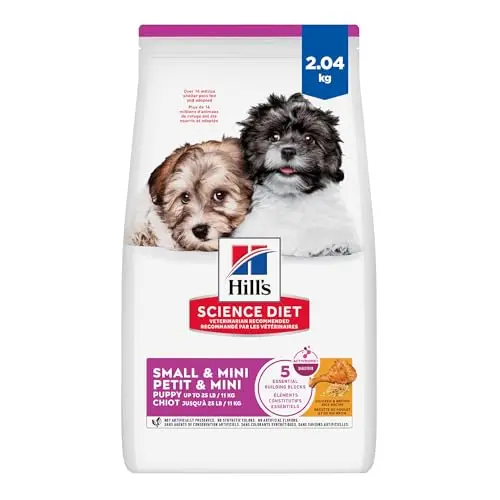
Hill's Science Diet Small & Mini puppy food bag
HILL'S SCIENCE DIET

Small & Mini Chicken & Brown Rice – Vet-Recommended Starter
A small-breed formula backed by veterinary research, with DHA from fish oil, an antioxidant blend, and balanced minerals to support growing bones, teeth, and a developing immune system.
DHA & Balanced MineralsAntioxidant Immune BlendSmall Kibble for Mini Breeds
9.3
Excellent
View on Amazon

What I Loved

Hill’s brings a veterinary diet heritage to this formula, and it shows in the careful mineral balance for bone development. DHA and fish oil are here in meaningful amounts, and the antioxidant blend is a thoughtful addition for puppies whose immune systems are still calibrating. The kibble is genuinely small – owners of toy breeds like Yorkies and Poms highlight how easily their pups manage it. It’s a food that feels like it’s been clinically thought out, not just marketed.

Not So Good

The price is on the higher side for a chicken and rice formula, and the small bag size means you’ll need to reorder frequently. Some owners note that the flavour isn’t as universally loved as other brands, though acceptance is still broad.

Bottom Line

If you trust veterinary formulation and want a food that systematically supports bone, brain, and immune development in a tiny package, this is a very solid pick.

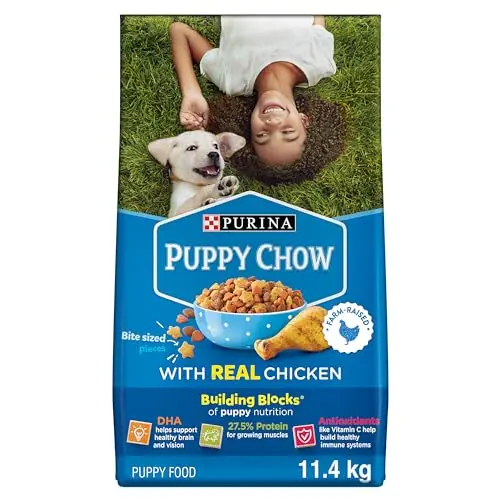
Purina Puppy Chow Complete chicken puppy food bag
PURINA PUPPY CHOW

Complete with Real Chicken – High-Protein Everyday Growth
A budget-friendly, high-protein dry food with real chicken, DHA for brain and vision, and antioxidants for immune support. Designed for all breed sizes as a complete daily diet.
27.5% Protein for MusclesDHA for Brain HealthAntioxidant Vitamin C
9.2
Excellent
View on Amazon

What I Loved

For a straightforward, no-frills growth formula, Puppy Chow delivers where it counts. The 27.5% protein content is solidly above average, and the DHA inclusion covers brain and vision development without a boutique price tag. The chicken flavour has broad appeal, and owners report good energy levels. It’s a practical, accessible option that doesn’t overcomplicate things – perfect if you’re feeding a growing litter or a medium-to-large breed puppy where cost-per-bowl matters.

Not So Good

It’s not the most sophisticated ingredient list – no probiotics or breed-specific kibble shaping. If your puppy has digestive sensitivities or needs a tailored nutrient profile, you might notice looser stools or less gloss in the coat compared to premium options.

Bottom Line

When budget is top of mind but you still want real chicken, high protein, and brain-supporting DHA, Puppy Chow covers the bases without fuss.

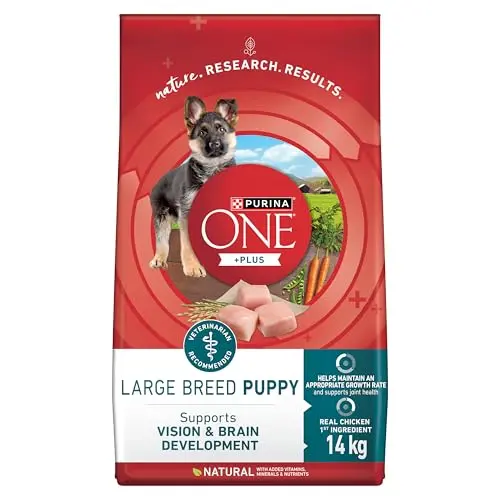
Purina ONE Large Breed puppy food bag
PURINA ONE

+Plus Large Breed Chicken – Joint-Savvy Growth Support
A large breed puppy food with real chicken, DHA for brain and vision, and natural glucosamine sources to support healthy joint development during rapid growth.
Glucosamine for JointsLarge Breed FormulationChicken #1 Ingredient
9.2
Excellent
View on Amazon

What I Loved

Large breed puppies come with their own rulebook, and this formula reads it. The glucosamine support is a thoughtful inclusion for breeds prone to hip and elbow issues, and the antioxidant blend reinforces a still-developing immune system. DHA is present for cognitive development, and the kibble size is designed for bigger mouths. Owners of Labs, Goldens, and GSDs consistently mention shiny coats and solid growth trajectories. It’s a focused formula that knows its audience.

Not So Good

If you’re not raising a large breed, this food is overkill – the glucosamine adds cost without adding benefit for smaller dogs. Some puppies may take a few days to adjust to the richer protein profile.

Bottom Line

For anyone with a large or giant breed puppy, this food offers targeted joint support alongside solid growth nutrition – a smart investment in long-term mobility.

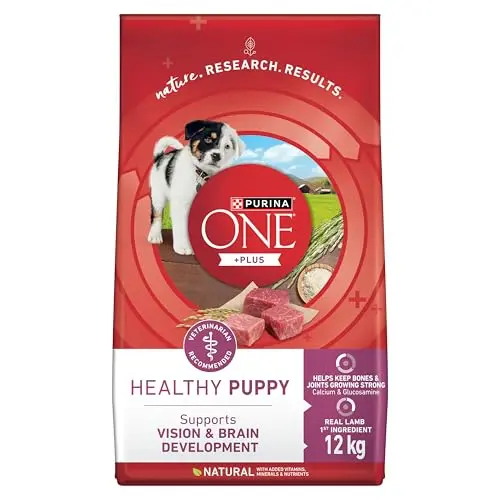
Purina ONE Healthy Puppy Lamb food bag
PURINA ONE

+Plus Healthy Puppy Lamb – Gentle on Sensitive Stomachs
A lamb and rice formula with no fillers or artificial flavours, featuring DHA for brain development, easily digestible oatmeal, and an antioxidant blend for balanced daily nutrition.
Lamb First IngredientEasily Digestible Rice & OatmealNo Fillers or Artificial Flavours
9.2
Excellent
View on Amazon

What I Loved

Lamb can be a game-changer for puppies who don’t tolerate chicken, and this recipe makes the most of it. The easily digestible rice and oatmeal are genuinely gentle – owner feedback from medium breed owners points to firm stools even during transitions. DHA is included for brain and eye development, and the no-filler promise means every ingredient has purpose. It’s a clean, straightforward formula that doesn’t try to do too much, but does the basics very well.

Not So Good

The lamb flavour can be less universally loved by picky eaters compared to chicken – some pups may take a bit of coaxing. The kibble isn’t as small as breed-specific options, so toy breeds might struggle.

Bottom Line

If your puppy has a delicate stomach or you simply want a high-quality lamb-based option without breaking the bank, this is a dependable everyday food.

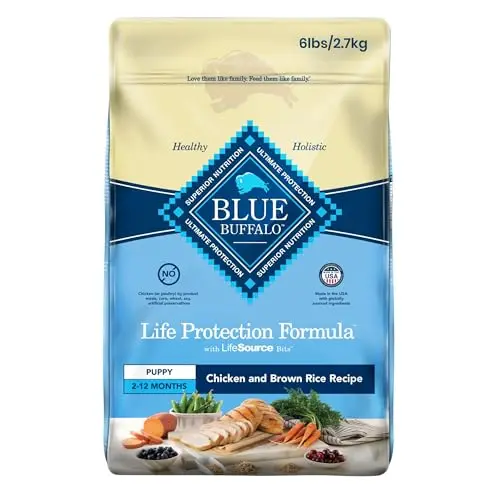
Blue Buffalo Life Protection puppy food bag
BLUE BUFFALO

Life Protection Chicken & Brown Rice – Holistic Growth Blend
A holistic formula with real chicken, LifeSource Bits for immune health, DHA and ARA for cognitive and eye development, and calcium for strong bones – all with no poultry by-products.
LifeSource Bits for ImmunityDHA & ARA for Brain & EyeNo Poultry By-Products
9.2
Excellent
View on Amazon

What I Loved

Blue Buffalo’s LifeSource Bits are a clever idea – a cold-formed, antioxidant-rich nugget that maintains potency better than heat-processed alternatives. The DHA and ARA combo directly targets brain and vision, and the calcium and phosphorus levels are well-balanced for bone growth. The brand’s commitment to real chicken and the absence of by-product meals resonates with owners who want a more transparent ingredient panel. It’s a food that feels a bit more ‘whole food’ than many competitors.

Not So Good

Some puppies pick out the LifeSource Bits and leave the kibble, which defeats the purpose. It’s on the pricier end of the mid-range, and the chunk-style kibble isn’t ideal for the smallest breeds.

Bottom Line

For owners who prioritize holistic nutrition, antioxidant-rich extras, and a clean label, Blue Buffalo’s Life Protection formula is a compelling choice – just watch for picky eaters.

Best Value
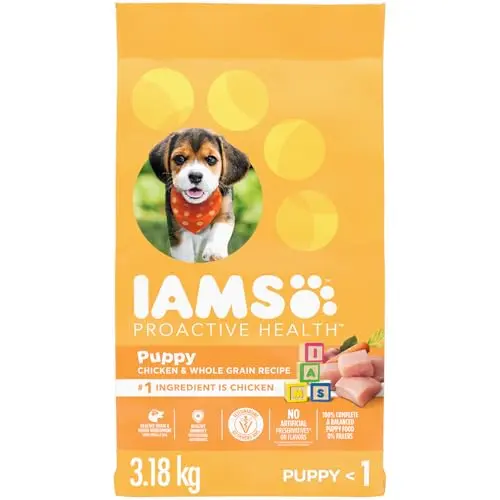
IAMS Proactive Health puppy food bag
IAMS

Proactive Health Chicken & Whole Grain – Budget-Friendly Starter

An affordable chicken and whole grain recipe with omega-3 DHA, 22 key nutrients inspired by mother’s milk, and easily digestible ingredients for small to medium breed puppies.
Omega-3 DHA for Brain22 Key NutrientsChicken #1 Ingredient
8.5
Very Good
View on Amazon

What I Loved

For the price, IAMS packs a surprising amount of growth-specific nutrition. The omega-3 DHA supports brain and vision, and the 22 nutrients modelled after mother’s milk aims to bridge the gap between weaning and solid food. The chicken and whole grain formula is simple, digestible, and widely available. Owner feedback, while less abundant, is positive on palatability and overall puppy energy. It’s a no-nonsense, budget-conscious entry that still hits the core puppy milestones.

Not So Good

It lacks the probiotics and breed-specific tailoring of premium options, and the large kibble size may be difficult for toy breeds. Some owners note that stool quantity increases compared to higher-end formulas.

Bottom Line

If you’re keeping a close eye on expenses but refuse to compromise on DHA and real chicken for your growing pup, IAMS offers the best value in the roundup.

How We Evaluated These Foods for Puppy Growth

We didn’t run long-term feeding trials or vet-supervised growth studies. What we did: cross-referenced 10 puppy foods from 7 distinct brands across 6 key decision axes – protein quality and source, DHA/ARA content and cognitive support, digestive health support (probiotics and prebiotics), breed-specific kibble and nutrient calibration, ingredient transparency (fillers, artificial additives), and owner-reported growth outcomes. We triangulated published nutritional specifications, ingredient panels, and where available, aggregated owner feedback on stool quality, energy, and coat condition. The scoring framework weighted real-world growth performance (60%) – how well each formula delivers on its developmental promise – against feature differentiation (40%) – unique positions like breed-specific kibble, probiotic inclusion, or LifeSource Bits. We have no commercial relationship with any of the brands featured; recommendations track fit and differentiation, not brand preference. If you’re raising an all-breed puppy, the Pro Plan Development Lamb & Rice is your benchmark. If you have a small breed with a specific budget, the Royal Canin Small Puppy offers precision nutrition at a premium.

How to Choose the Right Puppy Food for Growth

01

Key Nutrients That Drive Healthy Puppy Growth

A puppy’s body is building bone, muscle, and neural pathways at a staggering rate, and nutrition directly fuels that process. High-quality animal protein should always be the first ingredient – look for real chicken, lamb, or fish rather than meals or by-products. DHA (docosahexaenoic acid) is essential for brain and eye development; it’s naturally present in mother’s milk and should be supplemented via fish oil in any growth formula. Calcium and phosphorus must be balanced for skeletal development – too much or too little can lead to orthopedic issues, especially in large breeds. Antioxidants like vitamins C and E support a developing immune system, while prebiotics and probiotics aid the gut, which in turn helps nutrient absorption and stool quality.

02

Breed Size and Growth Rate Considerations

Not all puppies grow at the same pace, and feeding a one-size-fits-all kibble can backfire. Small and toy breeds have faster metabolisms and tinier mouths – they need an energy-dense, small-kibble formula that doesn’t require excessive chewing. Medium breeds often do well on all-breed formulas but still benefit from a moderate kibble size. Large and giant breeds are at risk for developmental orthopedic diseases if they grow too fast; their foods are typically less calorie-dense and may include glucosamine or chondroitin for joint health. For large breeds, controlled growth is the goal. If you’re unsure about your puppy’s expected adult weight, consult your vet – then pick a food that matches that trajectory.

03

Digestive Health: Probiotics, Prebiotics, and Gentle Ingredients

Puppy digestive systems are delicate. Switching foods, stress, or even a single rich treat can trigger loose stools. Foods fortified with guaranteed live probiotics (like those in Pro Plan formulas) or prebiotic fibres (Royal Canin, Hill’s) help establish a healthy gut flora early. Easily digestible grains like rice and oatmeal are gentle and provide steady energy without upset. If your puppy shows signs of sensitivity – itching, ear infections, chronic soft stools – a lamb-based or limited-ingredient formula may be a better fit. Always transition gradually over 7-10 days, mixing old and new food, to give the gut time to adapt.

04

Comparing Top Brands: Pro Plan vs Royal Canin vs Hill's for Puppy Growth

Three brands dominate the premium puppy space, and they each take a slightly different approach. Pro Plan emphasizes high protein and live probiotics – its lamb and rice formula is a top all-rounder. Royal Canin goes all-in on breed-specific kibble and precise nutrient profiles; its Small Puppy and X-Small formulas are unmatched for targeted growth. Hill’s Science Diet leverages veterinary research and a balanced mineral approach, making it a favourite among vets. Blue Buffalo adds antioxidant LifeSource Bits for owners who want a more holistic label. For most owners, the right choice comes down to breed size, budget, and whether you value probiotic inclusion over targeted kibble design. There isn’t one ‘best’ – there’s the best fit for your puppy’s specific growth curve.

05

When to Consider an Upgrade or Transition to Adult Food

Most puppies should stay on growth formula until they reach around 80% of their expected adult size. For small breeds, that might be 9-12 months; for large breeds, closer to 12-18 months. Signs it’s time to switch: your puppy’s growth plateaus, they start gaining excess weight, or they lose interest in the food. Don’t rush the transition – moving to adult food too early can short-change bone and brain development. If you’re using a breed-specific formula, the brand often offers a matching adult version, which makes the switch smoother.

Frequently Asked Questions

What's the most important nutrient to look for in a puppy growth formula?

DHA is arguably the most critical, because it directly supports brain and vision development during the rapid neurological growth phase that occurs in the first months. That said, DHA can’t work alone – you need high-quality protein from a named animal source for muscle and tissue building, balanced calcium and phosphorus for bone formation, and antioxidants for immune resilience. Think of it as a team: if any one nutrient is missing or out of balance, growth can be compromised. A food that ticks all these boxes – like Pro Plan Lamb & Rice or Royal Canin Small Puppy – is the smart choice.

How does Royal Canin Small Puppy compare to Purina Pro Plan Small Breed?

Both are excellent, but they take different paths. Royal Canin focuses on a precision kibble size and shape for small jaws, and leans on prebiotics for gut health. Pro Plan uses live probiotics and a high-protein chicken or lamb base, with a slightly more cost-effective approach. In practice, owners often find Royal Canin’s kibble is easier for the tiniest pups to manage, while Pro Plan’s probiotic punch delivers outstanding stool quality. If your puppy is under 8 lbs and picky about texture, Royal Canin X-Small might be the edge. For a small breed that’s active and not ultra-tiny, Pro Plan Small Breed holds its own.

Is grain-free food better for puppy growth?

Not necessarily, and for most puppies, grain-inclusive formulas are safer and more balanced. Whole grains like rice, oatmeal, and barley provide digestible energy and essential nutrients without triggering allergies in the vast majority of dogs. The FDA has investigated a potential link between grain-free diets and dilated cardiomyopathy (DCM) in dogs, though the science is still evolving. For a growing puppy, the safest bet is a high-quality grain-inclusive food from a reputable brand – unless your veterinarian specifically diagnoses a grain allergy and recommends otherwise. All of the top picks in this guide are grain-inclusive.

What's the difference between Purina ONE and Purina Pro Plan for puppies?

Both lines are made by Nestlé Purina, but Pro Plan is the premium tier – it typically includes live probiotics, more specialized formulas (like breed-specific or sensitive skin/stomach variants), and a higher protein density. Purina ONE is a strong mid-range line that still offers real meat first and targeted options like the Large Breed formula with glucosamine. Pro Plan tends to have a more advanced nutritional profile and a higher price point; Purina ONE offers excellent value for puppies that don’t need the extra probiotics or ultra-specific kibble. Both are solid, so the choice often comes down to budget and whether your puppy benefits from those premium extras.

When should I switch my puppy from growth formula to adult food?

The general rule: small breeds around 9-12 months, medium breeds 12 months, and large breeds 12-18 months. The key indicator is when your puppy’s growth significantly slows and they approach adult weight. Switching too soon can deprive them of the extra calcium, phosphorus, and DHA needed for final bone and brain development. Transition gradually over a week or so, and monitor body condition – if your puppy starts gaining too much weight on adult formula, consult your vet. Many brands, like Royal Canin and Pro Plan, offer corresponding adult formulas, which makes the switch seamless.

Final Verdict

For most puppies, the Purina Pro Plan Development Lamb & Rice is the clear all-rounder – it nails protein quality, digestive support via live probiotics, and brain development with DHA, all in a formula that works across breed sizes. If you’re raising a small breed and want precision nutrition, the Royal Canin Small Puppy is worth the premium. For owners watching the budget, the IAMS Proactive Health delivers honest growth nutrition without the frills. And large breed puppies are best served by the Purina ONE Large Breed for its joint-conscious formulation. Wherever your puppy falls, there’s a growth formula here that fits – you just need to match the food to the unique curve of your growing dog.

Best Overall
Development Lamb & Rice – All-Breed Growth Formula
Check
Scroll to Top