
Bringing home a tiny puppy is equal parts joy and worry – especially at mealtime. That first bowl of food sets the foundation for growth, brain development, and a lifetime of health. But walk down the pet store aisle and you’re met with a wall of options, many of which assume all puppies are the same. For small breeds, that assumption falls flat: their tiny mouths, fast metabolisms, and unique nutritional needs demand a food that’s truly scaled down.
We narrowed the field to the best small-puppy-specific formulas on the market. What separates a good option from a great one boils down to two things: kibble that a miniature jaw can actually crunch, and a nutrient profile that supports rapid development without overloading those delicate digestive systems. This guide will help you cut through the noise and find the right match for your pint-sized companion, whether you’re raising a teacup Chihuahua or a sturdy Corgi.
Best Food for Small Puppies – 2026 Reviews
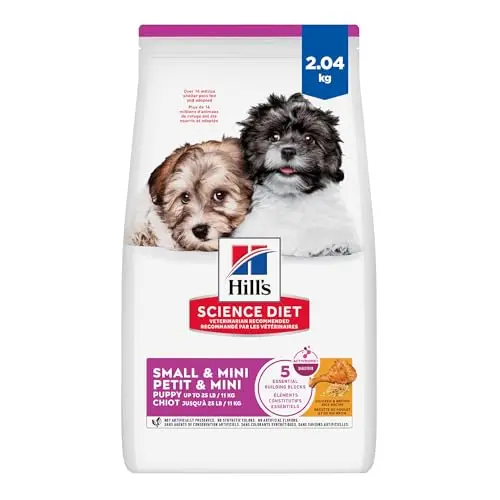
Puppy Small & Mini – Tailored Nutrition for Tiny Breeds
A trusted vet-recommended formula purpose-built for small and mini breed puppies. The tiny, easy-to-chew kibble is packed with DHA for brain development, balanced minerals for growing bones, and an antioxidant blend to support a developing immune system. Made with natural ingredients and no artificial preservatives, it’s a complete, everyday solution for your small pup’s first year.
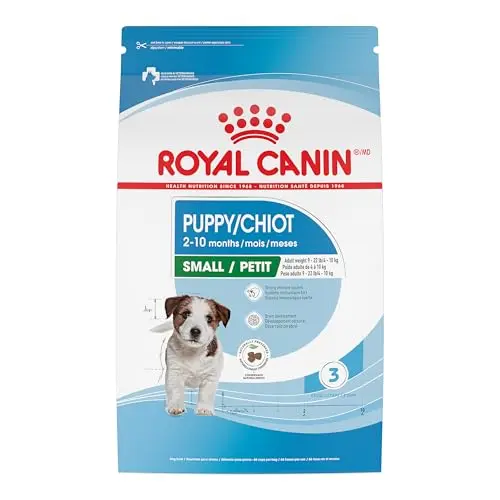
Small Puppy – Precise Nutrition for 9-22 lb Dogs
Engineered for puppies that will reach an adult weight between 9 and 22 pounds, this formula matches its nutrition to that specific growth trajectory. The crunchy kibble encourages chewing and supports dental health, while DHA, omega‑3s, and prebiotics work together to build brain function, immunity, and a resilient gut. It’s precise, breed‑conscious feeding made easy.
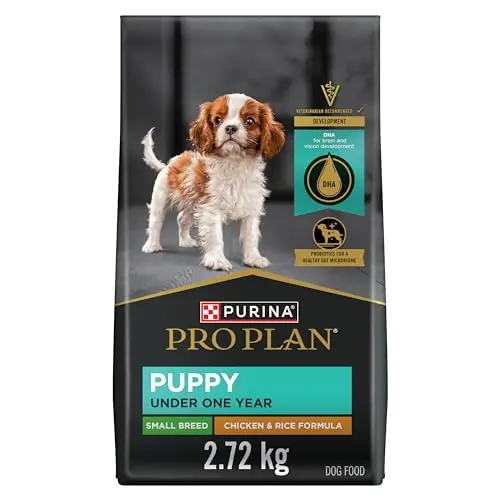
Small Breed Chicken & Rice – High Protein, Affordable Nutrition
Real chicken leads the ingredient list in this high‑protein formula, giving active small pups the fuel they need. What sets it apart is the inclusion of guaranteed live probiotics – a rarity in dry foods – to support both digestive and immune health. The bite‑sized kibble is tailored for small mouths, and the price per serving makes it one of the most competitive premium picks on the shelf.
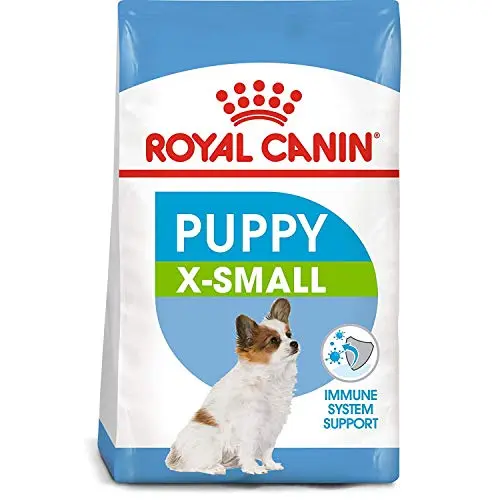
X‑Small Puppy – For Toy Breeds Under 8 lbs
Designed exclusively for puppies whose adult weight won’t exceed 8 pounds, this formula answers the unique challenge of feeding the tiniest breeds. The kibble is exceptionally small – almost like crumbs – making it one of the easiest options for a Yorkshire Terrier or Chihuahua to grasp. It pairs that with antioxidants, prebiotics, and DHA to nurture everything from the immune system to the developing brain.
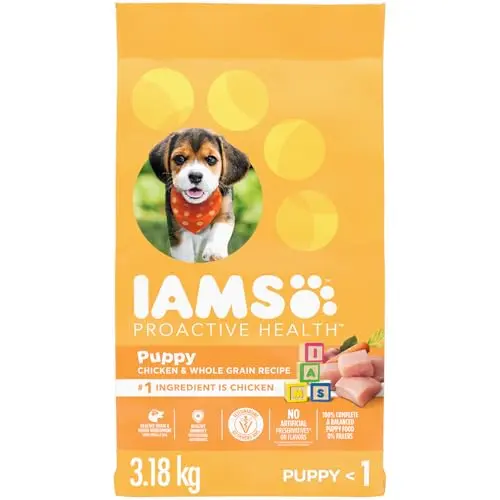
Proactive Health Puppy – Balanced Chicken & Whole Grains
A straightforward, no‑fuss puppy food that focuses on complete nutrition at a budget‑friendly price. The recipe includes omega‑3 DHA for brain and vision development, plus 22 key nutrients designed to mirror the benefits of mother’s milk. It’s also fortified with ingredients to promote firm stools – a real plus during the messy puppy stage – all without artificial flavours or fillers.
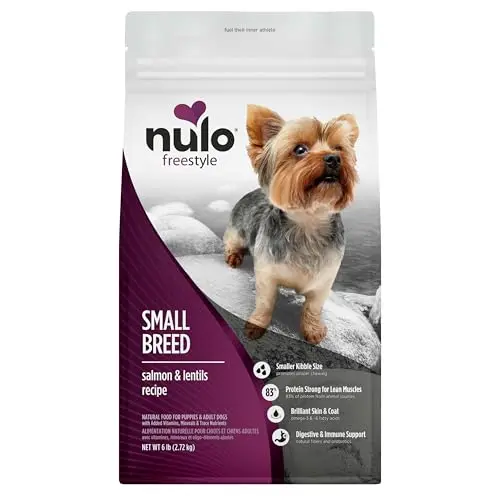
Freestyle Small Breed – Grain-Free High Protein Salmon
A grain‑free alternative that puts animal protein first, with a whopping 84% of its protein coming from real salmon and other meat sources. The small‑sized kibble is ideal for petite jaws, and the patented BC30 probiotic supports gentle digestion – a key concern for many small breeds. While labeled for adults and puppies, its nutrient profile suits growing pups on a grain‑avoidant plan.
How We Evaluated These Small Puppy Foods
We didn’t run feeding trials with actual puppies. What we did: cross‑referenced 6 small‑puppy‑focused formulas from 5 distinct brands across 5 decision axes – kibble size, nutritional completeness, ingredient quality, digestive support, and brand formulation standards. We triangulated published specifications, aggregated owner feedback where available, and use‑case fit against the unique needs of small breeds during their critical first year.
The scoring framework weighted real‑world performance (60%) – how well each food delivers on its promise of complete, size‑appropriate nutrition – against feature differentiation (40%) – unique advantages like targeted probiotics, breed‑specific kibble engineering, or nutrient‑dense ingredient profiles. We have no commercial relationship with any of the brands featured; recommendations track fit and differentiation, not brand preference. If you’re raising a typical small breed puppy, the Hill’s Science Diet Small & Mini is your all‑rounder; if money is tight, the Purina Pro Plan Small Breed delivers remarkable nutrition for the dollar.
How to Choose the Right Food for Small Puppies
Why Kibble Size Matters for Small Puppies
For a small puppy, the very act of eating can be a hurdle. Kibble that’s too large or too hard can cause choking, avoidance, or inefficient chewing, which in turn impacts digestion. Small breeds also have proportionally smaller jaws and weaker bite force, so the ideal kibble is not just small – it’s shaped to be easy to grasp and crush. Look for terms like ‘small bites,” ‘tiny kibble,” or ‘extra‑small” on the bag; these indicate the manufacturer has considered jaw mechanics, not just reduced the pellet size. The right kibble texture also supports dental health, helping scrape plaque off teeth as the puppy chews.
Key Nutrients to Look for in Puppy Food
Puppyhood is the fastest growth phase, so prioritize high‑quality animal protein (like chicken or salmon) to build lean muscle. DHA, an omega‑3 fatty acid, is critical for brain and vision development – many formulas now source it from fish oil or microalgae. Calcium and phosphorus must be present in the right ratio to support bone growth without causing developmental issues. For digestive health, ingredients like prebiotics (e.g., chicory root, fructooligosaccharides) and probiotics help establish a healthy gut microbiome, which tiny breeds need because their faster metabolisms can amplify digestive upsets.
Wet vs. Dry: Which is Best for Small Puppies?
While our lineup focuses on dry foods (the most popular choice for convenience and dental benefits), wet food can be a useful tool. Dry kibble helps scrape teeth and is calorie‑dense, suiting the high metabolic needs of little pups. Wet food, with its high moisture content, can be easier for teething puppies to eat and may entice picky eaters. Many owners mix a small amount of wet into dry to add variety. Just be aware that wet food spoils faster and costs more per calorie, so if you go that route, keep portions small and refrigerate leftovers.
Understanding Ingredient Lists: Grains, Fillers, and Protein Sources
Ingredient labels can be confusing. A real, named meat (like ‘chicken” or ‘salmon”) should be the first ingredient, indicating quality animal protein. Whole grains like brown rice, oatmeal, and barley provide gentle energy and fibre for most puppies; ‘filler” accusations are often overblown unless the food relies on cheap by‑products. However, if your puppy has a confirmed grain intolerance, a grain‑free recipe using legumes or sweet potatoes can be a suitable alternative – just ensure the carbohydrate profile remains moderate to avoid rapid blood sugar spikes. Avoid artificial colours, flavours, and preservatives; instead, look for natural preservation methods like mixed tocopherols (vitamin E).
Comparing Top Brands: Hill's vs. Royal Canin vs. Purina Pro Plan
These three brands dominate the small puppy food space, each with a different philosophy. Hill’s Science Diet emphasizes vet‑recommended natural ingredients and clinical research, making it a safe, balanced starting point. Royal Canin takes a size‑specific approach, offering multiple formulas (X‑Small, Small) that map precisely to a puppy’s expected adult weight – you’re paying for that exactitude. Purina Pro Plan leans into functional benefits like guaranteed live probiotics and high protein at a more accessible price, making it a favourite for owners who want premium nutrition without the premium cost. The best choice depends on your puppy’s predicted size and your budget.
Frequently Asked Questions
At what age should I switch my small puppy to adult food?
Small breeds tend to mature faster than large breeds. Most small puppies can transition to an adult diet around 10 to 12 months of age, but this varies slightly by breed. A good rule of thumb is to watch for plateauing weight gain and consult your veterinarian. Switching too early can short‑change their final growth phase; too late may lead to excess calories. During the transition, mix increasing amounts of the new food into the old over 7-10 days to ease the digestive shift.
What's the difference between Hill's Science Diet Puppy Small & Mini and Royal Canin Small Puppy?
Both are excellent, but they target slightly different puppies. Hill’s is a general small‑breed formula with a very tiny, easily chewable kibble and a natural ingredient focus – it’s a great all‑rounder for any small puppy. Royal Canin Small, however, is specifically calibrated for puppies expected to reach 9-22 pounds at adulthood; its kibble size and nutrient ratios are tailored to that weight bracket. If you know your puppy’s adult size estimate, Royal Canin offers more precise nutrition; if you prefer a broader, versatile option, Hill’s is the safer bet.
Is Purina Pro Plan Small Breed better than IAMS for small puppies?
They sit at different tiers. Purina Pro Plan offers real chicken as the first ingredient, guaranteed live probiotics, and a community of positive owner feedback on small breeds. IAMS provides solid, budget‑conscious nutrition with DHA and 22 key nutrients, but the kibble is slightly larger and the ingredient list includes more grains. If your priority is premium features and protein quality, Pro Plan wins. If you’re watching cost and want a straightforward, proven formula, IAMS is a perfectly sound choice – especially for puppies that aren’t ultra‑tiny.
Can I feed my small puppy large breed puppy food?
No, and it can be harmful. Large breed puppy foods are formulated with different calcium levels and calorie densities to slow growth and prevent bone disorders. Feeding them to a small breed can lead to nutrient imbalances and, over time, obesity. Stick to a formula explicitly labeled for small breed or all breed sizes, and check the AAFCO statement on the bag to confirm it’s suitable for your puppy’s growth stage.
Final Verdict
For the overwhelming majority of small‑breed puppies, the Hill’s Science Diet Puppy Small & Mini is the pick – it nails the kibble size, nutrient density, and digestive gentleness that tiny pups need without over‑complicating things. If you’re budget‑conscious, the Purina Pro Plan Small Breed delivers near‑identical protein quality and adds live probiotics at a noticeably lower cost per meal. For owners of true toy dogs (under 8 lbs), don’t compromise: the Royal Canin X‑Small Puppy is the only one engineered for the tiniest mouths. Whichever you choose, these small‑pup‑specific formulas put your puppy on a strong foundation for a healthy first year.