
You fill the bowl, your pup trots over, grabs a mouthful of kibble… and then carries it three rooms away to crunch it on the living room rug. Every single meal. If this is your life, you’re definitely not alone—it’s one of the most common (and honestly kind of adorable) quirks that leave owners scratching their heads.
The good news: it’s almost never a sign that something is wrong. In most cases it comes down to instinct, comfort, or a small annoyance with the bowl itself. Let’s walk through what’s really going on—and what you can do if the trail of scattered kibble is starting to drive you a little crazy.
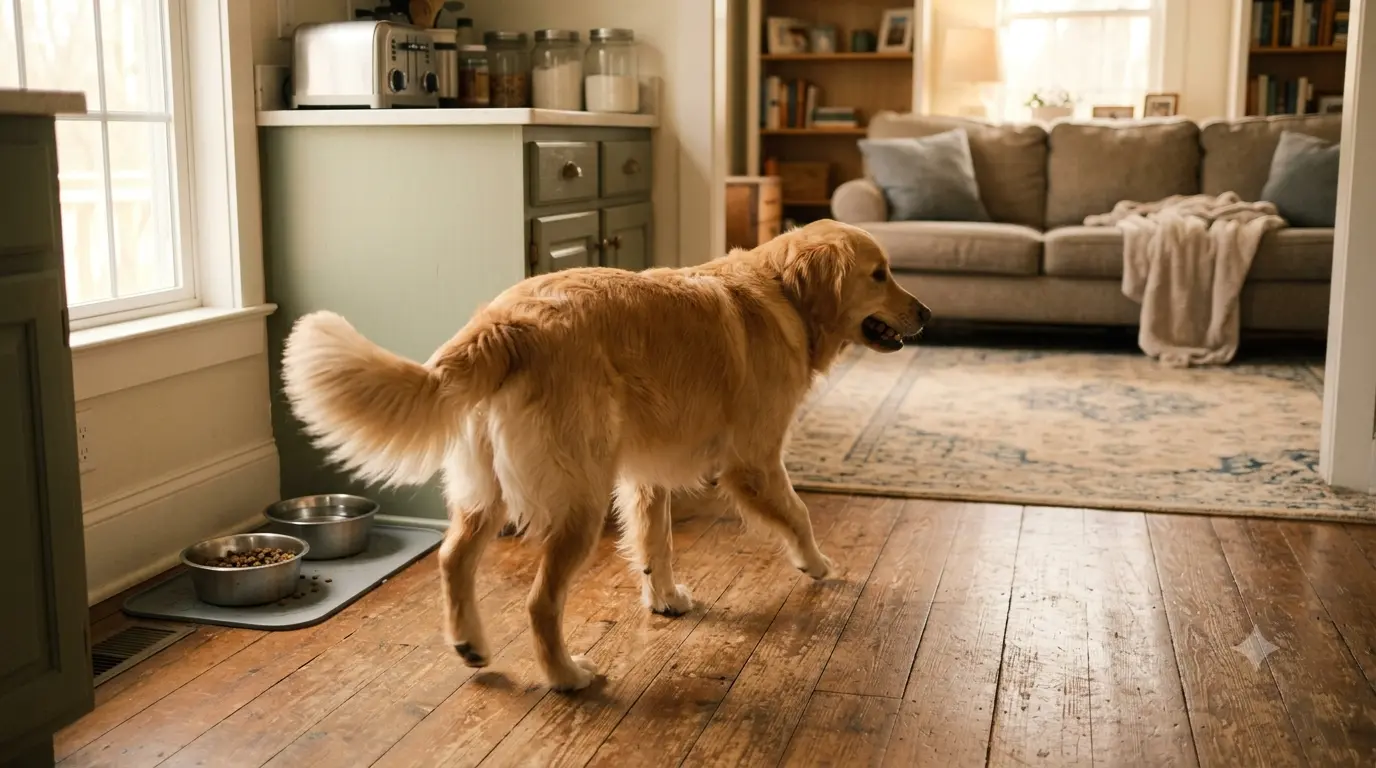
The Real Reasons Your Dog Carries Food Away from the Bowl
Dogs don’t do this to be difficult. Usually there are a few overlapping reasons at play, and yours may have more than one going on at once.
An Ancestral Pack Instinct
Long before dogs were curled up on our couches, their ancestors lived and ate in groups. In a pack, food is something you compete for—and a more cautious or lower-ranking animal often learned to grab its share and carry it off to eat somewhere safe, away from the scrum. That instinct didn’t vanish just because dinner now arrives in a ceramic dish.
So when your pup hauls a mouthful over to a quiet corner, part of them may simply be doing what their ancestors did: protecting the meal and eating it in peace. It’s not that they distrust you—it’s an old, hardwired habit surfacing in a modern kitchen. This same guarding instinct shows up more intensely in homes with several dogs; if that’s you, our guide to multi-dog feeding problems digs into it.
They Want to Be Near You
Here’s the sweet one. Dogs are deeply social, and many of them just don’t love eating alone in an empty kitchen while the rest of “their pack”—you—hangs out in the living room. Bringing dinner to wherever you are lets them eat and stay close to their favorite humans at the same time.
If your dog tends to relocate to exactly where you’re sitting, this is very likely part of the story. It’s less of a problem to solve and more of a compliment to accept.
Noise from the Bowl Startles Them
This one surprises a lot of owners. Metal bowls can be loud. Every time your dog’s collar tags clink against stainless steel, or the bowl scoots and scrapes across a hard floor, it makes a sharp, echoing sound right next to their sensitive ears. Some dogs find that unpleasant enough to grab a mouthful and retreat to a quieter, softer spot to finish.
If you’ve got a jumpy or noise-sensitive pup and a metal dish on tile, this is a strong suspect.
The Floor Is Too Slippery
Picture trying to eat off a plate that keeps sliding away from you. On tile, hardwood, or laminate, a lightweight bowl chases the food around as your dog eats, which is genuinely frustrating for them. Moving to a rug or carpet gives them traction and a stable surface—so they take a mouthful somewhere their dinner will actually stay put.
Bowl Shape and Whisker Discomfort
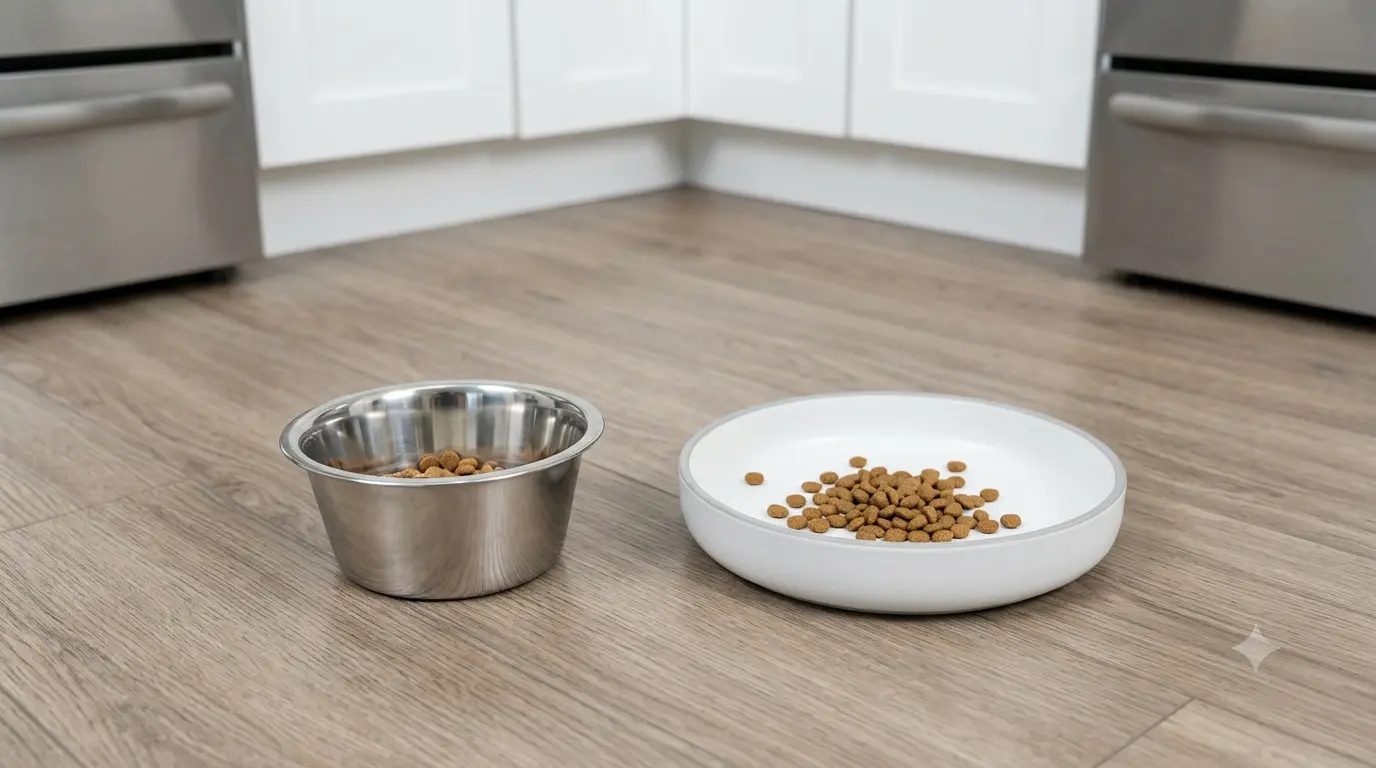
A dog’s whiskers (called vibrissae) are highly sensitive sensory tools, not just decorative hairs. With a deep, narrow bowl, your dog has to push their face down inside it, and the sides can rub or press against those whiskers with every bite. Some dogs find that mildly uncomfortable and would rather scoop the food out and eat it off the open floor.
It’s worth being honest here: “whisker fatigue” is far better documented in cats than in dogs, and it’s still debated as a diagnosis. But plenty of owners notice the relocating stops once they switch to a wider, shallower bowl—so if the other reasons don’t fit, bowl shape is a cheap and easy thing to test. Interestingly, the same discomfort can make some dogs refuse to drink from a deep water bowl too.
When Should You Actually Worry?
For the vast majority of dogs, moving food around is a harmless quirk. But a few things are worth a closer look:
A sudden change in behavior stands out most. If your dog has always eaten happily at the bowl and only just started carrying food away, that’s worth noticing—especially if it comes alongside other changes.
Signs of pain while eating matter too. Dropping food, chewing on one side, pawing at the mouth, or reluctance to eat at all can point to dental or mouth problems rather than a preference. In an older dog, a shift in eating habits deserves particular attention—our guide on a senior dog that won’t eat covers when to be concerned.
Finally, watch for guarding or anxiety. If the food-carrying comes with tense body language, growling, or visible stress around mealtimes, that’s a behavior worth addressing gently rather than ignoring.
When in doubt, a quick chat with your vet rules out anything physical and gives you peace of mind. Most of the time, though, you’ll walk away being told your dog is just… being a dog.
How to Stop the “Eat-in-the-Living-Room” Habit
If the scattered kibble is more than you want to keep sweeping up, here are the fixes most likely to help—roughly in order of how easy they are to try.
Switch to a Wider, Shallower Dish
Trading a deep bowl for a flat, wide feeding dish or tray solves two problems at once: no more whisker pressure, and your dog can see everything without burying their face. For many dogs, this single change ends the relocating overnight.
Add Traction and Cut the Noise
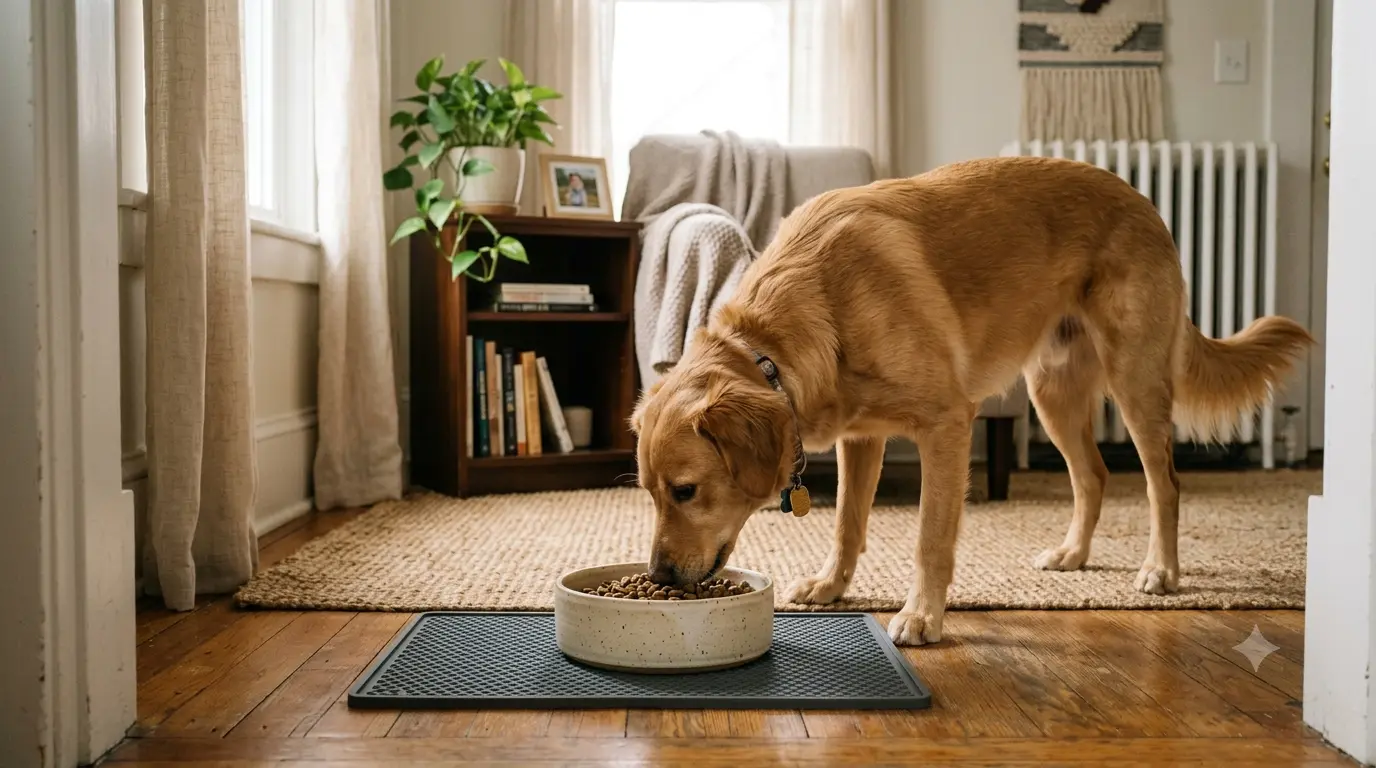
Put a non-slip mat or a rubber-bottomed bowl on hard floors so nothing slides around. If noise is the issue, a ceramic or silicone bowl is much quieter than metal, and taking your dog’s tags off during meals (or using a silicone tag silencer) gets rid of that clinking sound entirely.
Create a Calm, Semi-Private Feeding Spot
Since a lot of dogs relocate for peace and quiet, give them the peace and quiet right at the bowl. Pick a low-traffic corner away from the front door, foot traffic, and other pets. If you have multiple animals, feed them in separate spots so nobody feels they need to guard their food or flee with it.
Feed Them Where You Already Are
If your dog is clearly relocating just to be near you, you can meet them halfway—set the bowl in a corner of the room where the family actually spends time. Sometimes the simplest fix is letting them eat where they wanted to eat all along.
The Bottom Line
Most of the time, this habit comes down to old instincts, a wish to stay close to you, or a small gripe with a noisy, slippery, or too-deep bowl. None of it means your dog is broken or badly behaved—it just means they have preferences, same as we do.
Try a wider bowl, a non-slip mat, and a quieter feeding corner, and you’ll likely watch the kibble trail shrink fast. And if it doesn’t? Well, some dogs will always be committed to eating dinner on the good rug. Sometimes the easiest fix is a little patience, a handheld vacuum, and a laugh at just how much personality one hungry pup can pack into mealtime.
Frequently Asked Questions
Is it bad that my dog moves food out of the bowl to eat it?
Not at all, in most cases. It’s usually driven by instinct, a desire to be near you, or minor discomfort with the bowl. It only warrants attention if it starts suddenly, comes with signs of mouth pain, or is paired with anxiety or food guarding.
Why does my dog carry food to the carpet specifically?
Carpet and rugs give traction and a soft, stable surface, so the food stays put instead of sliding around like it does on tile or hardwood. Many dogs also simply feel calmer and more secure eating on a soft, familiar spot.
Will a different bowl really stop this behavior?
For some dogs, yes. Switching to a wide, shallow, non-slip bowl removes several common triggers at once—whisker pressure, noise, and a sliding dish. It’s an inexpensive first thing to try, though instinct-driven relocating may continue regardless.
Should I stop my dog from moving their food?
You don’t have to. If it isn’t causing mess or stress, it’s perfectly fine to let them. If the cleanup bothers you, adjust the bowl and feeding spot rather than forcing your dog to stay put, which can create anxiety around mealtimes.
Could this be a sign of a medical problem?
Rarely, but it’s possible. If your dog also drops food, chews awkwardly, paws at their mouth, or suddenly changes eating habits, check in with your vet to rule out dental or mouth issues before assuming it’s just a preference.