
There’s a particular kind of worry that settles in when your gray-muzzled companion turns away from the food bowl but still pads over for a drink. They’re not eating—but they’re clearly not fine with going without water either. It’s confusing and a little frightening, especially with an older dog, where you know not to take changes lightly.
This guide will help you think it through calmly: the common reasons appetite fades in senior dogs, safe ways to tempt them to eat, foods that go down easily for dogs with sore teeth or delicate stomachs, and—importantly—the signs that mean it’s time to stop tempting and start calling the vet.
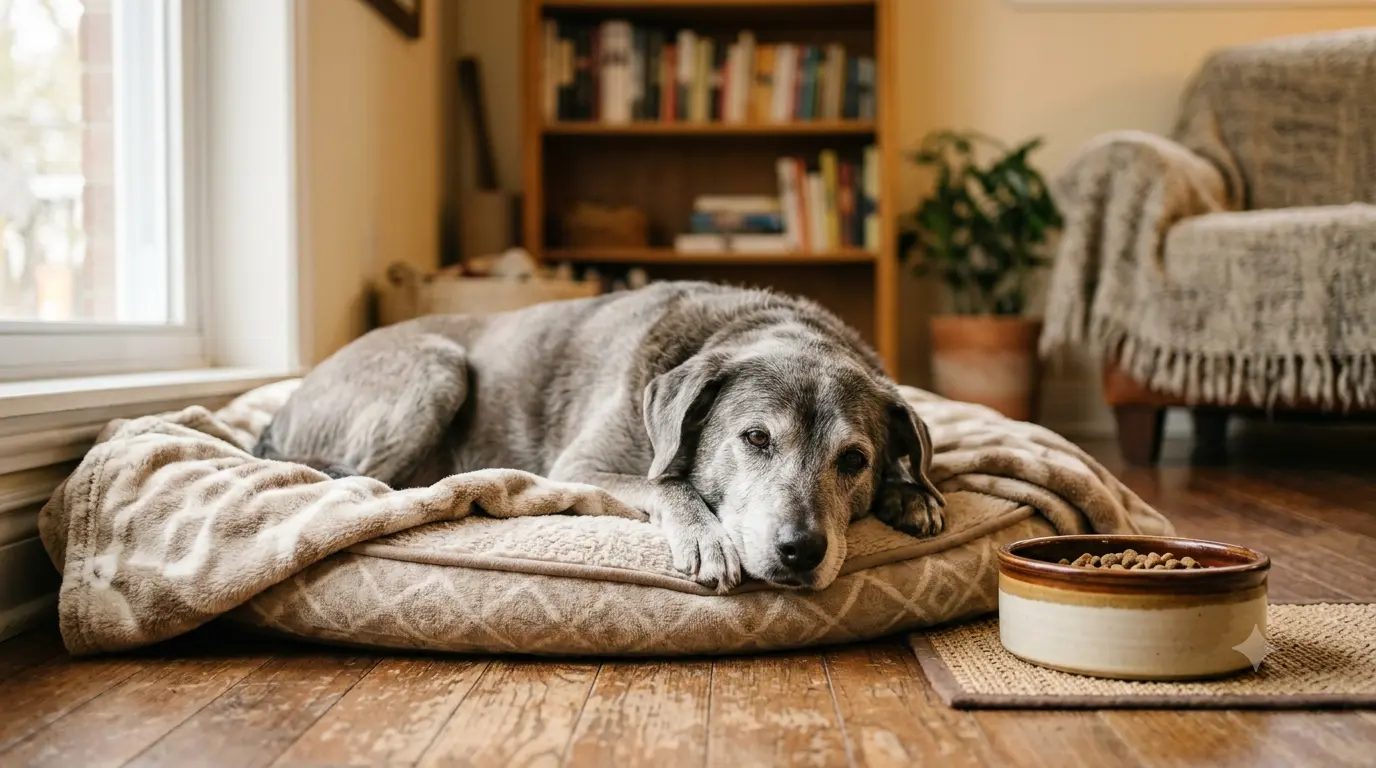
Why Your Senior Dog Is Refusing Food (But Drinking Plenty of Water)
An older dog who still drinks but won’t eat is telling you something, and there are a few common explanations worth understanding before you try to fix it.
A Declining Sense of Smell and Taste
For dogs, smell is everything at mealtime—it’s what makes food food. As dogs age, their senses of smell and taste naturally dull, so the same kibble that once smelled irresistible may now register as bland and uninteresting. The dog isn’t being difficult; the food has genuinely lost its appeal to them. This is one reason warming food to release its aroma works so well for seniors, as we’ll cover below.
Dental Pain and Tooth Decay
This is a big one, and it’s easy to miss. Older dogs frequently develop dental disease—worn or broken teeth, gum inflammation, infections—that make chewing genuinely painful. A dog with a sore mouth may still want to eat but find crunching kibble too uncomfortable, so they drink (which doesn’t hurt) and avoid the food that does. Signs include dropping food, chewing on one side, bad breath, or pawing at the mouth. Dental pain needs a vet, not just a softer dinner.
Other factors can play in too—nausea, medication side effects, or simply the slower metabolism of an older, less active dog. Because so many possibilities exist, a prolonged loss of appetite in a senior dog always deserves a professional look.
Safe Ways to Jumpstart a Reluctant Appetite
If your vet has ruled out anything urgent, or while you’re arranging a visit for a dog who’s otherwise stable, these gentle techniques can help tempt an older dog to eat.
Make the Food Smell Irresistible
Since faded smell is such a common culprit, lean into aroma. Warming food to just above room temperature—a short zap or a splash of warm water—releases a wave of scent that can reawaken interest. Strongly aromatic foods, like a spoonful of warmed wet food mixed in, can also cut through a dull sense of smell. This is the same principle that helps tempt a picky dog to eat their kibble.
Hand-Feeding and High-Calorie Support
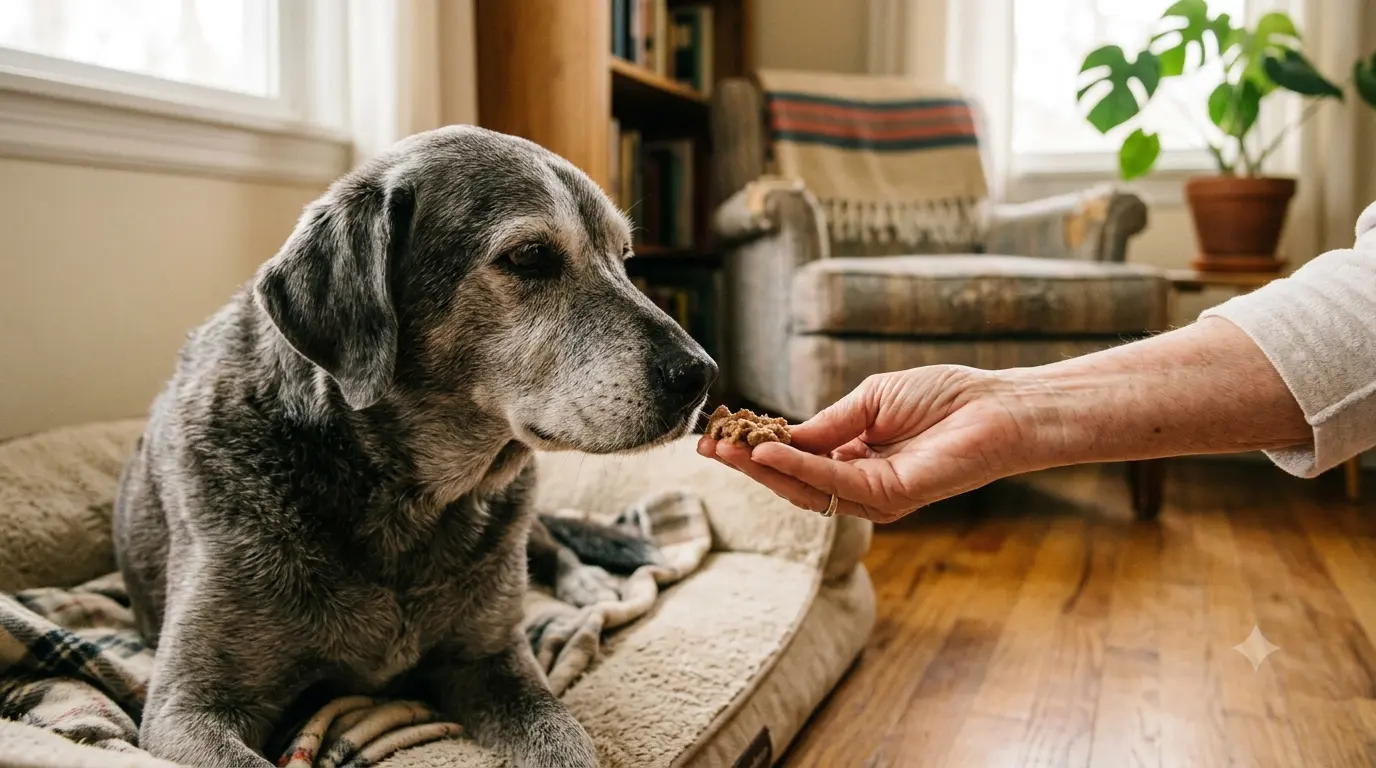
Sometimes an older dog just needs a little encouragement and comfort. Offering food by hand, sitting with them, and keeping the environment calm can coax a hesitant eater. For dogs who need extra help maintaining condition, high-calorie nutritional gels and pastes pack a lot of energy into a small, easy-to-lick amount—useful when a dog can only manage a little at a time. These are best used with your vet’s input, especially for a dog recovering from illness or surgery.
Dog Not Eating After Surgery: Getting Their Appetite Back
Coming home groggy from anesthesia, many dogs have no interest in food for a bit, and that’s often normal in the very short term.
Managing Post-Anesthesia Nausea
Anesthesia and pain medication can leave a dog queasy, so a lack of appetite in the first day after surgery isn’t unusual. Offer small amounts of bland, easy food, keep things quiet, and follow your vet’s specific discharge instructions to the letter. Don’t force food. If your dog still refuses to eat well beyond the window your vet described, call them—post-surgical appetite loss that drags on needs to be checked.
Gentle, Easy Options
For a recovering dog, small and soft is the theme: a little warmed bland food, offered frequently in modest portions rather than one big meal. Syringe-feeding a liquid or gel diet may be appropriate in some cases, but only under veterinary guidance—it must be done carefully to avoid the food going down the wrong way.
Best Easy-to-Digest Foods for Dogs with Bad Teeth or Weak Stomachs
When chewing hurts or digestion is delicate, texture and gentleness matter as much as taste.
Softening Dry Kibble Correctly
If your dog is attached to their usual kibble, you don’t have to switch—just soften it. Soak the kibble in warm water or a little unsalted broth until it turns tender, giving it enough time to fully absorb and swell. This makes it easy to eat with sore teeth while keeping the nutrition your dog is used to. Serve it soon after softening so it stays fresh and appealing.
Soft, Digestible Formulas
Canned mousses, pâtés, and soft-chew formulas made for senior dogs are designed to be gentle on both teeth and stomachs. Look for options with quality, easily digestible ingredients and a soft texture that requires little chewing. If you’re changing foods rather than just softening the old one, transition gradually to avoid an upset stomach—our 7-day food transition guide explains how.
An elevated or slightly tilted bowl can also help an older dog eat more comfortably by reducing the strain on stiff joints and neck as they lower their head. Small adjustments like these often make a real difference for an aging dog.
The Bottom Line
A senior dog who drinks but won’t eat is worth taking seriously—dulled senses and dental pain are common, treatable culprits, but so are conditions that need prompt care. Warm the food, soften it, make it aromatic, and offer small, gentle portions with a little patience and hand-feeding. Just don’t let it ride: if an older dog refuses food for more than a day or so, or shows any other symptoms, that’s your signal to call the vet rather than keep experimenting at home.
Frequently Asked Questions
Why is my senior dog not eating but still drinking water?
Common reasons include a naturally declining sense of smell and taste (making food seem bland) and dental pain that makes chewing hurt while drinking stays comfortable. Nausea, medication, or other health issues can also be involved. Because the causes range from minor to serious, a prolonged appetite loss in an older dog should be checked by a vet.
How can I get my dog to eat after surgery?
Offer small amounts of bland, easy-to-eat food, warm it slightly to boost aroma, keep the environment calm, and follow your vet’s discharge instructions. Some queasiness in the first day after anesthesia is normal—don’t force food, but do call your vet if poor appetite lasts beyond the window they described.
What foods are easy to digest for senior dogs with dental problems?
Softened kibble (soaked in warm water or unsalted broth until tender), canned mousses and pâtés, and soft-chew senior formulas are all gentle on sore teeth and delicate stomachs. Choose easily digestible ingredients, and if you’re switching foods rather than just softening, transition gradually.
How long can an older dog safely go without eating?
Not long, especially if they’re unwell. A senior dog refusing food for more than about a day, or skipping meals alongside any other symptoms, should be seen by a vet. Older dogs have less reserve than younger ones, so it’s safer to act early than to wait and watch.
Should I hand-feed my senior dog?
Hand-feeding can be a helpful, comforting way to encourage a hesitant older dog to eat, and it lets you monitor how much they’re taking in. It’s a fine short-term tool, but if your dog will only eat from your hand or won’t eat at all, that persistent change should be discussed with your vet.
A lasting loss of appetite can be an early sign of illness in older dogs, so when in doubt, reach out to your veterinarian rather than managing it alone.