
Bringing home an Akita puppy is exciting – those big paws and curious eyes promise a loyal, powerful companion. But behind that fluffy exterior is a breed with very specific nutritional needs. Get the diet wrong, and you risk skeletal issues, joint problems, or a sensitive stomach that makes house training a nightmare. The right food, on the other hand, supports steady growth, a shiny coat, and the brain development that turns your pup into a well‑adjusted adult.
We surveyed the market – from mainstream staples to boutique brands – and zeroed in on formulas that balance high‑quality protein, DHA for cognitive development, and the controlled mineral levels large breeds need. Whether you’re looking for something gentle on digestion, packed with joint‑supporting ingredients, or just honest value, this guide will help you pick the food that fits your Akita pup’s first year.
Best Puppy Foods for Akita Puppies – 2026 Reviews
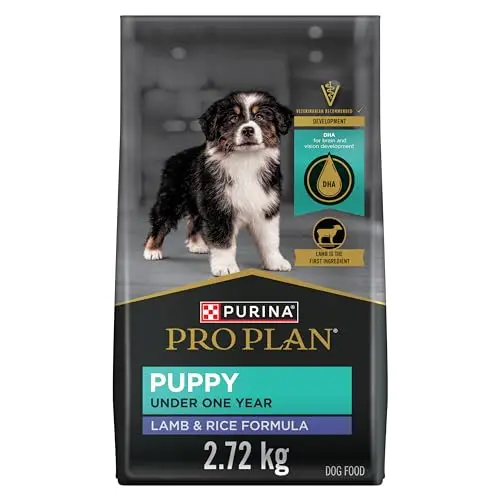
Lamb & Rice Formula – Gentle on Sensitive Stomachs
A time‑tested favourite that leans on real lamb as the first ingredient, this recipe is fortified with probiotics and DHA. The kibble is sized for medium mouths, and the formula is especially kind to pups prone to digestive upset – a common Akita trait.
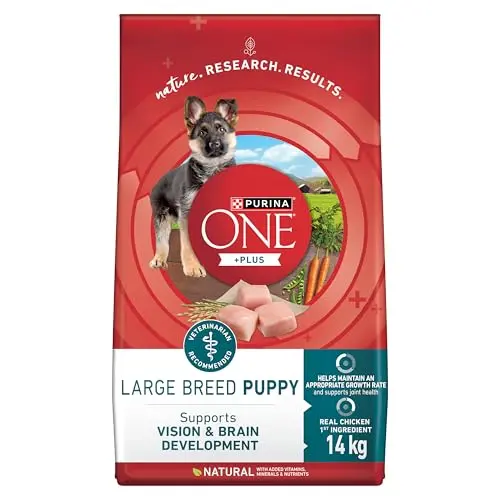
+Plus Large Breed Chicken – Joint Support for Big Pups
Purpose‑built for puppies who’ll tip the scales at 23 kg or more, this chicken‑first formula includes natural glucosamine sources and a SmartBlend of nutrients tailored to controlled growth. A 14 kg bag offers serious value for multi‑pup homes or long‑term planning.
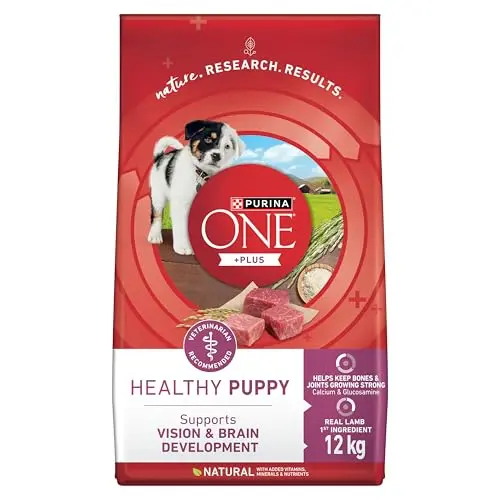
+Plus Healthy Lamb – SmartBlend Nutrition
A lamb‑based alternative to chicken formulas, this recipe uses Purina ONE’s SmartBlend for 100% complete nutrition with zero fillers. It’s a versatile, widely available option for Akita pups who prefer a red‑meat protein source.
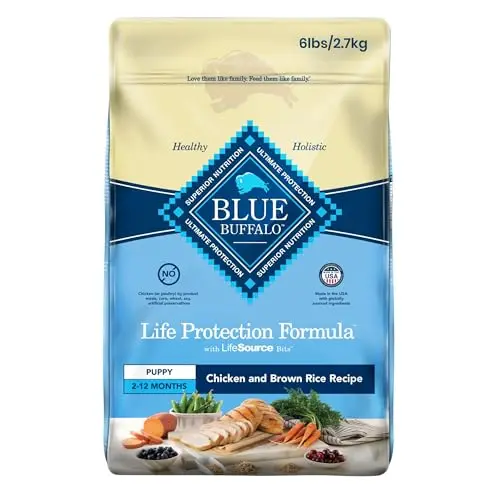
Life Protection Chicken & Brown Rice – Immune-Boosting LifeSource Bits
A holistic favourite featuring exclusive LifeSource Bits – a cold‑formed antioxidant blend. Real chicken leads, and the recipe skips corn, wheat, and soy, leaning on wholesome grains like brown rice and oatmeal for gentle energy.
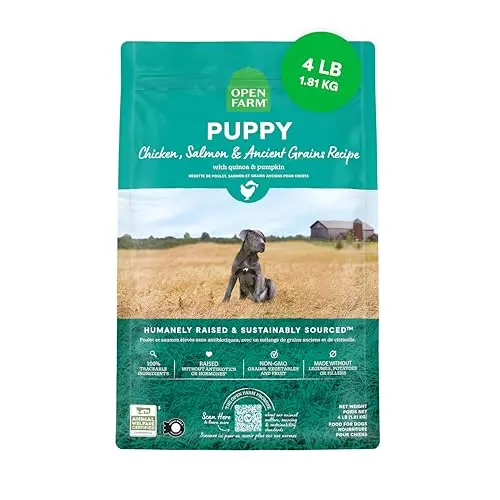
Ancient Grains Chicken & Salmon – Traceable Premium Ingredients
Open Farm’s transparency sets it apart: every ingredient is traceable. This chicken‑and‑salmon blend uses ancient grains like quinoa and oats, skips peas and legumes, and adds superfoods like pumpkin and coconut oil.
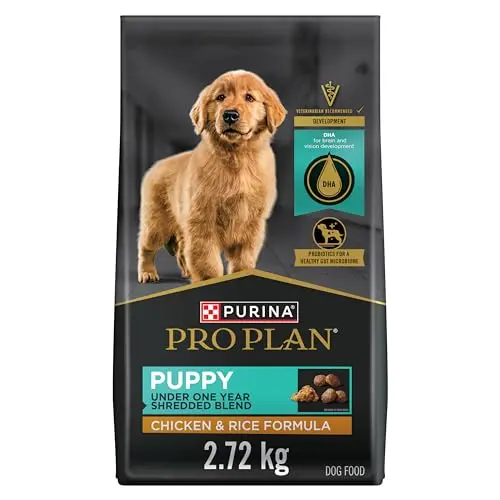
Shredded Blend Chicken & Rice – Tender Shredded Kibble
A texture‑focused variant that mixes crunchy kibble with tender, shredded morsels. DHA and antioxidants remain front and centre, making it a tasty twist on the classic Pro Plan formula.
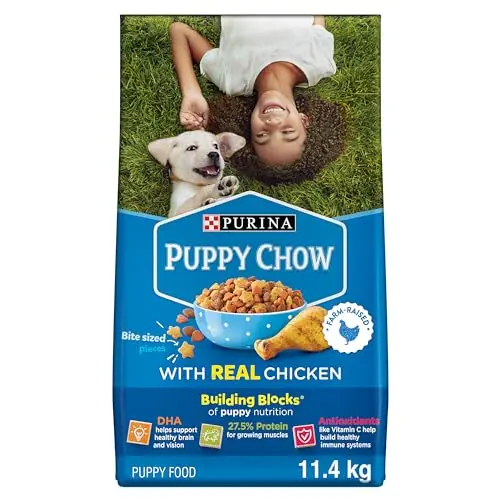
Complete Chicken – Budget-Friendly Classic
A wallet‑friendly staple that leans on farm‑raised chicken and includes DHA and antioxidants. The 11.4 kg bag stretches far, making it a practical choice for cost‑conscious multi‑dog households.
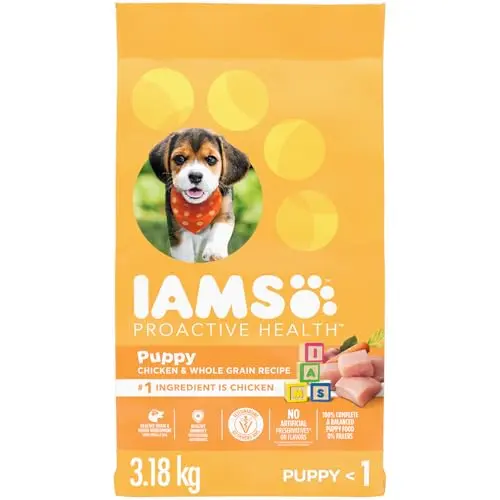
Proactive Health Chicken & Whole Grain – Budget-Friendly Starter
IAMS’ entry‑level puppy recipe focuses on small‑medium breeds with a chicken‑and‑whole‑grain formula. It includes omega‑3 DHA and promises optimal stool quality within 10 days – a bold claim with some owner backing.
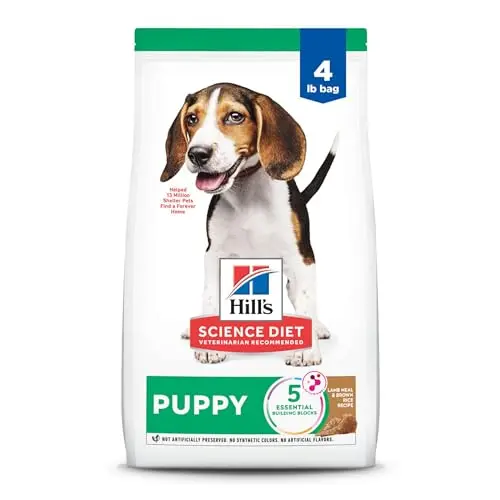
Lamb Meal & Brown Rice – Prebiotic Gut Health
Hill’s brings its veterinary heritage to a lamb‑meal recipe with a breakthrough prebiotic fiber blend. DHA and balanced minerals are standard, but the gut‑health focus stands out.
How We Evaluated These Puppy Foods for Akita Puppies
We didn’t run controlled feeding trials or track growth curves over months. What we did: cross‑referenced 9 puppy foods from 7 distinct brands across 6 decision axes – protein quality and source, DHA content, joint‑supporting ingredients, digestibility factors, ingredient transparency, and breed‑size suitability. We triangulated published nutritional analyses, manufacturing specs, and aggregated owner feedback where available, then benchmarked each formula against the known needs of a large‑breed, fast‑growing Akita.
The scoring framework weighted real‑world performance (60%) – how well a food supports growth, digestion, and breed‑specific concerns – against feature differentiation (40%) – unique advantages like probiotics, large‑breed mineral ratios, or traceable sourcing. Our selections are completely independent; we have no commercial relationship with any featured brand. If your Akita shows signs of a sensitive stomach, the Pro Plan Lamb & Rice is our top pick; for joint‑conscious owners, the Purina ONE Large Breed is purpose‑built.
How to Choose the Right Puppy Food for Your Akita
Why Large Breed Puppy Nutrition Matters for Akitas
Akitas aren’t just big – they grow fast. Without careful nutritional management, that rapid growth can strain developing joints and lead to lifelong mobility issues. Large‑breed puppy formulas control the calcium‑phosphorus ratio to keep bones lengthening at a safe pace, and they often include natural glucosamine to support cartilage. If the food you’re eyeing doesn’t explicitly say ‘large breed,’ check the AAFCO statement: it should be suitable for dogs expected to exceed 32 kg as adults. Many standard puppy foods are perfectly adequate, but a dedicated large‑breed recipe gives you an extra margin of safety – especially with a breed prone to hip dysplasia.
Protein Quality and Muscle Development: What to Look For
Puppy food is protein‑centric, and Akitas need plenty of it – but not just any protein. Whole meat meals or named meat sources (chicken, lamb, salmon) should top the ingredient list. Avoid vague terms like ‘meat meal’ or ‘animal by‑products.’ A crude protein percentage in the high‑20s is typical and sufficient; more isn’t always better. The key is digestibility: a well‑sourced protein that your pup can actually absorb supports lean muscle without overloading the kidneys. If your Akita struggles with chicken, lamb or fish‑based recipes are excellent alternatives.
DHA and Brain Development: A Key Nutrient for Smart Puppies
You’ve seen DHA plastered on puppy food bags for years, and it’s not hype. This omega‑3 fatty acid is a structural component of the brain and retina, and puppies that receive adequate DHA show better cognitive function and trainability. Fish oil, salmon meal, and algae are common sources. For an Akita – a breed that’s independent and can be stubborn – anything that boosts learning retention is a win. Look for DHA listed in the guaranteed analysis or prominently in the ingredients; it’s a sign the manufacturer prioritizes neurological development.
Joint Support: Glucosamine and Controlled Growth
Big dogs, big joints, big risks. Akitas are predisposed to hip and elbow dysplasia, so proactive joint care starts in puppyhood. While no food can prevent genetic conditions, controlled mineral levels and the inclusion of natural glucosamine sources (like chicken meal or added supplements) can help. Large‑breed formulas explicitly balance calcium and phosphorus to slow down rapid bone growth, reducing stress on developing cartilage. If you choose an all‑life‑stages or non‑large‑breed food, your vet may recommend a separate joint supplement – factor that into your decision.
Digestibility: Ingredients That Won't Upset a Sensitive Stomach
Akita owners know the breed’s reputation for sensitive digestion. Loose stools, gas, and intermittent appetite are common. That’s why highly digestible ingredients – like rice, oatmeal, and probiotics – matter. Avoid recipes loaded with fillers (corn gluten meal, wheat middlings) that pass through undigested. Prebiotic fibers feed good gut bacteria, and guaranteed live probiotics can firm up stool consistency. Lamb and rice formulas have historically been gentle on the GI tract, but every dog is an individual. If you’re switching foods, do it gradually over 7-10 days.
Grain-Free vs. Grain-Inclusive: What's Right for an Akita Pup?
The grain‑free debate isn’t settled, but the FDA has flagged potential links between grain‑free diets and dilated cardiomyopathy (DCM) in dogs. Since Akitas aren’t among the breeds most strongly associated, the risk appears lower – but why gamble? Whole grains like brown rice, barley, and oatmeal provide steady energy and fiber without the concerns tied to legumes and potatoes often used as grain replacements. A grain‑inclusive formula from a reputable brand is the safer, research‑backed path for a growing puppy. If you have a strong preference for grain‑free, consult your veterinarian and choose a recipe that uses minimal legumes.
How to Transition Your Puppy to a New Food
Switching foods overnight is a recipe for digestive chaos. Start with 75% old food and 25% new food for two days, then go 50/50 for two days, then 25/75 for two days, before going fully new. Monitor stool consistency – soft but formed is okay; liquid diarrhea means slow down. For Akita pups with extra‑sensitive stomachs, add a spoonful of plain pumpkin or a probiotic supplement during the transition. And never switch brands right before a stressful event like a vet visit or a training class.
Frequently Asked Questions
What's the difference between Purina Pro Plan Lamb & Rice and Purina ONE Large Breed Chicken?
Both come from the Purina family, but they target different priorities. The Pro Plan Lamb & Rice leans on a lamb‑first recipe and includes guaranteed live probiotics, making it a standout for sensitive digestion. It’s an all‑breed formula, so it doesn’t tailor calcium for large breeds. The Purina ONE Large Breed Chicken, on the other hand, is built specifically for puppies that will exceed 23 kg. It includes natural glucosamine for joints and a controlled calcium‑phosphorus ratio for safer growth. If your Akita has occasional loose stools, the Pro Plan is a gentler choice; if you’re laser‑focused on orthopedic health, the Purina ONE Large Breed is the smarter long‑term pick.
Is grain-free food safe for my Akita puppy?
There’s no evidence that grain‑free diets are acutely dangerous for Akitas, but the FDA’s investigation into DCM has made many veterinarians cautious. Grain‑free recipes often replace grains with legumes and potatoes, which may interfere with taurine absorption. A grain‑inclusive formula like the Blue Buffalo Life Protection or Hill’s Science Diet uses gentle grains like brown rice and oatmeal – ingredients with a long safety record. If you’re set on grain‑free, discuss it with your vet and consider periodic cardiac screening as a precaution.
How much should I feed my Akita puppy?
There’s no one‑cup‑fits‑all answer. Most packaging includes feeding charts based on expected adult weight – for an Akita, that’s usually 32-54 kg. Start at the low end of the recommended range and adjust based on body condition, not bowl‑emptiness. You should be able to feel the ribs without seeing them. Large‑breed puppies benefit from three measured meals a day until about six months, then twice daily. Avoid free‑feeding; Akitas can be prone to bloat, and a consistent schedule helps prevent gorging. Always keep fresh water available.
Can I feed my Akita puppy an all-life-stages food instead of a puppy formula?
Technically yes, if the food meets AAFCO standards for growth – but it’s rarely ideal. All‑life‑stages formulas have to hit a moving target, balancing the high‑calorie demands of a puppy with the maintenance needs of a senior dog. That often means the calcium and phosphorus levels aren’t optimized for large‑breed growth. A dedicated puppy formula, especially a large‑breed one, gives you better control over that critical first year. Once your Akita reaches about 80% of its adult size, you can transition to an adult maintenance diet.
What's the best way to deal with a picky Akita puppy?
Akitas can be food‑motivated, but they’re also surprisingly picky. If your pup turns up its nose, don’t immediately switch foods – that can create a cycle of fussiness. Instead, stick to a schedule: offer the food for 20 minutes, then remove it. A healthy puppy won’t starve itself. You can also try slightly moistening the kibble with warm water or mixing in a spoonful of canned pumpkin (not pie filling). Textural variety can help – the Purina Pro Plan Shredded Blend proved popular among texture‑sensitive dogs. If refusal lasts more than 24 hours, consult your vet to rule out underlying issues.
Final Verdict
Feeding an Akita puppy isn’t about chasing the most expensive bag; it’s about matching the food to your pup’s growth stage and sensitivities. For most, the Purina Pro Plan Lamb & Rice delivers the digestion‑friendly, DHA‑packed foundation these dogs need – and it does it without a premium markup. If your Akita is trending large and joint health keeps you up at night, the Purina ONE Large Breed Chicken is purpose‑built for controlled growth. And when ingredient sourcing matters more than price, Open Farm’s Ancient Grains sets the transparency bar. Whichever you choose, pair it with consistent mealtimes, fresh water, and regular vet checks – your Akita’s first year sets the stage for a long, sturdy life.